
Reducing time-to-fill for IT support roles has become a priority for hiring managers and HR teams facing increased demand for technical support professionals. Delays in hiring can lead to overloaded teams, slower ticket resolution, employee burnout, and reduced customer satisfaction. Organizations that streamline their hiring process for help desk technicians, desktop support specialists, IT support analysts, and technical support engineers are better positioned to maintain operational efficiency and retain productivity.
Hiring for IT support positions often becomes complicated because of high competition, inconsistent candidate pipelines, and lengthy approval processes. Improving recruitment efficiency requires a combination of faster screening, clearer job requirements, stronger sourcing strategies, and better coordination between HR and IT leadership.
Identify Hiring Bottlenecks Early
One of the most effective ways to reduce hiring delays is identifying where the recruitment process slows down. Many organizations lose qualified candidates because interview scheduling, resume screening, or internal approvals take too long.
Common bottlenecks include:
- Delayed feedback from hiring managers
- Overly complex interview stages
- Poorly written IT support job descriptions
- Slow communication with candidates
- Limited sourcing channels
- Unrealistic technical requirements
Tracking recruitment metrics can reveal where improvements are needed. HR teams should monitor:
- Average time-to-fill
- Time-to-interview
- Candidate drop-off rate
- Offer acceptance rate
- Source of hire
- Interview-to-offer ratio
These insights help hiring managers optimize the recruitment workflow and eliminate unnecessary delays.
Write More Targeted IT Support Job Descriptions
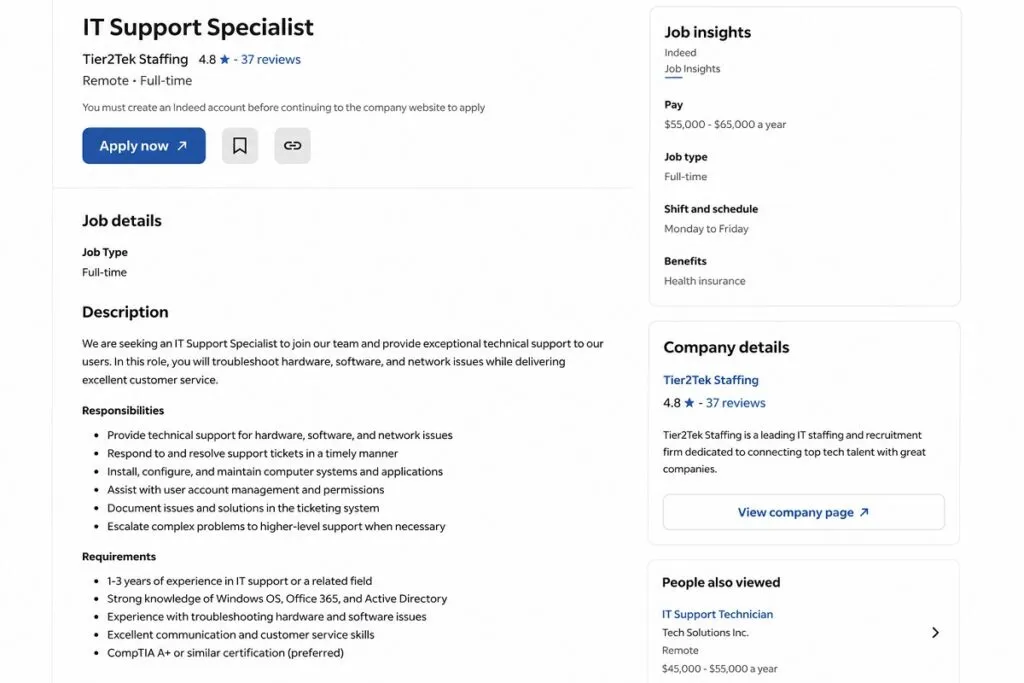
Many IT support recruitment challenges begin with unclear or overloaded job postings. Generic listings often attract unqualified applicants while discouraging strong candidates who may feel they do not meet every requirement.
Strong IT support job descriptions should focus on the actual responsibilities of the role rather than listing every possible technical skill.
Focus on Core Technical Skills
Instead of creating long lists of preferred qualifications, prioritize the essential competencies needed for success.
Examples include:
- Active Directory support
- Windows and macOS troubleshooting
- Ticketing systems experience
- Office 365 administration
- Remote desktop support
- Network connectivity troubleshooting
- Customer service communication
Separating required skills from preferred skills can significantly improve applicant quality.
Use Search-Friendly Keywords
SEO optimization for recruitment content helps job postings rank better on Google and job boards. Natural keyword usage improves visibility without sounding repetitive.
Relevant keywords include:
- IT support specialist
- Help desk technician
- Technical support analyst
- Desktop support engineer
- IT support recruitment
- IT staffing solutions
- Reduce time-to-fill
- IT hiring process
- Technical support hiring
- Service desk recruitment
Using these terms naturally throughout the posting helps attract candidates actively searching for IT support opportunities.
Build a Dedicated IT Talent Pipeline
Waiting until a position opens before sourcing candidates increases hiring time significantly. Organizations that maintain an active pipeline of IT support professionals can fill roles faster when vacancies appear.
Talent pipelines can include:
- Previous applicants
- Contract IT professionals
- Internship candidates
- Employee referrals
- Local technical college graduates
- Passive candidates from LinkedIn
Maintaining regular communication with potential hires keeps your organization visible and improves response rates when opportunities arise.
Create Candidate Pools by Skill Set
Segmenting candidates based on technical expertise makes future hiring more efficient.
Examples of segmented pools include:
- Help desk support
- Desktop support
- Level 1 IT support
- Level 2 technical support
- Remote support specialists
- Network support technicians
When an opening becomes available, recruiters can immediately contact pre-qualified candidates instead of starting from scratch.
Improve Collaboration Between HR and IT Departments

One major cause of delayed hiring is misalignment between HR teams and IT leadership. Recruiters may not fully understand technical requirements, while hiring managers may expect unrealistic candidate qualifications.
Regular collaboration improves hiring speed and candidate quality.
Establish Clear Hiring Criteria
Before posting a role, HR and IT managers should agree on:
- Required technical skills
- Certifications that matter
- Preferred years of experience
- Soft skill expectations
- Salary range
- Interview structure
This prevents confusion later in the process and reduces unnecessary candidate rejections.
Assign Faster Feedback Deadlines
Hiring managers often unintentionally slow recruitment by delaying interview evaluations. Establishing internal feedback deadlines keeps momentum moving.
Best practices include:
- Resume feedback within 24 to 48 hours
- Interview feedback on the same day
- Offer decisions within one business day
- Scheduled interview blocks each week
Faster decisions improve the candidate experience and reduce the risk of losing applicants to competitors.
Streamline the IT Support Interview Process
Lengthy interview cycles are one of the biggest contributors to extended time-to-fill metrics.
Many IT support positions do not require four or five interview rounds. Simplifying the process can dramatically reduce hiring timelines without sacrificing candidate quality.
Limit the Number of Interviews
For most technical support roles, an effective process may include:
- Recruiter screening
- Technical interview
- Final culture or team fit interview
Adding excessive interview rounds often results in candidate drop-off.
Use Practical Skill Assessments
Technical evaluations should reflect real job responsibilities rather than overly difficult theoretical questions.
Effective assessments may include:
- Troubleshooting ticket simulations
- Customer communication scenarios
- Remote support exercises
- Basic networking problem solving
- Operating system troubleshooting
These assessments provide better insight into actual performance while shortening decision-making time.
Leverage Employee Referral Programs
Employee referrals consistently produce faster hires and stronger retention rates for IT support positions.
Current IT employees often know qualified professionals with relevant technical experience. Encouraging referrals can reduce sourcing time and improve cultural alignment.
Successful referral programs typically include:
- Clear bonus incentives
- Fast referral review processes
- Regular promotion of open positions
- Transparent hiring updates
Referred candidates often move through the hiring pipeline more quickly because they already understand company expectations and workplace culture.
Expand Sourcing Channels

Relying only on major job boards can slow hiring efforts, especially in competitive technology markets.
Diversifying sourcing methods increases candidate flow and improves hiring speed.
Use Specialized IT Recruitment Platforms
Technology-focused hiring platforms often produce more qualified applicants than general job sites.
Recruiters should actively source candidates through:
- Dice
- GitHub
- Spiceworks Community
- Local IT networking groups
- Technical certification communities
Combining multiple sourcing channels creates a more consistent pipeline of technical support talent.
Work With IT Staffing Agencies and Recruitment Firms
Partnering with a direct hire staffing agency or IT recruitment firm can help companies fill IT support roles faster. Specialized recruiters like Tier2Tek Staffing often have access to pre-screened technical support candidates, reducing sourcing time and improving candidate quality.
Working with an IT staffing partner can help organizations:
- Reach qualified IT support professionals faster
- Reduce screening and sourcing workloads
- Fill urgent technical support openings
- Access passive candidates not active on job boards
- Improve overall hiring efficiency
Combining internal recruiting with staffing agency support creates a stronger pipeline of IT support talent.ips can create a more reliable pipeline of technical support talent while improving overall hiring efficiency.
Partner With Technical Schools and Training Programs
Entry-level IT support hiring can move much faster through relationships with educational institutions.
Potential partnerships include:
- Community colleges
- IT bootcamps
- CompTIA certification programs
- Workforce development initiatives
- University technology departments
Graduates from these programs are often eager to begin support careers and can quickly fill junior IT positions.
Improve Employer Branding for IT Recruitment
Top IT support candidates often receive multiple offers. Organizations with weak employer branding may struggle to attract applicants quickly.
Candidates want clear information about:
- Career growth opportunities
- Team culture
- Work flexibility
- Technical environment
- Training support
- Benefits and compensation
A strong employer brand shortens hiring timelines by increasing application rates and improving offer acceptance.
Highlight Career Advancement Opportunities
Many IT support professionals view help desk positions as stepping stones toward systems administration, cybersecurity, networking, or cloud roles.
Organizations that clearly outline advancement opportunities attract more motivated candidates.
Examples include:
- Internal promotion paths
- Certification reimbursement
- Cross-training opportunities
- Mentorship programs
- Exposure to new technologies
Showing long-term career value can improve recruitment outcomes significantly.
Use Recruitment Automation Strategically
Automation tools can help HR teams reduce manual tasks and speed up hiring decisions.
Recruitment technology can assist with:
- Resume screening
- Interview scheduling
- Candidate communication
- Skills testing
- Applicant tracking
- Offer management
Automating repetitive administrative work allows recruiters to focus more on candidate engagement and relationship building.
Implement Faster Scheduling Systems
Interview scheduling delays are common in IT recruitment. Self-service scheduling tools help candidates book interviews quickly without long email chains.
This can reduce scheduling delays from several days to a few hours.
Automated reminders also reduce no-show rates and improve interview attendance.
Reduce Offer Delays
Many organizations lose IT support candidates during the offer stage because approval processes take too long.
Once a strong candidate is identified, delays can quickly lead to competing offers.
To reduce offer-related hiring delays:
- Pre-approve salary ranges
- Standardize compensation packages
- Simplify approval workflows
- Prepare offer templates in advance
- Maintain regular candidate communication
Speed and transparency during this stage improve acceptance rates and reduce restarting the recruitment process.
Strengthen Candidate Communication

Poor communication damages the candidate experience and increases dropout rates during IT hiring.
Candidates often lose interest when recruiters disappear for several days between interviews.
Consistent communication should include:
- Status updates
- Timeline expectations
- Interview preparation details
- Quick responses to questions
- Transparent hiring steps
Even when decisions take longer than expected, proactive communication helps maintain candidate engagement.
Use Contract-to-Hire Strategies When Necessary
For urgent IT support staffing needs, contract-to-hire arrangements can reduce immediate operational pressure while allowing companies to evaluate candidates in real-world environments.
This approach can help organizations:
- Fill support gaps quickly
- Reduce hiring risk
- Evaluate technical performance
- Assess communication skills
- Improve long-term retention decisions
Contract staffing can be especially useful during periods of rapid growth or large technology rollouts.
Measure Recruitment Performance Regularly
Reducing time-to-fill requires ongoing analysis and optimization.
Organizations should regularly review recruitment performance indicators to identify trends and improvement opportunities.
Key metrics include:
- Average days-to-fill
- Candidate response rates
- Offer acceptance percentage
- Source effectiveness
- Interview completion rates
- Hiring manager satisfaction
Regular reporting helps HR leaders refine recruitment strategies and maintain consistent hiring efficiency for IT support roles.
Reducing time-to-fill for IT support roles requires a balanced approach that combines faster decision-making, targeted sourcing, streamlined interviews, and stronger collaboration between HR and IT teams. Organizations that optimize these areas can secure qualified technical support talent more efficiently while improving candidate experience and maintaining operational stability.