
IT support job titles explained clearly can help hiring managers and HR teams build stronger technical departments, improve recruitment accuracy, and create better career pathways for employees. The IT support field includes a wide range of positions, from entry level help desk roles to senior infrastructure specialists, and understanding how these titles differ is essential when hiring, promoting, or structuring a support team.
Different companies often use similar titles for different responsibilities, which can create confusion during hiring. A clear understanding of IT support job titles helps organizations align expectations, salary ranges, technical skills, and reporting structures more effectively.
Entry Level IT Support Job Titles

Entry level IT support positions focus on handling basic technical issues, assisting end users, and escalating more advanced problems when needed. These roles are often the first point of contact for employees or customers experiencing technical difficulties.
Help Desk Technician
A Help Desk Technician typically handles first line support tasks such as:
- Password resets
- Printer troubleshooting
- Software installation
- Basic connectivity issues
- Ticket documentation
- User account support
This role usually requires strong communication skills and basic knowledge of operating systems, business software, and ticketing systems.
IT Support Specialist
The IT Support Specialist title is commonly used for professionals who provide broader technical assistance across hardware, software, and network environments.
Responsibilities may include:
- Diagnosing workstation problems
- Supporting remote employees
- Managing user devices
- Assisting with Microsoft 365 administration
- Troubleshooting VPN connections
Many organizations use this title interchangeably with Help Desk Technician, although IT Support Specialist roles often involve slightly more technical responsibility.
Desktop Support Technician
Desktop Support Technicians focus heavily on endpoint devices and in person support. Their work often includes:
- Computer imaging and deployment
- Hardware replacement
- Peripheral configuration
- Office workstation setup
- Mobile device troubleshooting
Companies with large office environments frequently rely on desktop support teams to maintain employee productivity.
Mid Level IT Support Job Titles

Mid level IT support professionals typically handle more complex technical issues and may oversee infrastructure components or mentor junior technicians.
Technical Support Engineer
A Technical Support Engineer usually supports advanced software platforms, enterprise systems, or customer facing technologies.
Key responsibilities include:
- Escalated troubleshooting
- Log analysis
- Server diagnostics
- Application support
- Incident resolution
- Coordination with development teams
This title is common in SaaS companies, managed IT service providers, and enterprise software organizations.
Systems Support Analyst
Systems Support Analysts often bridge the gap between IT support and systems administration.
Their work may involve:
- Monitoring system performance
- Supporting internal applications
- Managing access permissions
- Assisting with server maintenance
- Supporting enterprise software integrations
This title is often associated with organizations that rely heavily on business applications and internal systems.
Network Support Technician
Network Support Technicians specialize in connectivity and communication infrastructure.
Typical duties include:
- Troubleshooting switches and routers
- Diagnosing Wi Fi issues
- Monitoring network performance
- Supporting VoIP systems
- Managing network hardware
Hiring managers often seek certifications such as CompTIA Network+ or Cisco CCNA for these roles.
Senior IT Support Job Titles

Senior IT support professionals typically manage escalated incidents, lead support teams, and contribute to infrastructure planning.
Senior IT Support Specialist
A Senior IT Support Specialist handles high priority technical issues while mentoring junior staff.
Responsibilities often include:
- Escalation management
- Advanced troubleshooting
- Vendor coordination
- Technical documentation
- Root cause analysis
- Process improvement
This role commonly serves as a leadership position within internal IT departments.
Infrastructure Support Engineer
Infrastructure Support Engineers focus on maintaining critical IT systems and operational stability.
Areas of responsibility may include:
- Server environments
- Virtualization platforms
- Storage systems
- Backup solutions
- Cloud infrastructure
- Disaster recovery support
Organizations with hybrid or enterprise environments frequently use this title for highly technical support personnel.
IT Operations Analyst
IT Operations Analysts monitor and support the day to day performance of IT environments.
Their duties may include:
- System monitoring
- Incident response
- Performance reporting
- Service availability management
- Maintenance coordination
This title is often connected to ITIL based service management environments.
Specialized IT Support Job Titles
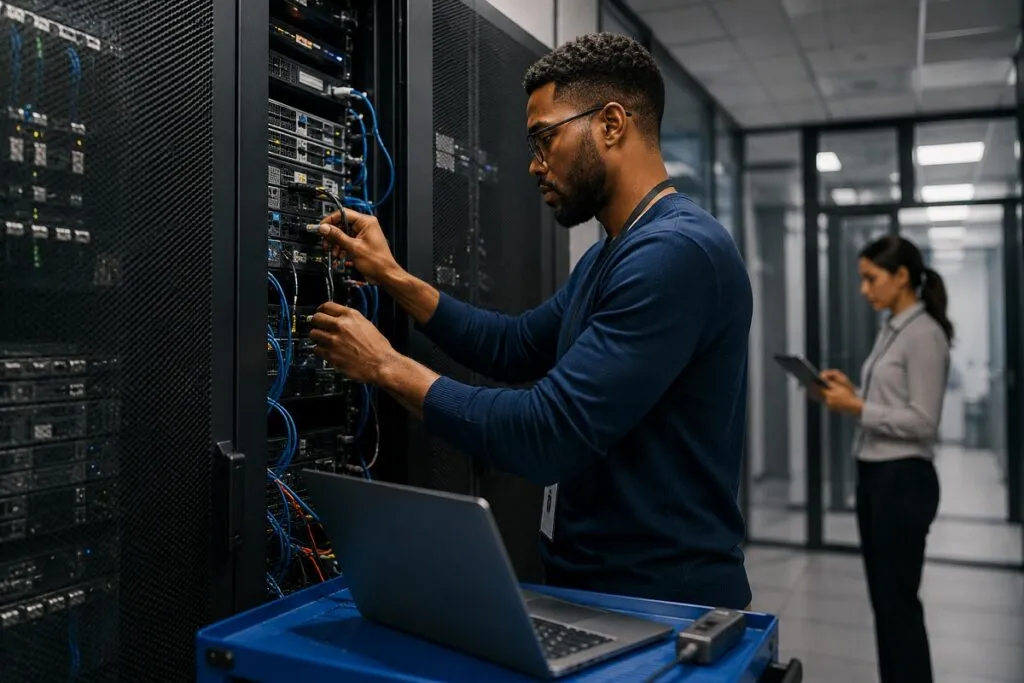
Many organizations require IT support professionals with expertise in specific technologies or environments.
Application Support Analyst
Application Support Analysts focus on maintaining software applications used by employees or customers.
Their work commonly involves:
- Troubleshooting software issues
- Supporting integrations
- Monitoring application performance
- Managing software updates
- Assisting users with functionality problems
This title is common in finance, healthcare, and enterprise software environments.
Cloud Support Engineer
Cloud Support Engineers support cloud infrastructure and cloud based services.
Core responsibilities often include:
- Managing cloud resources
- Troubleshooting cloud connectivity
- Supporting Azure or AWS environments
- Monitoring cloud performance
- Handling identity and access issues
As cloud adoption continues growing, this title has become increasingly common in IT support teams.
Security Support Specialist
Security focused support professionals assist with cybersecurity operations and incident response.
Tasks may include:
- Monitoring security alerts
- Supporting endpoint protection
- Assisting with access control
- Investigating suspicious activity
- Supporting compliance initiatives
This role often overlaps with IT support and security operations teams.
IT Support Management Titles

Management positions focus on team leadership, operational efficiency, staffing, and service delivery.
IT Support Manager
An IT Support Manager oversees support staff, ticket workflows, and service performance.
Responsibilities generally include:
- Team supervision
- KPI tracking
- Escalation oversight
- Staff scheduling
- Vendor management
- Budget coordination
Hiring managers often seek leadership experience alongside technical expertise for this position.
Help Desk Manager
Help Desk Managers focus specifically on frontline support operations.
Key priorities typically include:
- Ticket response times
- First contact resolution
- User satisfaction
- Technician performance
- Service desk processes
This role is critical in organizations with high ticket volumes and large employee bases.
Director of IT Support
The Director of IT Support is a senior leadership role responsible for overall support strategy and operational direction.
Responsibilities may include:
- Department planning
- Staffing strategy
- Technology budgeting
- Service improvement initiatives
- Executive reporting
- Cross departmental coordination
This title is more common in enterprise organizations with larger internal IT departments.
Common Differences Between IT Support Titles
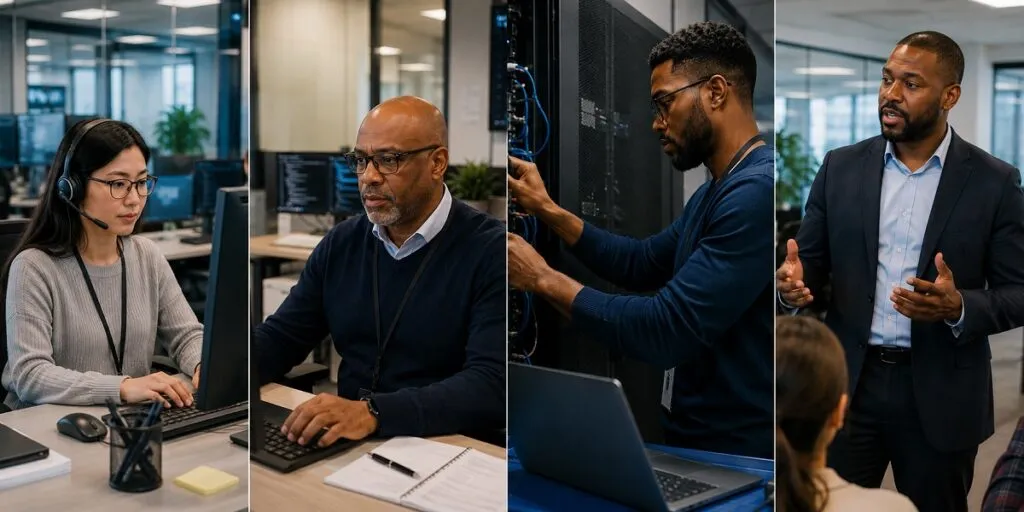
Many IT support job titles overlap, but certain distinctions are important during hiring and workforce planning.
Technical Depth
Some titles indicate broader technical expertise.
For example:
- Help Desk Technician usually focuses on basic support
- Technical Support Engineer often handles advanced systems
- Infrastructure Support Engineer works with enterprise infrastructure
Clear title definitions help reduce confusion during recruitment.
Internal vs Customer Facing Support
Some support roles focus on internal employees, while others support external customers.
Internal support titles often include:
- Desktop Support Technician
- IT Support Specialist
- Systems Support Analyst
Customer facing support titles may include:
- Technical Support Engineer
- Product Support Specialist
- Customer Support Engineer
Understanding this distinction helps align communication and service expectations.
Remote vs On Site Support
Modern IT support teams often include hybrid responsibilities.
On site focused roles commonly include:
- Desktop Support Technician
- Field Service Technician
Remote focused positions may include:
- Remote Support Specialist
- Cloud Support Engineer
- Application Support Analyst
Organizations should define workplace expectations clearly in job descriptions.
Choosing the Right IT Support Job Title

Selecting accurate IT support job titles improves recruiting outcomes and employee clarity.
Align Titles With Responsibilities
Job titles should reflect actual responsibilities rather than inflated naming conventions.
For example:
- Avoid using Engineer titles for purely entry level support roles
- Use Analyst titles when troubleshooting and reporting are core functions
- Reserve Manager titles for positions with leadership duties
Accurate titles help attract qualified candidates and reduce hiring mismatches.
Standardize Titles Across Departments
Large organizations often face inconsistencies when departments create their own job titles independently.
Standardization can improve:
- Compensation planning
- Career progression
- Internal mobility
- Workforce reporting
- Recruitment consistency
A structured IT support hierarchy also helps employees understand advancement opportunities.
Consider Industry Expectations
Some industries commonly favor certain naming conventions.
Examples include:
- SaaS companies frequently use Technical Support Engineer
- Healthcare organizations may use Systems Support Analyst
- MSPs often use Service Desk Technician
- Enterprise corporations commonly use Infrastructure Support Engineer
Using recognizable industry terminology can improve job posting visibility and candidate engagement.
IT Support Titles and Career Progression
IT support career paths often move from frontline support into specialized or leadership positions.
A common progression may look like:
- Help Desk Technician
- IT Support Specialist
- Desktop Support Technician
- Technical Support Engineer
- Senior IT Support Specialist
- IT Support Manager
Some professionals move into specialized paths such as cybersecurity, cloud administration, systems engineering, or network operations.
Clear career mapping helps HR teams improve retention and employee development planning.
Building Better IT Support Teams
Understanding IT support job titles explained in detail allows hiring managers and HR professionals to create more effective technical teams. Accurate titles improve hiring precision, establish clearer expectations, and help organizations structure support operations more efficiently.
Whether hiring for entry level service desk roles or senior infrastructure positions, properly defined IT support titles help organizations attract stronger candidates and build scalable IT support departments that align with operational needs.
Finding qualified IT professionals with the right technical skills and experience can also make a major difference in long term team performance. Tier2Tek Staffing helps companies connect with experienced IT support candidates across help desk, desktop support, systems support, infrastructure, and IT leadership roles to support hiring goals and workforce growth.