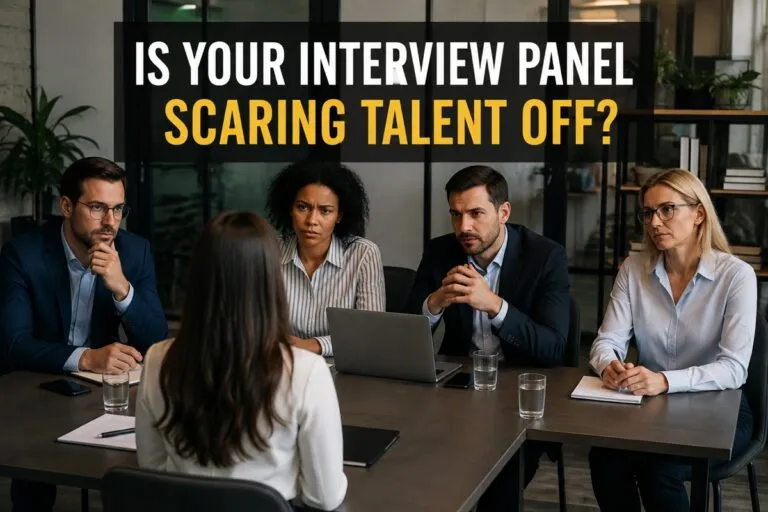
Your interview panel could be scaring talent off without anyone realizing it. Candidates often decide whether they want to work for your company based on the interview experience, not just the job description or salary. A panel interview that feels unorganized, intimidating, or overly aggressive can cause qualified professionals to withdraw from the hiring process or decline an offer.
For hiring managers and HR professionals, every interview is an opportunity to showcase your company culture while evaluating candidates. If your interview panel creates unnecessary stress or confusion, top talent may accept positions with competitors that provide a more positive hiring experience.
First Impressions Are Made Both Ways
Many employers focus on how candidates perform during interviews, but candidates are evaluating your organization just as closely.
The interview panel represents your company’s leadership, communication style, and workplace culture. A respectful, engaging discussion leaves candidates feeling excited about the opportunity. An uncomfortable interview often creates the opposite reaction.
Candidates commonly pay attention to:
- How panel members treat each other
- Whether interviewers appear prepared
- If questions are relevant to the position
- Whether everyone listens to responses
- How respectful the overall conversation feels
A positive interview experience builds confidence that your organization values employees. A negative one raises concerns about what working there might actually be like.
Large Interview Panels Can Feel Overwhelming
Having too many interviewers in one room can make even experienced professionals uncomfortable.
For technical roles like CAD designers, CAD drafters, help desk specialists, desktop support technicians, and IT support professionals, technical knowledge should be the focus. Instead, some candidates spend the interview trying to manage anxiety caused by facing six or seven interviewers at once.
Large panels can create problems such as:
- Candidates becoming nervous and struggling to communicate clearly
- Multiple interviewers asking overlapping questions
- Little opportunity for meaningful conversation
- The interview feeling more like an interrogation than a discussion
A smaller panel often creates a more productive conversation while still allowing key stakeholders to participate.
Mixed Messages Create Candidate Frustration
One of the biggest interview mistakes occurs when panel members are not aligned before meeting the candidate.
If one interviewer asks detailed technical questions while another focuses on unrelated topics, candidates may become confused about what the company actually values.
Common examples include:
- One interviewer emphasizes technical expertise while another only discusses personality.
- Different interviewers describe conflicting job responsibilities.
- Salary expectations vary depending on who is speaking.
- Team members provide inconsistent information about schedules or career growth.
Candidates notice these inconsistencies immediately. They may assume internal communication problems exist throughout the organization.
Aggressive Interview Styles Can Push Away Great Talent
Some organizations still believe pressure creates better interviews.
While challenging technical questions are appropriate, intentionally creating stress rarely helps identify the best employee.
Interview behaviors that often discourage candidates include:
- Interrupting answers repeatedly
- Rapid fire questioning
- Challenging every response unnecessarily
- Long periods of silence meant to create discomfort
- Interviewers arguing with one another during the meeting
Highly qualified professionals often have multiple employment options. If another employer provides a respectful interview process, they are more likely to accept that opportunity instead.
Every Panel Member Should Have a Purpose
An effective interview panel is carefully planned.
Every participant should evaluate a specific area rather than asking random questions that repeat what others have already covered.
For example:
Hiring Manager
Focus on experience, responsibilities, and team fit.
Technical Lead
Evaluate technical skills, troubleshooting ability, software knowledge, or CAD proficiency relevant to the position.
HR Representative
Discuss company culture, benefits, hiring process, and employment expectations.
When everyone understands their role, interviews become more organized and candidates receive a better overall experience.
Watch for Nonverbal Signals
Candidates notice body language just as much as spoken words.
If panel members appear distracted or uninterested, candidates often assume the company lacks professionalism.
Common behaviors to avoid include:
- Looking at phones or laptops
- Whispering to another interviewer
- Checking emails during responses
- Avoiding eye contact
- Appearing bored or impatient
Even if these actions are unintentional, they send a message that the candidate is not important.
Positive body language helps candidates feel respected while allowing them to perform at their best.
Give Candidates Time to Answer
Many technical professionals prefer to think before responding.
This is especially true when discussing troubleshooting scenarios, CAD workflows, software issues, or complex problem solving.
Panel members should avoid jumping in with another question before the candidate has finished.
Allowing a few moments for thoughtful responses often produces much better insights into how someone actually approaches problems.
Keep Technical Questions Relevant
Candidates appreciate interviews that directly relate to the position.
For CAD staffing and IT support hiring, technical questions should reflect real workplace situations rather than obscure trivia.
Relevant interview topics may include:
- Troubleshooting methodology
- Software proficiency
- Project collaboration
- Customer service situations
- Documentation practices
- Time management
- Problem solving under deadlines
When questions mirror actual job responsibilities, candidates are more likely to demonstrate their abilities accurately.
Avoid Turning Interviews Into Cross Examinations
Panel interviews should feel like professional conversations.
When multiple interviewers ask questions back to back without any discussion, candidates often feel as though they are defending themselves rather than interviewing for a position.
Instead, encourage natural conversation by:
- Asking follow up questions when appropriate
- Allowing candidates to ask questions throughout the interview
- Building on previous responses
- Maintaining a conversational pace
This approach creates a more authentic picture of how candidates communicate in real work situations.
Remember That Top Candidates Have Choices
Highly skilled CAD professionals and IT support specialists are frequently interviewing with multiple employers.
A poor interview experience may cause candidates to remove themselves from consideration before receiving an offer.
Warning signs include:
- Delayed responses after interviews
- Declining second interviews
- Withdrawing applications
- Accepting another offer quickly
While compensation certainly matters, the hiring experience often influences the final decision.
Companies that respect candidates’ time and create positive interview experiences frequently improve both offer acceptance rates and employer reputation.
Gather Feedback About Your Interview Process
Many organizations collect feedback from hiring managers but never ask candidates about their interview experience.
Anonymous candidate feedback can reveal valuable insights such as:
- Interviews running too long
- Repetitive questioning
- Confusing scheduling
- Poor communication between interview stages
- Unprofessional interviewer behavior
Making small improvements based on feedback can significantly strengthen your recruiting process over time.
How Staffing Partners Can Improve the Interview Experience
Working with an experienced staffing partner can help employers identify interview issues before they affect hiring success.
Recruiters regularly receive honest candidate feedback that applicants may never share directly with employers.
This feedback can help organizations:
- Improve interview structure
- Prepare panel members before interviews
- Set realistic candidate expectations
- Reduce unnecessary interview rounds
- Increase offer acceptance rates
- Strengthen employer branding
For companies hiring CAD professionals or IT support specialists, refining the interview process often results in faster hiring and stronger long term employee retention.
Tier2Tek works closely with employers to identify qualified candidates for direct hire CAD and IT support positions while helping create hiring processes that attract, rather than discourage, top talent. Learn more at https://tier2tek.com/.
The interview panel should leave candidates feeling challenged, respected, and excited about the opportunity. When interviews are organized, professional, and focused on meaningful conversations, employers are far more likely to attract skilled professionals who are eager to join the team. Small improvements to your interview process today can make a significant difference in hiring success tomorrow.