

Writing better job ads starts with understanding how candidates search for jobs, what information helps them make decisions, and what convinces them to apply. Hiring managers and HR teams that improve their job postings often see stronger applicant quality, faster hiring times, and better candidate engagement.
A job ad is not just a list of duties. It is a recruiting tool that shapes how potential employees view your company, your culture, and the opportunity itself. Well written job ads also improve visibility in search engines and job boards, helping employers reach more qualified applicants organically.
Use Clear and Search Friendly Job Titles
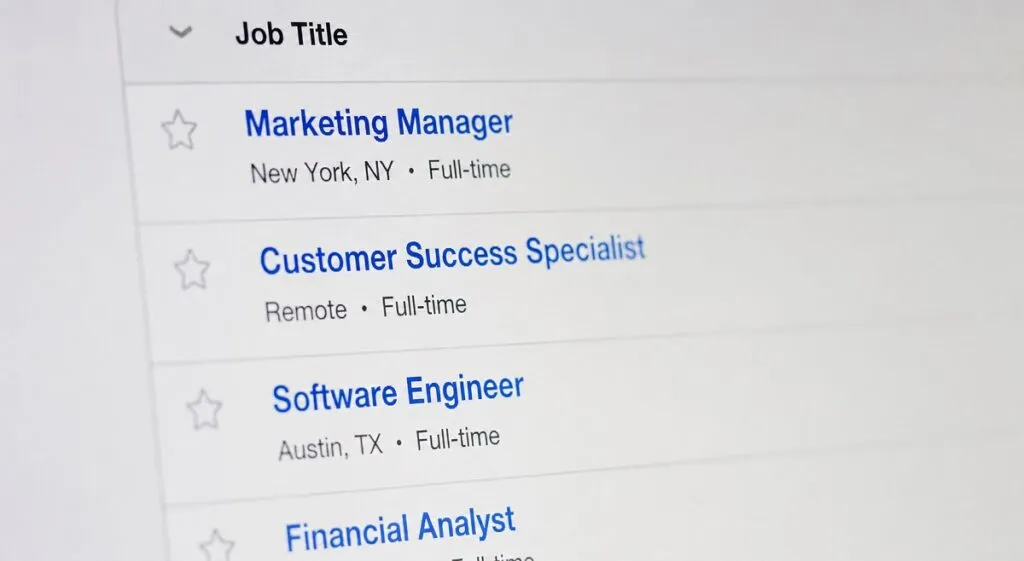
The job title is one of the most important parts of a job advertisement. Candidates typically search using standard industry terms, so clarity should always come before creativity.
Avoid vague or overly branded titles such as:
- Marketing Rockstar
- Sales Ninja
- Coding Wizard
- Customer Happiness Hero
Instead, use recognizable job titles that align with search behavior and industry standards.
Examples of better job titles include:
- Digital Marketing Manager
- Senior Software Engineer
- Customer Support Specialist
- Human Resources Coordinator
Using searchable job titles improves SEO for job postings and increases visibility on Google Jobs, LinkedIn, and major job boards.
Include Important Keywords Naturally
Candidates search with specific phrases related to:
- Job titles
- Skills
- Certifications
- Industries
- Work arrangements
- Seniority levels
Include keywords naturally throughout the job ad without stuffing them unnaturally into sentences.
Examples of valuable hiring keywords include:
- remote jobs
- hybrid work
- project management
- customer service experience
- B2B sales
- data analysis
- leadership skills
- employee benefits
- career growth opportunities
These keywords help improve search rankings while keeping the content readable.
Start With a Strong Introduction
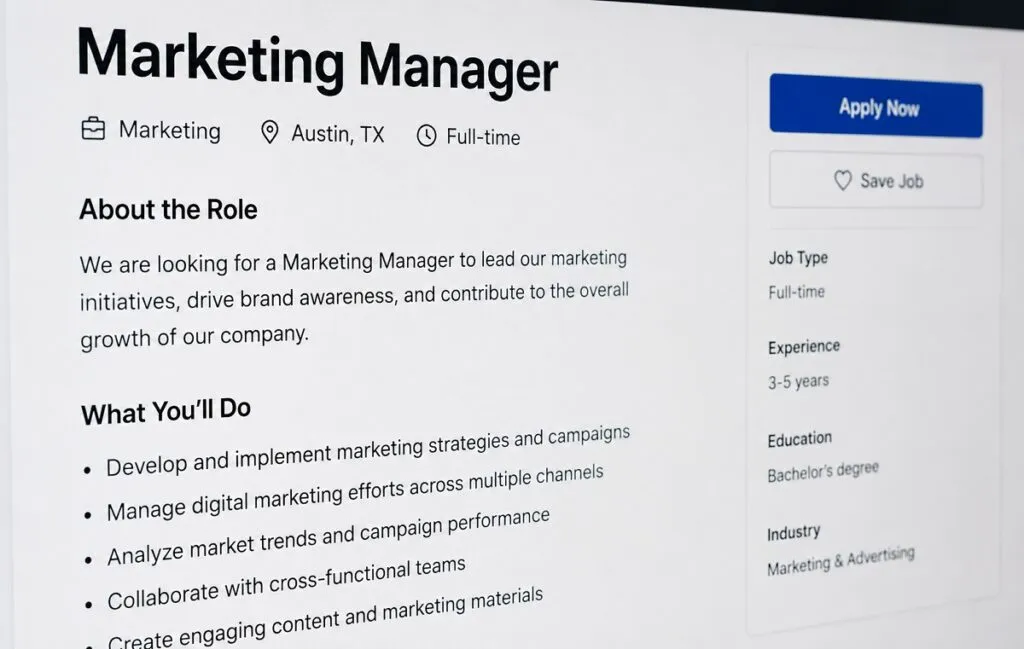
The opening paragraph should immediately describe the role and what makes the opportunity appealing.
Candidates often skim job ads quickly before deciding whether to continue reading. The introduction should provide enough information to capture attention without overwhelming the reader.
Example of an Effective Introduction Structure
A strong introduction usually includes:
- The role
- The department or team
- The work environment
- A brief highlight of the opportunity
Keep the tone professional, direct, and informative.
Focus on Responsibilities That Matter
Long blocks of repetitive responsibilities can reduce candidate interest. Instead of listing every possible task, focus on the responsibilities that truly define the role.
Use bullet points to improve readability.
Effective Responsibility Lists
Good responsibility sections are:
- Specific
- Easy to scan
- Relevant to daily work
- Prioritized by importance
Example:
- Manage digital marketing campaigns across multiple channels
- Collaborate with sales and design teams on campaign strategy
- Analyze campaign performance using reporting tools
- Develop content calendars and promotional plans
- Optimize paid advertising performance and ROI
Avoid generic phrases like:
- Other duties as assigned
- Must wear many hats
- Fast paced environment
These phrases provide little value and can discourage qualified applicants.
Be Specific About Required Skills
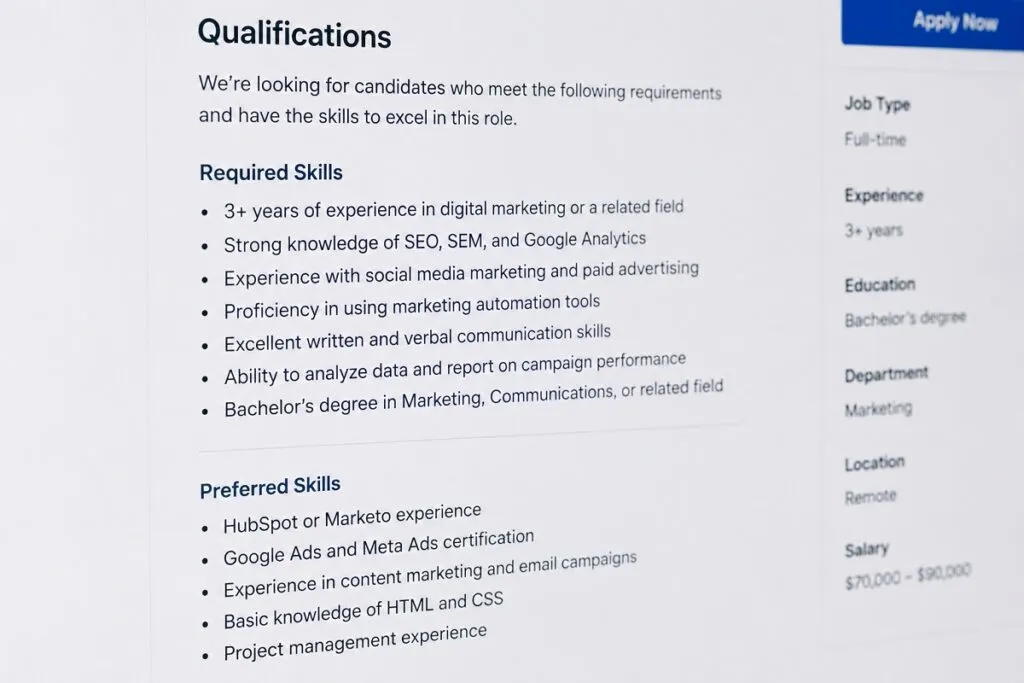
One common mistake in job ads is creating unrealistic requirement lists. Excessive requirements can reduce applications from qualified candidates, especially women and underrepresented groups who may hesitate to apply unless they meet every qualification.
Separate required qualifications from preferred qualifications.
Include Relevant Hard and Soft Skills
Examples of hard skills:
- CRM software experience
- SQL knowledge
- Payroll processing
- Graphic design
- Financial reporting
Examples of soft skills:
- Communication
- Leadership
- Problem solving
- Time management
- Collaboration
Keep qualification lists concise and relevant to actual job performance.
Salary Transparency Improves Applicant Quality
Job seekers increasingly expect salary information in job postings. Transparent compensation details can improve trust and reduce unqualified applications.
Including salary ranges also helps:
- Increase application completion rates
- Improve candidate satisfaction
- Reduce negotiation issues later
- Save recruiter and hiring manager time
When possible, include:
- Salary range
- Bonus opportunities
- Commission structures
- Equity options
- Benefits highlights
Mention Benefits Clearly
Candidates often compare total compensation packages, not just salary.
Highlight valuable benefits such as:
- Health insurance
- Retirement plans
- Paid time off
- Flexible scheduling
- Remote work options
- Professional development support
- Wellness programs
- Tuition reimbursement
Keep the information concise but meaningful.
Keep Job Ads Easy to Read
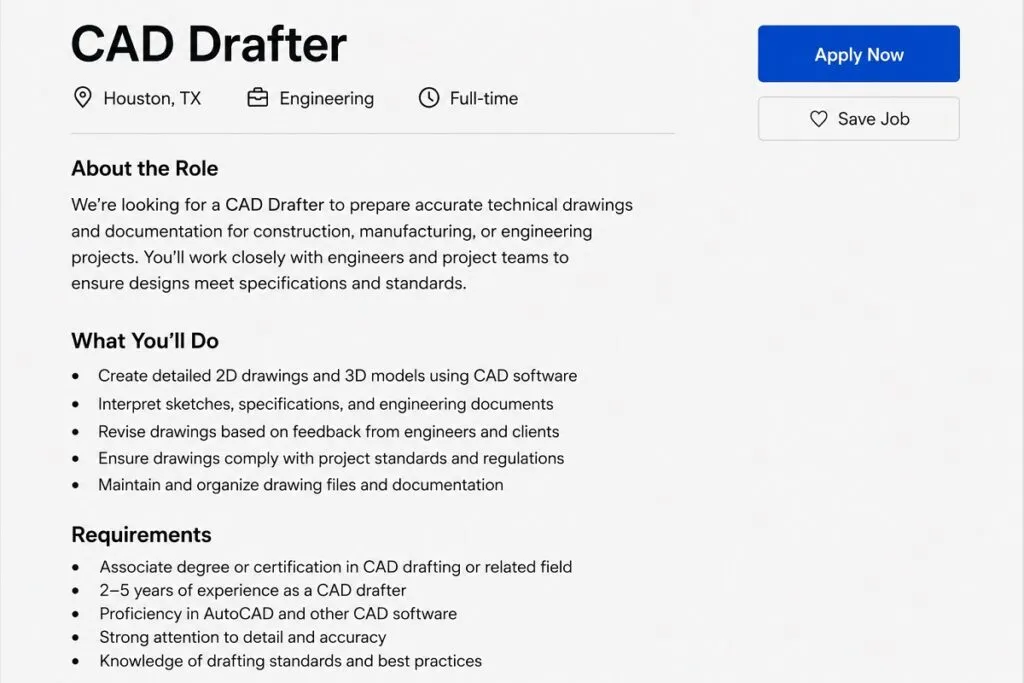
Formatting plays a major role in job ad performance. Large text blocks can discourage applicants, especially on mobile devices.
Use Short Paragraphs and Clear Sections
Organize the content using:
- H2 headings
- H3 subheadings
- Bullet points
- Short paragraphs
- White space
This improves readability and encourages candidates to continue reading.
Avoid Corporate Jargon
Overly formal or complicated language can make job ads feel impersonal.
Replace phrases like:
- Synergize cross functional deliverables
With simpler alternatives:
- Collaborate with multiple departments
Clear language helps candidates understand the role quickly.
Highlight Workplace Culture Authentically
Candidates want insight into the work environment before applying. Instead of generic statements, provide concrete details about company culture.
Weak culture statements:
- We are like a family
- We work hard and play hard
Stronger culture descriptions:
- Weekly team collaboration meetings
- Flexible remote work schedules
- Mentorship opportunities for new hires
- Employee recognition programs
- Cross department training initiatives
Specific details feel more credible and informative.
Optimize Job Ads for Mobile Users
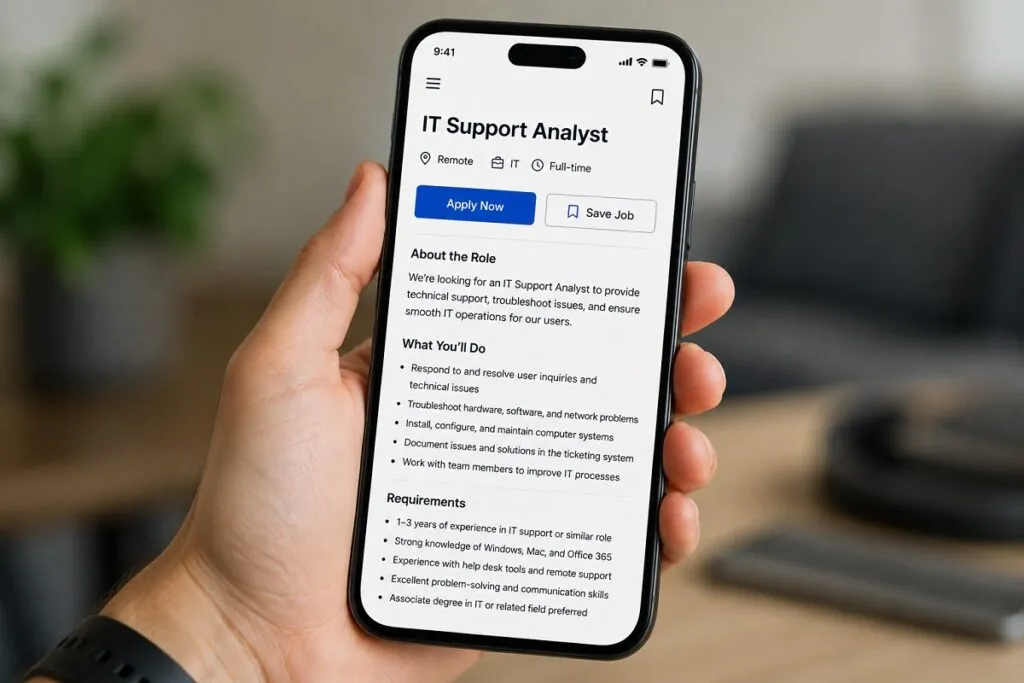
A large percentage of job seekers browse opportunities on mobile devices. Poor mobile formatting can reduce application rates significantly.
Mobile Friendly Job Ads Should Include
- Short sections
- Simple formatting
- Concise paragraphs
- Easy to scan bullet points
- Clear application instructions
Avoid:
- Excessive capitalization
- Long dense paragraphs
- Overly complicated formatting
- Huge lists of qualifications
The easier the experience, the more likely candidates will complete the application.
Use Inclusive Language
Inclusive job ads help attract a broader and more diverse talent pool.
Certain words and phrases may unintentionally discourage candidates from applying.
Replace Exclusionary Language
Instead of:
- Aggressive salesperson
- Digital native
- Young and energetic
Use:
- Results driven professional
- Comfortable with technology
- Motivated team member
Inclusive language creates a more welcoming candidate experience and supports diversity hiring goals.
Include a Clear Application Process

Candidates appreciate transparency around the hiring process.
Briefly explain:
- How to apply
- What materials are needed
- Expected hiring timeline
- Interview stages if applicable
Example:
- Submit your resume and cover letter through our online application portal
- Selected candidates will be contacted within two weeks
- The interview process includes an initial screening and two team interviews
This reduces uncertainty and improves candidate trust.
Avoid Overloading the Job Ad
Trying to include every possible detail often weakens the overall message.
Common mistakes include:
- Excessive company history
- Too many buzzwords
- Endless requirements
- Duplicate responsibilities
- Long mission statements
Focus on the information candidates need most to decide whether the role fits their goals and experience.
Improve SEO for Job Postings
Search engine optimization helps job ads rank better in search results and attract organic traffic.
SEO Best Practices for Job Ads
Use keywords naturally in:
- Job titles
- Headings
- Introduction paragraphs
- Skills sections
- Responsibilities
Include location information clearly, especially for local hiring.
Examples:
- Remote Digital Marketing Manager
- Denver Customer Service Representative
- Hybrid HR Coordinator in Chicago
Also make sure job ads contain:
- Clear job titles
- Structured formatting
- Relevant keywords
- Readable content
- Mobile friendly layouts
These elements support visibility on Google for Jobs and job search platforms.
Update Job Ads Regularly
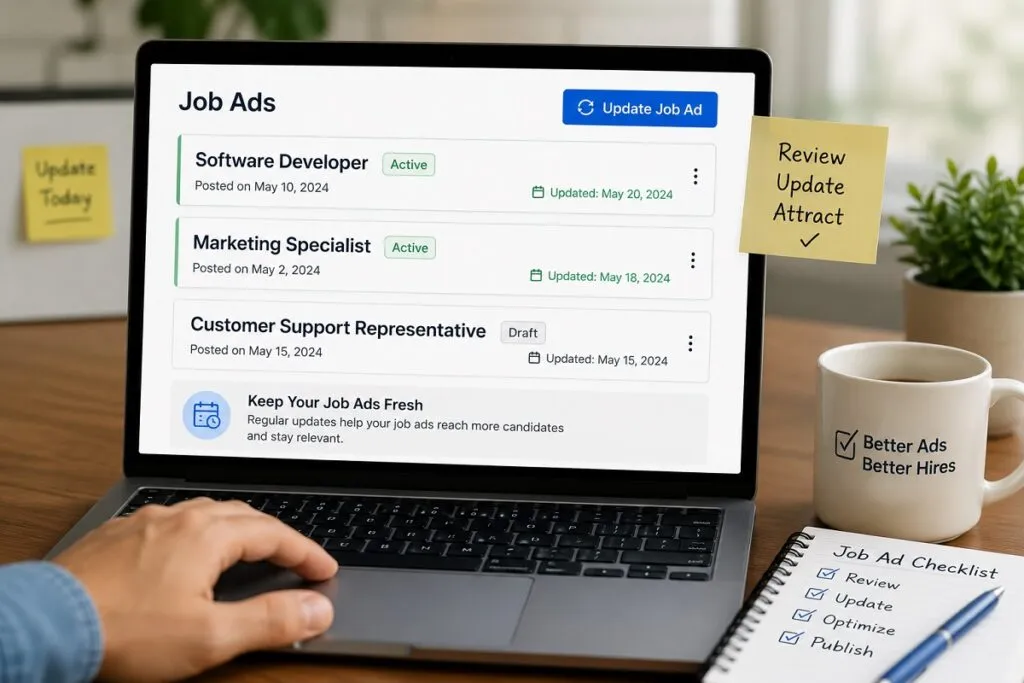
Outdated job ads can damage employer branding and reduce candidate trust.
Review postings regularly to ensure:
- Salary ranges remain competitive
- Responsibilities are accurate
- Benefits are current
- Skills reflect current industry needs
- Hiring information is up to date
Refreshing older job ads can also improve search rankings and visibility.
Strong Job Ads Create Better Hiring Results
Hiring managers and HR professionals who write better job ads often attract stronger candidates while reducing time spent screening unqualified applicants. Clear structure, readable formatting, accurate expectations, and search optimized language all contribute to more effective recruitment.
Well written job ads help candidates quickly understand the opportunity, evaluate whether they are a fit, and feel confident applying. By focusing on clarity, relevance, transparency, and user friendly formatting, companies can improve both candidate experience and hiring outcomes.
Content reviewed and published by Tier2Tek Staffing Editorial Team.