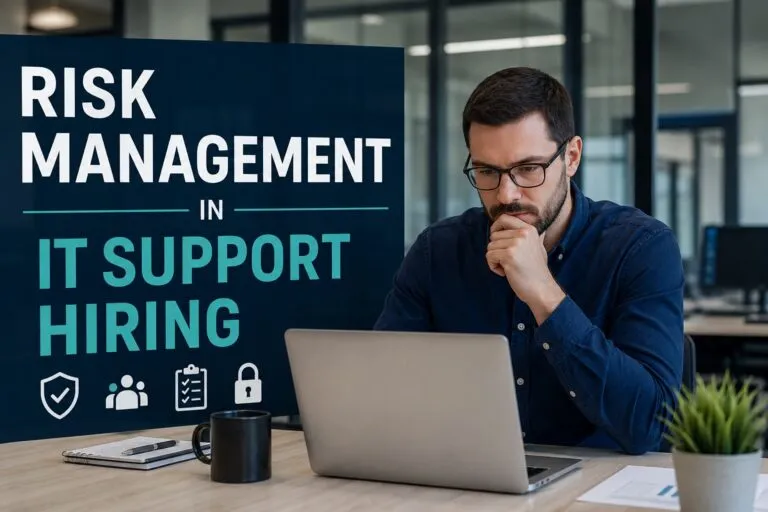
Risk management in IT support hiring plays a direct role in protecting business operations, customer data, internal systems, and overall service continuity. Hiring managers and HR teams responsible for technical recruitment must evaluate more than technical ability when filling IT support roles. A poor hiring decision in IT support can create security vulnerabilities, compliance issues, operational downtime, and expensive turnover costs.
Organizations rely heavily on IT support professionals to maintain systems, troubleshoot technical problems, manage user access, and support critical infrastructure. Because these employees often have direct access to sensitive systems and company information, the hiring process requires careful planning and structured risk mitigation strategies.
Identifying Hiring Risks in IT Support Recruitment

Hiring risks in IT support recruitment can affect both daily operations and long-term business stability. Recognizing these risks early helps organizations build a more secure and reliable hiring process.
Technical Skill Gaps
One of the most common risks involves hiring candidates whose technical skills do not match the job requirements. Resumes and certifications may appear impressive, but they do not always reflect practical troubleshooting ability.
Technical gaps can lead to:
- Increased system downtime
- Delayed issue resolution
- Poor user satisfaction
- Escalation overload for senior IT staff
- Reduced productivity across departments
Structured technical assessments help reduce this risk by testing real-world support scenarios instead of relying only on interviews.
Security and Access Risks
IT support employees often manage passwords, user permissions, remote access tools, and internal systems. Hiring someone without proper vetting can expose the organization to cybersecurity threats.
Potential security risks include:
- Unauthorized access to company data
- Mishandling confidential information
- Weak adherence to security protocols
- Insider threats
- Poor incident reporting practices
Background screening and security-focused interview questions help organizations identify candidates who understand cybersecurity responsibilities.
High Employee Turnover
IT support roles frequently experience high turnover due to stress, burnout, and limited career advancement opportunities. Frequent hiring cycles increase recruitment costs and create service disruptions.
Turnover-related risks include:
- Loss of institutional knowledge
- Reduced team morale
- Longer ticket resolution times
- Increased onboarding expenses
- Delayed IT projects
Hiring managers can lower turnover risk by evaluating long-term fit, workload expectations, and communication style during the recruitment process.
Building a Risk-Based IT Support Hiring Strategy

A risk-based hiring strategy focuses on preventing operational issues before they occur. This approach combines technical evaluation, behavioral screening, and structured hiring workflows.
Define Role-Specific Risk Exposure
Not all IT support positions carry the same level of risk. A Tier 1 help desk technician may require limited system access, while a systems support specialist may have administrative privileges across multiple platforms.
Hiring managers should assess:
- Level of system access
- Data sensitivity exposure
- Remote access responsibilities
- Compliance requirements
- Customer-facing responsibilities
Clearly defining these factors helps HR teams prioritize the right screening measures for each role.
Standardize the Hiring Process
Inconsistent hiring practices create unnecessary risk. A standardized process improves hiring accuracy and reduces bias.
A structured IT support hiring process should include:
- Technical skills evaluation
- Behavioral interviews
- Security awareness assessment
- Reference verification
- Background screening
- Role-specific scenario testing
Consistency allows hiring teams to compare candidates fairly while maintaining compliance standards.
Technical Assessments That Reduce Hiring Risk

Technical testing remains one of the most effective ways to evaluate IT support candidates accurately.
Use Realistic Troubleshooting Scenarios
Practical assessments reveal how candidates think under pressure and resolve technical issues.
Examples include:
- Diagnosing network connectivity problems
- Resolving email synchronization issues
- Managing Active Directory permissions
- Handling malware-related incidents
- Supporting remote desktop environments
These exercises provide better insight than theoretical questions alone.
Evaluate Documentation Skills
Poor documentation creates operational risk within IT support environments. Candidates should demonstrate the ability to write clear ticket notes, escalation summaries, and troubleshooting documentation.
Strong documentation skills support:
- Faster issue resolution
- Improved knowledge sharing
- Better compliance tracking
- Reduced repeat incidents
Testing written communication during the interview process helps identify candidates who can maintain accurate records.
Test Communication Under Pressure
IT support professionals interact with frustrated users, executives, and external vendors. Poor communication increases service dissatisfaction and operational confusion.
Behavioral interview questions should evaluate how candidates:
- Handle difficult users
- Explain technical issues clearly
- Prioritize urgent requests
- Manage multiple incidents simultaneously
- Escalate issues appropriately
Communication failures can become major operational risks even when technical skills are strong.
Compliance and Security Considerations in IT Support Hiring
Many organizations operate under strict compliance frameworks that directly affect hiring practices for IT personnel.
Industry Compliance Requirements
Certain industries require additional vetting for IT support employees due to data handling responsibilities.
Examples include:
- HIPAA compliance in healthcare
- PCI DSS compliance in payment processing
- SOC 2 requirements for SaaS companies
- GDPR considerations for international organizations
Hiring managers should align recruitment procedures with compliance obligations to avoid regulatory penalties.
Background Checks and Verification
Background screening reduces the likelihood of hiring individuals who may pose operational or security risks.
Verification processes may include:
- Employment history checks
- Criminal background screening
- Education verification
- Certification validation
- Identity confirmation
The level of screening should match the role’s system access and organizational impact.
Privileged Access Management
Hiring decisions should consider how quickly employees receive administrative privileges after onboarding.
Risk reduction strategies include:
- Role-based access controls
- Gradual privilege escalation
- Temporary restricted access periods
- Multi-factor authentication enforcement
- Access logging and monitoring
These measures reduce exposure during the onboarding phase.
Reducing Operational Risk Through Better Candidate Evaluation

Strong candidate evaluation helps organizations avoid costly hiring mistakes.
Assess Problem-Solving Ability
IT support work involves constant troubleshooting. Candidates should demonstrate logical thinking and adaptability.
Effective interview questions may focus on:
- Diagnosing unfamiliar technical issues
- Managing competing priorities
- Responding to system outages
- Escalating incidents correctly
- Supporting non-technical employees
Problem-solving ability often predicts long-term performance more accurately than certifications alone.
Evaluate Team Compatibility
Poor team fit can disrupt collaboration and reduce productivity across the IT department.
Hiring managers should assess:
- Collaboration style
- Adaptability
- Accountability
- Conflict management
- Willingness to follow procedures
Technical teams perform more effectively when communication and workflow expectations align.
Verify Remote Support Capabilities
Many organizations now operate hybrid or fully remote support environments. Remote IT support introduces additional hiring risks related to accountability, responsiveness, and communication.
Candidates should demonstrate experience with:
- Remote troubleshooting tools
- Ticketing systems
- VPN support
- Virtual collaboration platforms
- Time management in remote environments
Evaluating remote support readiness helps prevent service gaps.
Onboarding as Part of Hiring Risk Management

Hiring risk management does not end once a candidate accepts the offer. The onboarding process directly affects operational stability and security.
Structured IT Onboarding Procedures
Poor onboarding increases the likelihood of configuration errors, policy violations, and support inconsistencies.
Effective onboarding should include:
- Security training
- Access control procedures
- Documentation standards
- Escalation workflows
- Compliance requirements
- Internal system training
A structured onboarding plan improves performance while reducing preventable mistakes.
Access Monitoring During Early Employment
New hires should be monitored closely during the initial onboarding phase.
Monitoring may include:
- Ticket quality reviews
- Access activity auditing
- Supervisor oversight
- Incident escalation tracking
- Compliance adherence checks
Early monitoring helps organizations identify concerns before they become larger operational problems.
Common Hiring Mistakes That Increase IT Support Risk
Several recruitment mistakes consistently increase organizational risk in IT support hiring.
Prioritizing Certifications Over Practical Ability
Certifications alone do not guarantee strong troubleshooting performance. Some candidates test well but struggle in real support environments.
Practical assessments should always complement certification reviews.
Rushing the Hiring Process
Urgent staffing shortages sometimes pressure organizations into making fast hiring decisions. Accelerated hiring without proper screening increases the chance of poor fit and security concerns.
A delayed hire is often less costly than a bad hire.
Ignoring Soft Skills
Technical support roles require patience, communication, and professionalism. Candidates with strong technical knowledge but poor interpersonal skills may create user dissatisfaction and internal friction.
Balanced evaluation methods reduce this risk.
Failing to Involve IT Leadership
HR teams should collaborate closely with IT leadership during recruitment. Technical managers provide valuable insight into role requirements, operational risks, and system access considerations.
Joint decision-making improves hiring quality and reduces misalignment.
Metrics That Help Measure Hiring Risk
Tracking recruitment metrics helps organizations improve IT support hiring outcomes over time.
Useful metrics include:
- First-year turnover rate
- Average onboarding completion time
- Ticket resolution performance
- Security incident involvement
- Time-to-productivity
- User satisfaction scores
- Escalation frequency
Data-driven hiring analysis allows HR and IT leaders to refine recruitment strategies continuously.
Vendor and Outsourced IT Support Hiring Risks
Organizations using managed service providers or outsourced IT support teams must also manage external hiring risks.
Key considerations include:
- Vendor background screening policies
- Security certifications
- Data handling agreements
- Access control procedures
- Incident response standards
- Service level agreement compliance
Third-party support personnel can create the same operational risks as internal employees if proper oversight is lacking.
Risk management in IT support hiring requires a combination of technical evaluation, security awareness, compliance alignment, and structured recruitment practices. Hiring managers and HR professionals who focus on practical assessments, standardized hiring workflows, and operational risk reduction can build stronger support teams while protecting business systems and data. Careful hiring decisions improve service reliability, reduce turnover, strengthen cybersecurity posture, and support long-term operational stability.