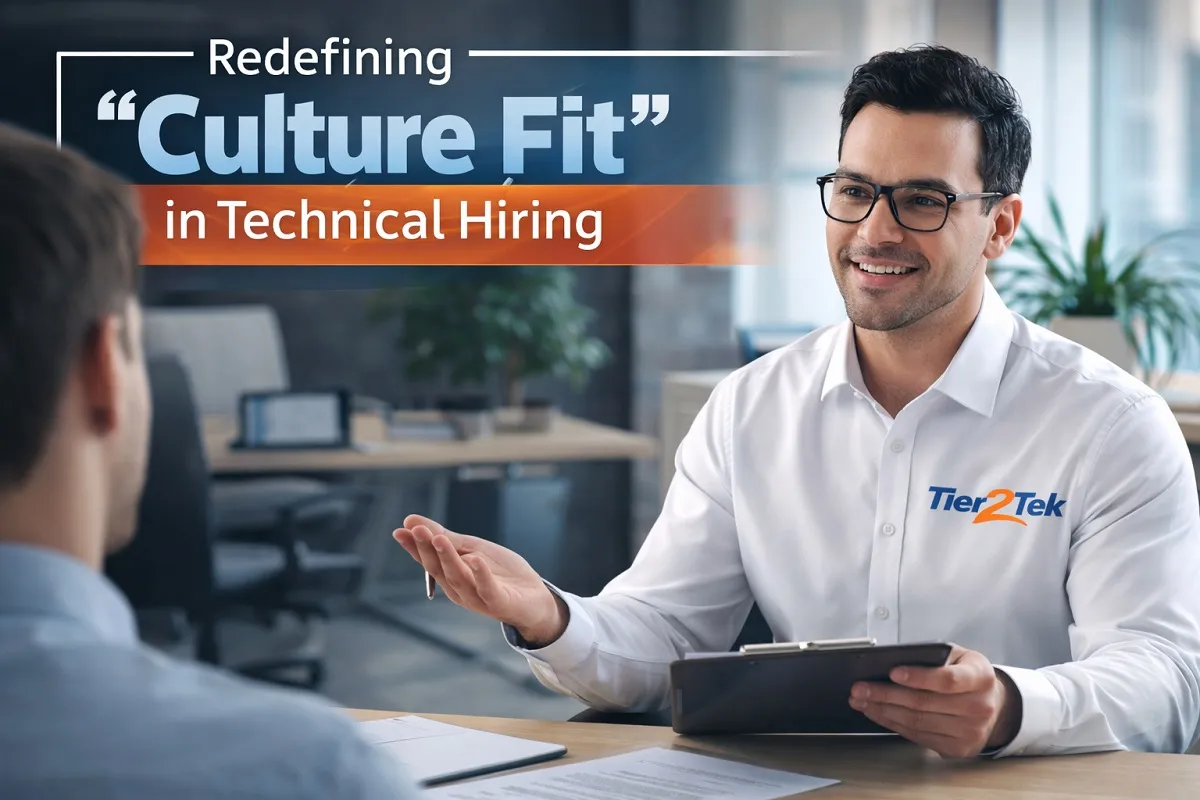
Redefining “culture fit” is becoming essential in modern hiring, especially for organizations recruiting CAD professionals and IT support talent. Hiring managers are under pressure to fill roles quickly while improving retention and performance, yet traditional ideas of culture fit often lead to mismatches, slow hiring cycles, and missed top candidates.
In real hiring scenarios, culture fit is often used as a subjective filter. This creates inconsistency in candidate evaluation and can eliminate highly qualified professionals who would succeed in the role. For technical hiring, where skills and adaptability directly impact productivity, redefining culture fit is critical to improving quality of hire.
Why “Culture Fit” Is Failing Hiring Managers
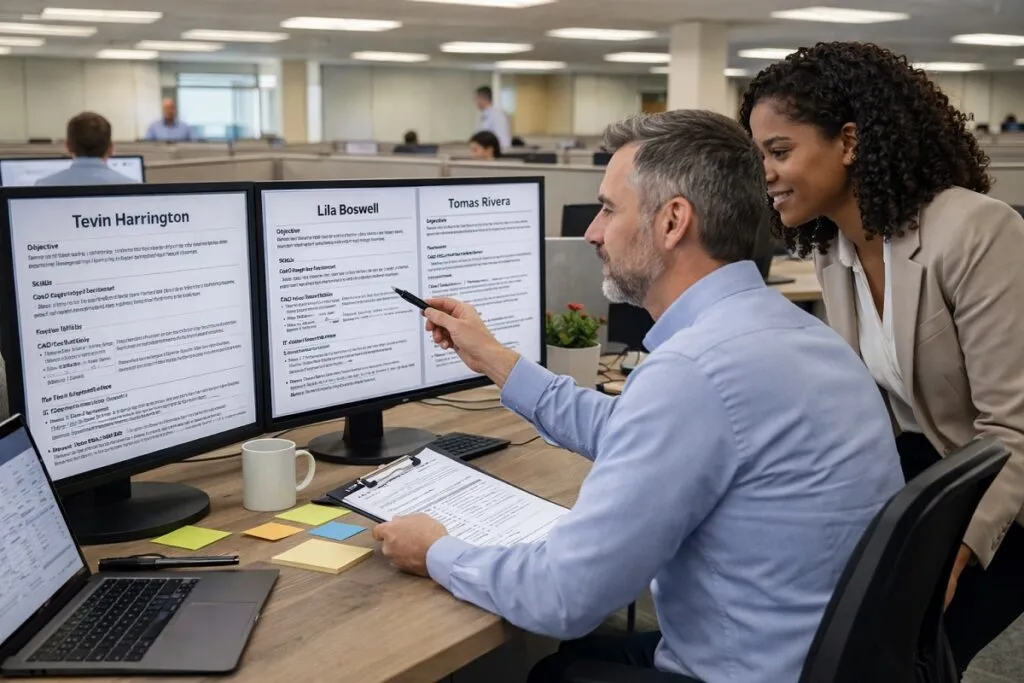
Many hiring teams rely on culture fit as a final decision factor. The problem is that it is rarely defined clearly or measured consistently.
In CAD and IT support hiring, this leads to:
- Strong candidates being rejected for vague reasons
- Interview bias influencing decisions
- Longer time-to-fill due to indecision
- Poor retention when “fit” was misjudged
For example, a CAD designer may be rejected for not being “collaborative enough” during interviews, even though their portfolio demonstrates strong project coordination. Similarly, an IT support technician may be overlooked for being too process-driven in an environment that actually requires consistency.
This disconnect creates hiring inefficiencies that directly impact operations.
From Culture Fit to Culture Add
Instead of asking whether a candidate “fits” the existing culture, hiring managers should evaluate how a candidate contributes to it.
This shift helps:
- Reduce bias in hiring decisions
- Improve team diversity of thought and skill
- Focus on measurable behaviors rather than personality
- Align hiring decisions with business outcomes
For technical roles, this is especially important. CAD professionals bring different design approaches, software expertise, and problem-solving styles. IT support staff bring varying levels of process discipline, communication style, and troubleshooting methods.
A candidate who adds a new strength to your team can improve performance more than one who simply mirrors existing employees.
The Impact on Time-to-Fill and Candidate Quality
When culture fit is vague, hiring slows down. Decision-makers hesitate, interviews repeat, and roles remain open longer.
Common outcomes include:
- Extended vacancy periods for CAD designers and drafters
- Increased workload on IT support teams
- Higher recruitment costs
- Compromised hiring decisions under pressure
By redefining culture fit into structured evaluation criteria, organizations can:
- Reduce interview cycles
- Make faster decisions
- Improve alignment between hiring managers and HR
- Increase offer acceptance rates
Working with a partner that specializes in direct hire staffing solutions can further streamline this process by delivering pre-qualified candidates aligned to both technical and cultural requirements.
Evaluating Culture in CAD Recruitment

CAD hiring requires a balance between technical precision and collaboration. Culture should be evaluated through real-world job alignment, not subjective impressions.
Key Evaluation Areas for CAD Professionals
- Design workflow compatibility
- Experience with your specific CAD software stack
- Ability to work within engineering standards
- Communication with project stakeholders
- Adaptability to revisions and deadlines
For example, a candidate experienced in fast-paced architectural design may struggle in a highly regulated manufacturing environment. This is not a culture issue. It is a workflow mismatch.
Using structured evaluation methods, often applied by specialized CAD recruitment services, helps hiring managers identify candidates who will succeed in their specific environment.
Rethinking Culture Fit in IT Support Hiring

IT support roles are heavily influenced by team dynamics, service expectations, and operational processes. Culture fit is often overemphasized in these roles, leading to missed hires.
Common Hiring Mistakes
- Prioritizing personality over troubleshooting ability
- Overvaluing “customer-friendly” traits without technical depth
- Rejecting candidates who follow strict processes
- Ignoring adaptability to ticketing systems and workflows
A service desk technician who excels in structured environments may outperform a more outgoing candidate who lacks consistency.
When hiring for roles such as desktop support or service desk analysts, structured screening is essential. Partnering with an IT support staffing agency or leveraging service desk staffing expertise can ensure candidates are evaluated on real performance indicators.
Building a Structured Culture Evaluation Framework
To make culture measurable, hiring teams need a repeatable framework.
Step 1: Define Operational Culture
Focus on how work gets done, not personalities.
Examples:
- Is your environment process-driven or flexible?
- Are deadlines rigid or adjustable?
- Is collaboration frequent or independent?
Step 2: Align with Role Requirements
Match culture to job function.
- CAD roles may require precision and structured workflows
- IT support roles may require responsiveness and communication under pressure
Step 3: Use Behavioral Interviewing
Ask candidates to demonstrate how they have worked in similar environments.
Examples:
- “Describe how you handled conflicting design revisions.”
- “How do you prioritize multiple support tickets with different urgency levels?”
Step 4: Standardize Scorecards
Create evaluation criteria that all interviewers use.
- Technical skills
- Workflow alignment
- Communication style
- Problem-solving approach
This reduces bias and improves hiring consistency.
The Role of Direct Hire Staffing in Culture Alignment
Direct hire staffing partners bring structure to both technical and cultural evaluation. This is especially valuable when internal teams lack time or specialized recruiting expertise.
A strong staffing partner will:
- Pre-screen candidates for technical competency
- Evaluate alignment with your operational culture
- Reduce unqualified interviews
- Deliver candidates ready for final decision-making
For example, when hiring CAD professionals in competitive markets like Denver or Houston, working with targeted solutions such as CAD staffing in Denver can significantly reduce time-to-fill.
Similarly, for IT support roles in high-demand cities, leveraging services like IT support staffing in Chicago ensures access to qualified candidates who match both skill and environment requirements.
Reducing Hiring Risk Through Better Culture Evaluation

Poor hiring decisions often stem from unclear expectations. Redefining culture fit helps reduce this risk.
Key Benefits
- Improved retention rates
- Better team performance
- Faster onboarding
- Reduced turnover costs
For example, an IT support hire who aligns with ticketing workflows and escalation processes will ramp up faster and require less supervision.
A CAD designer who understands your revision cycles and documentation standards will produce accurate work with fewer iterations.
These outcomes directly impact project timelines and operational efficiency.
How to Improve Your Hiring Process for Culture Fit
Improving your hiring process requires moving from subjective judgment to structured evaluation.
Actionable Steps
- Define what culture means for each role, not the company overall
- Replace vague interview questions with scenario-based questions
- Use scorecards to standardize candidate evaluation
- Train hiring managers to assess behavior, not personality
- Align HR and technical teams on evaluation criteria
- Incorporate technical assessments early in the process
For CAD Hiring
- Review portfolios against real project requirements
- Test software proficiency in your environment
- Evaluate attention to detail through sample tasks
For IT Support Hiring
- Simulate ticket scenarios during interviews
- Assess troubleshooting methodology
- Evaluate communication under pressure
Partnering with a provider of direct hire staffing solutions can help implement these improvements quickly by introducing proven screening frameworks and candidate pipelines.
Need Help Hiring CAD or IT Support Talent?
If redefining culture fit is slowing down your hiring process or impacting candidate quality, it may be time to bring in a specialized partner.
Tier2Tek helps hiring managers secure high-quality CAD professionals and IT support talent through targeted, structured recruiting.
Request qualified candidates today:
Content reviewed and published by Tier2Tek Staffing Editorial Team .
Content reviewed and published by Tier2Tek Staffing Editorial Team .