IT Support Staffing in San Francisco for Fast, Reliable Hiring
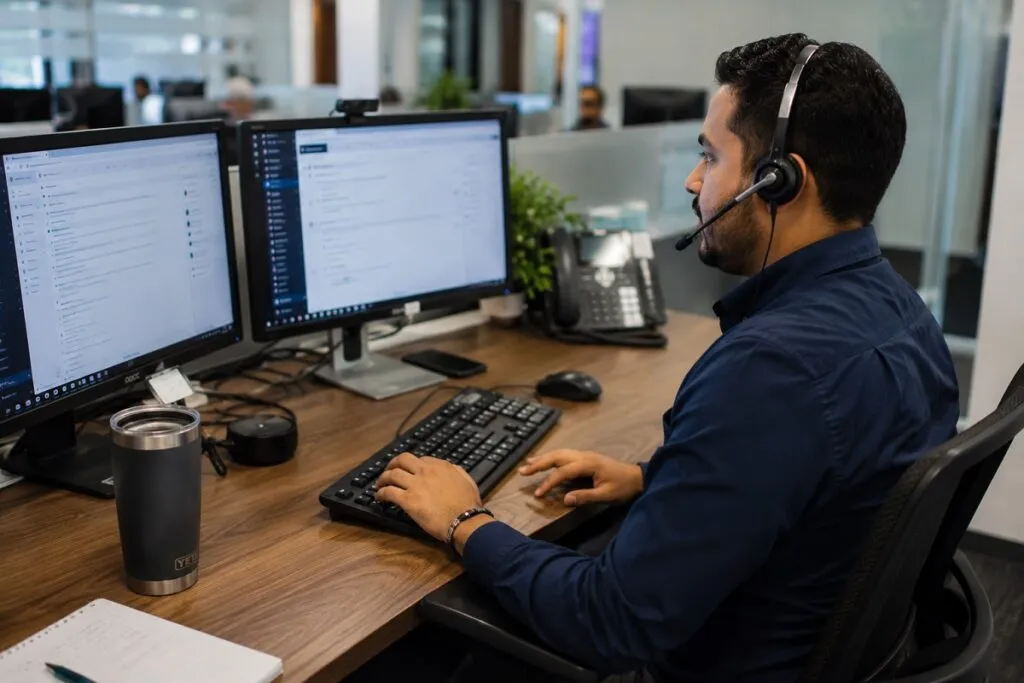
San Francisco businesses operate in one of the country’s most competitive technology hiring markets. While the city remains known for software development and innovation, employers across industries continue to face growing challenges when hiring experienced IT support professionals who can maintain stable operations, deliver exceptional end user service, and adapt to complex enterprise environments.
Tier2Tek Staffing partners with organizations that need dependable IT support talent capable of keeping business operations running without interruption. We work with technology companies, healthcare organizations, financial firms, legal practices, educational institutions, life sciences companies, and enterprise service providers throughout the San Francisco Bay Area. Our recruiting process focuses on professionals who understand modern support environments, communicate effectively with users, and have demonstrated success supporting business-critical technology.
Whether your organization needs a single Desktop Support Technician or a team capable of supporting a regional rollout, we evaluate candidates based on technical proficiency, troubleshooting methodology, customer service, documentation habits, and their ability to succeed within your operational environment.
Why San Francisco Creates a Different IT Support Hiring Market

San Francisco’s hiring environment differs significantly from most metropolitan areas. Employers are not simply competing against neighboring companies. They are competing against venture-backed startups, global technology firms, rapidly expanding AI companies, biotechnology organizations, and enterprise software providers that continuously recruit experienced technical talent.
Many support professionals who would traditionally remain in desktop support or systems support roles often transition into cloud operations, DevOps, security, or infrastructure engineering after only a few years. This creates an unusually shallow pool of experienced mid-level IT support professionals compared to many other major cities.
Hiring managers frequently discover that candidates possessing both strong technical skills and exceptional customer service abilities receive multiple interview requests within days of entering the market.
For employers, lengthy hiring cycles often become the greatest obstacle. An interview process extending three weeks may already be too slow for experienced candidates actively evaluating opportunities.
Another reality unique to San Francisco is the wide variation in technical environments across organizations. A help desk technician supporting a venture-backed startup may manage identity platforms, endpoint security, SaaS administration, and device lifecycle management independently. Meanwhile, an enterprise support specialist at a global financial institution may operate within highly structured ITIL processes and strict change management requirements. Understanding these differences matters when evaluating candidate fit.
Supporting Business Operations Across San Francisco’s Diverse Industries
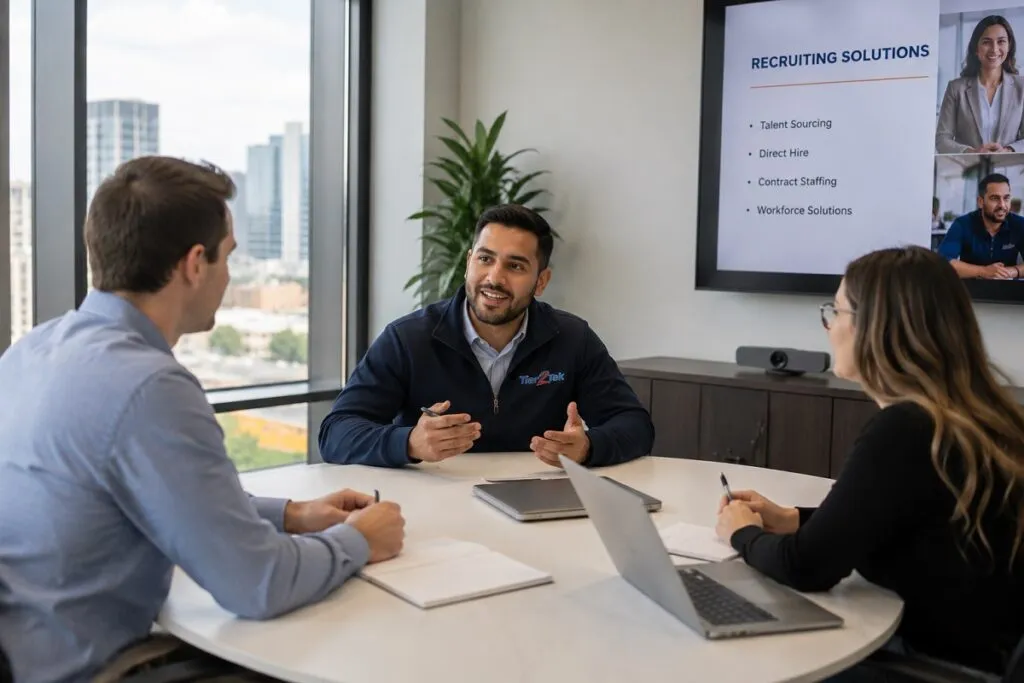
Unlike cities dominated by a single industry, San Francisco employers require IT support professionals who can adapt to very different operational environments.
Some of the sectors driving hiring demand include:
- Artificial Intelligence companies
- SaaS and enterprise software
- Biotechnology and life sciences
- Venture capital firms
- Financial technology
- Digital media
- Healthcare providers
- Legal services
- Higher education
- Professional consulting firms
- Nonprofit organizations
- Logistics and supply chain operations
Each industry places different expectations on technical support teams.
For example, biotech organizations often require technicians familiar with regulated laboratory environments, specialized workstation configurations, and controlled access procedures. Financial firms typically emphasize security, compliance, endpoint management, and rapid incident response. Legal organizations often prioritize document management platforms, secure remote access, and executive-level white glove support.
These distinctions influence every hiring decision, from technical screening to communication style.
One operational pattern we regularly observe in San Francisco is the growing overlap between traditional help desk responsibilities and SaaS administration. Many organizations now expect support professionals to troubleshoot Okta authentication, Microsoft 365 licensing, Zoom administration, Slack permissions, Google Workspace management, and endpoint security platforms within the same role.
Employers hiring solely for traditional desktop support experience often overlook candidates who have become highly effective administrators of modern cloud-first workplaces.
Local IT Support Challenges Employers Experience Every Day
San Francisco organizations rarely struggle because technology changes too quickly.
More often, operational disruptions occur because support teams become understaffed while business growth continues.
Common challenges include:
- Increased ticket volume after acquisitions
- Hybrid workforce support
- Executive support requests
- Device deployment during onboarding
- Office expansions
- Security-related user requests
- Multi-office support coordination
- Vendor escalation management
- Endpoint replacement projects
- Identity and access management requests
Businesses that continue operating with lean support teams frequently experience longer ticket queues, delayed onboarding, inconsistent documentation, and increased employee frustration.
These issues become especially visible in organizations experiencing rapid hiring.
A growing AI startup may onboard dozens of employees within a single month. Every new employee requires hardware preparation, account provisioning, software licensing, MFA enrollment, security policy enforcement, and day-one technical readiness. Without adequate staffing, onboarding quickly becomes inconsistent and places additional pressure on senior infrastructure engineers who should remain focused on strategic initiatives.
Experienced IT leaders recognize that support staffing directly affects employee productivity across the organization.
San Francisco IT Support Hiring Priorities by Business Type
| Organization Type | Common IT Support Priorities | Hiring Considerations |
|---|---|---|
| AI and SaaS Companies | Identity management, SaaS administration, rapid onboarding, endpoint security | Candidates comfortable wearing multiple hats and adapting to changing processes |
| Financial Services | Security, compliance, executive support, change control | Strong documentation habits and experience in regulated environments |
| Healthcare Organizations | HIPAA awareness, clinical workstation support, device reliability | Customer service, urgency, and experience supporting healthcare users |
| Law Firms | Document systems, remote access, executive responsiveness | Professional communication and confidentiality |
| Biotech and Life Sciences | Laboratory technology, specialized equipment, secure research environments | Adaptability and familiarity with regulated operations |
Rather than focusing only on certifications, many employers increasingly prioritize candidates who understand how technology supports day-to-day business operations.
Technical knowledge can often be developed. Sound troubleshooting habits, ownership, communication, and professionalism are considerably harder to teach.
The Technology Stack Defining Today’s San Francisco Support Environment
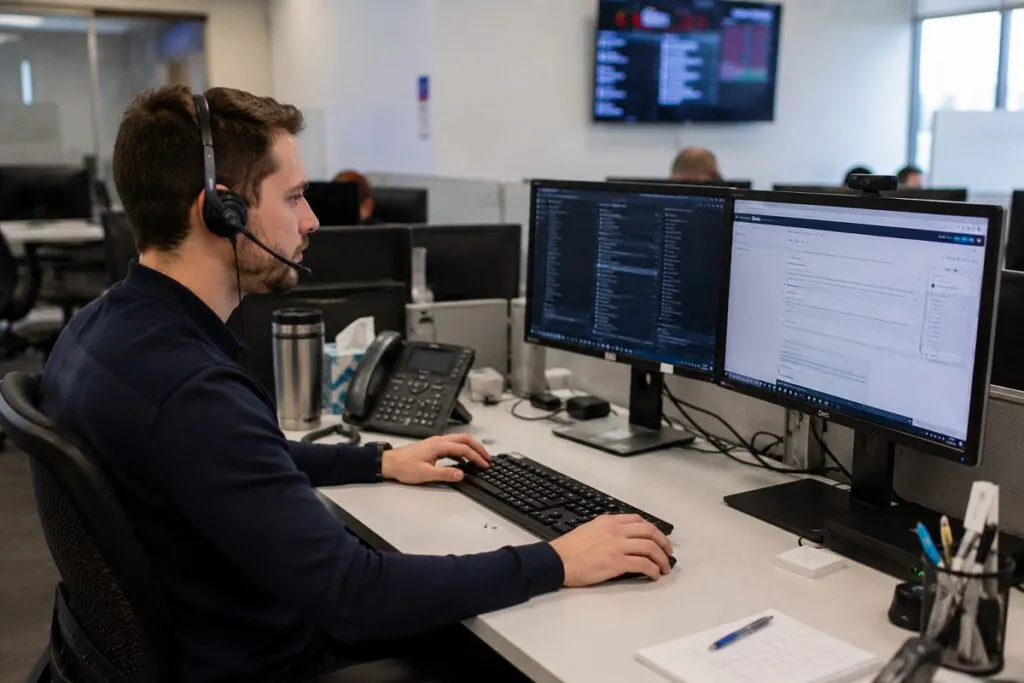
The typical IT support professional in San Francisco now supports significantly more cloud services than hardware.
Candidates commonly work with environments including:
- Microsoft 365
- Azure Active Directory
- Entra ID
- Google Workspace
- Okta
- Slack
- Zoom
- Jira Service Management
- ServiceNow
- Intune
- Jamf
- Kandji
- Cisco Meraki
- CrowdStrike
- SentinelOne
- VMware
- Windows 11
- macOS
- Microsoft Teams
- VPN technologies
- Multi-factor authentication platforms
Mac support has become particularly valuable throughout San Francisco.
Many technology companies operate predominantly Apple-based environments while maintaining Windows infrastructure for finance, operations, and engineering teams. Candidates who comfortably support both ecosystems remain in consistently high demand.
Another observation specific to San Francisco is the increasing expectation that frontline support professionals understand basic security operations. Support technicians are often the first to recognize phishing attempts, suspicious account behavior, endpoint isolation events, or identity-related incidents before they escalate to dedicated security teams.
Organizations increasingly value candidates who understand not only how to resolve tickets, but how to recognize risks before they become larger operational problems.
For employers seeking broader support recruiting expertise across help desk and service desk functions, Tier2Tek also provides specialized IT Service Desk Staffing services that complement desktop support hiring and enterprise support teams:.
How Tier2Tek Evaluates IT Support Candidates Beyond the Resume
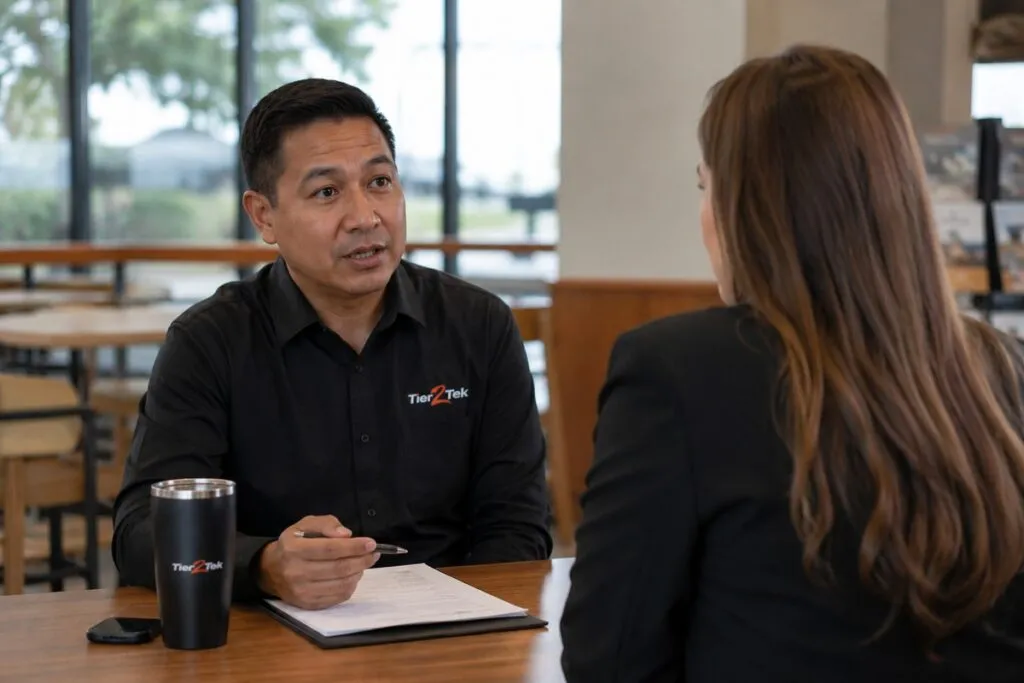
Resumes often highlight certifications, technologies, and years of experience, but they rarely show how someone performs when users are frustrated, systems are unavailable, or priorities shift unexpectedly. That is why our recruiting process extends well beyond keyword matching.
We evaluate candidates through conversations focused on real operational scenarios. Rather than asking whether someone has used ServiceNow or Microsoft Intune, we explore how they approach troubleshooting, communicate with end users, document recurring issues, and collaborate with infrastructure, networking, and security teams.
Areas we assess include:
- Technical troubleshooting methodology
- Customer service and communication skills
- Experience with ticket prioritization
- Knowledge of endpoint management
- Active Directory and identity administration
- Microsoft 365 and Google Workspace support
- macOS and Windows administration
- Documentation quality
- Remote support capabilities
- Ability to work within ITIL or structured service management environments
For employers in San Francisco, adaptability is another important evaluation factor.
Support environments evolve quickly. A technician hired to manage desktop support today may soon assist with SaaS administration, automation initiatives, security awareness, or device lifecycle projects. Candidates who demonstrate curiosity and continuous learning often provide greater long-term value than those whose experience is limited to a narrow technical scope.
We also look for evidence of ownership. Strong support professionals do not simply close tickets. They identify recurring issues, improve documentation, recommend process improvements, and contribute to a more efficient IT operation.
Common Hiring Mistakes San Francisco Employers Make
Even experienced hiring managers can encounter challenges in a market as competitive as San Francisco.
One common mistake is creating job descriptions that combine responsibilities from several different roles. It is not unusual to see postings requesting expertise in desktop support, systems administration, cloud infrastructure, networking, cybersecurity, scripting, and vendor management while offering compensation aligned with an entry-level support position.
The strongest candidates recognize these mismatches immediately and often pursue more realistic opportunities.
Another frequent issue is delaying hiring decisions.
Because experienced support professionals regularly receive interest from multiple employers, lengthy interview processes increase the likelihood of losing qualified candidates before an offer is extended.
Employers also sometimes overemphasize certifications while overlooking practical experience. Certifications demonstrate initiative, but they do not necessarily reflect how someone handles executive support requests, manages competing priorities, or communicates during high-pressure situations.
In San Francisco’s technology market, interpersonal skills frequently separate exceptional support professionals from technically capable candidates.
Finally, some organizations underestimate the importance of cultural alignment.
A technician who succeeds in a structured enterprise environment may not thrive within a rapidly changing startup. Likewise, someone accustomed to supporting a fast-paced SaaS company may become frustrated by highly formal approval processes within regulated industries.
Hiring decisions become stronger when technical ability and organizational fit receive equal consideration.
Balancing Speed, Experience, and Long-Term Team Growth
Every hiring decision involves tradeoffs.
Some organizations prioritize immediate technical expertise because they need someone who can contribute with minimal onboarding. Others prefer candidates with strong fundamentals who can grow alongside the business.
The right approach depends on operational priorities.
For example, if your internal team is preparing for a major office expansion or company acquisition, hiring an experienced support professional capable of managing high ticket volumes immediately may outweigh the benefits of developing a junior employee over time.
Conversely, organizations with established documentation, structured onboarding, and strong mentorship may achieve better long-term results by investing in adaptable candidates who demonstrate excellent communication and problem-solving skills.
We work with clients to evaluate these tradeoffs before recruiting begins so that expectations, timelines, and candidate profiles remain aligned.
| Hiring Objective | Recommended Candidate Profile | Business Impact |
|---|---|---|
| Immediate operational support | Experienced desktop or service desk professional | Faster productivity with minimal ramp-up |
| Rapid company growth | Adaptable technician with cloud and SaaS experience | Scales with changing business needs |
| Executive support | Strong communication skills with professionalism | Higher user satisfaction and responsiveness |
| Hybrid workforce support | Experience supporting remote users and modern collaboration tools | Improved consistency across distributed teams |
| Long-term team development | High potential candidate with strong troubleshooting fundamentals | Greater retention and future internal growth |
Building Resilient IT Support Teams in a Competitive Market
Successful IT departments rarely depend on individual technical experts alone.
They establish repeatable support processes, encourage knowledge sharing, maintain accurate documentation, and hire professionals who contribute to continuous improvement.
In San Francisco, where technology environments change rapidly, resilient teams also embrace cross-functional collaboration.
Support technicians increasingly work alongside cloud engineers, cybersecurity teams, HR departments, facilities teams, and application owners. Employee onboarding, hardware refreshes, software rollouts, and security initiatives often require coordinated efforts across multiple departments.
One operational reality many Bay Area employers recognize is that hybrid work has permanently changed support expectations. Employees now expect the same level of technical assistance whether they are working from a downtown office, a home office in Marin County, or a coworking space in Oakland. Supporting this distributed workforce requires technicians who are comfortable resolving issues remotely while maintaining a high level of customer service.
Organizations that invest in experienced support professionals often experience benefits beyond faster ticket resolution. Strong support teams improve employee productivity, reduce recurring technical issues, strengthen security practices, and create a more consistent technology experience across the business.
Frequently Asked Questions About IT Support Staffing in San Francisco
Most clients begin reviewing qualified candidates within 1 to 3 business days, depending on the position and hiring requirements.
Yes. We regularly assist organizations with high-volume hiring initiatives, including office expansions, technology deployments, mergers, acquisitions, and rapid workforce growth.
Absolutely. Many San Francisco employers operate mixed environments, and we recruit professionals experienced supporting Windows, macOS, Microsoft 365, Google Workspace, and modern endpoint management platforms.
Yes. We recruit candidates with experience supporting distributed workforces, remote troubleshooting, endpoint management, and cloud-based collaboration environments.
Yes. We support hiring for organizations operating in healthcare, financial services, biotechnology, legal services, education, and other industries with specialized compliance and operational requirements.
We recruit for Help Desk Technicians, Desktop Support Specialists, Service Desk Analysts, Technical Support Engineers, Field Support Technicians, IT Support Leads, Executive Support Specialists, and other end user support positions.
Recruiting Expertise You Can Trust
Tier2Tek Staffing approaches recruiting with the same attention to detail that high-performing IT departments expect from their own teams.
Our content is developed using current labor market observations, conversations with employers, practical recruiting experience, and evolving technology hiring trends. We continually evaluate changing support workflows, cloud technologies, enterprise platforms, and employer expectations to ensure our recruiting strategies remain relevant.
Rather than relying on automated resume matching, our recruiters focus on understanding each client’s technical environment, operational priorities, and long-term hiring goals. This allows us to present candidates who not only meet technical requirements but also align with the way your organization operates.
Request IT Support Talent for Your San Francisco Team
Whether you need to strengthen an existing support team, prepare for business growth, replace a critical team member, or build a high-volume hiring strategy, Tier2Tek Staffing can help you identify qualified IT support professionals who fit your technical environment and organizational culture.
Our recruiters understand the unique hiring dynamics of the San Francisco market and work efficiently to connect employers with experienced candidates who can make an immediate impact.