IT Support Recruitment Services in Philadelphia
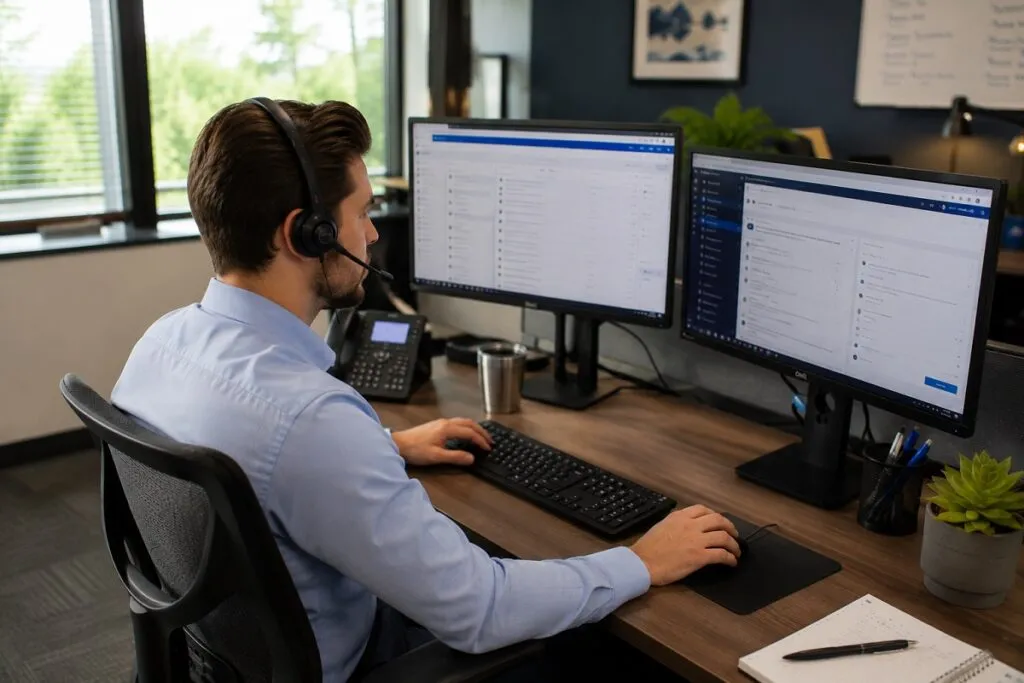
Philadelphia organizations depend on reliable IT support to keep employees productive, protect customer experiences, and maintain business continuity. Whether supporting healthcare providers, financial institutions, universities, manufacturers, or professional services firms, IT support teams often serve as the first line of defense against operational disruption. A single unresolved workstation issue, VPN outage, or identity management problem can quickly ripple across departments, delaying projects and reducing employee productivity.
For employers, hiring IT support professionals in Philadelphia involves more than filling open positions. Local competition for experienced technicians, changing hybrid work models, and increasing expectations around cybersecurity awareness have made support staffing a strategic business decision. Organizations that underestimate the complexity of the local hiring market often experience longer vacancies, higher support ticket backlogs, and unnecessary operational risk.
Tier2Tek Staffing helps Philadelphia employers build dependable IT support teams by evaluating technical capability alongside communication skills, troubleshooting methodology, customer service, and long-term reliability. Our recruiting process is designed around business continuity, allowing organizations to secure qualified IT support professionals quickly while minimizing disruption to daily operations.
Why Philadelphia Employers Face Unique IT Support Hiring Challenges

Philadelphia’s business community creates an unusually diverse support environment. Enterprise healthcare systems, higher education institutions, logistics companies, financial organizations, biotechnology firms, and manufacturing operations all compete for many of the same experienced IT support professionals.
Unlike markets dominated by a single industry, Philadelphia requires technicians who can adapt to very different technology environments. One employer may require experience supporting electronic medical records and strict compliance requirements, while another needs expertise with warehouse mobility devices, Microsoft 365 administration, or large Active Directory environments.
Many experienced technicians also pursue opportunities with managed service providers because they gain exposure to multiple environments while often receiving accelerated career growth. This reduces the available pool for organizations seeking long-term internal support staff.
Business leaders frequently encounter challenges such as:
- Extended hiring timelines for experienced Tier 2 technicians
- Competition from regional employers throughout southeastern Pennsylvania and South Jersey
- Increasing salary expectations for professionals with cloud administration experience
- Limited availability of candidates comfortable supporting hybrid workforces
- Difficulty finding technicians with strong customer service and technical troubleshooting skills
Organizations that delay hiring until support workloads become unmanageable often find themselves competing for candidates during periods of peak demand.
The Business Cost of Understaffed IT Support
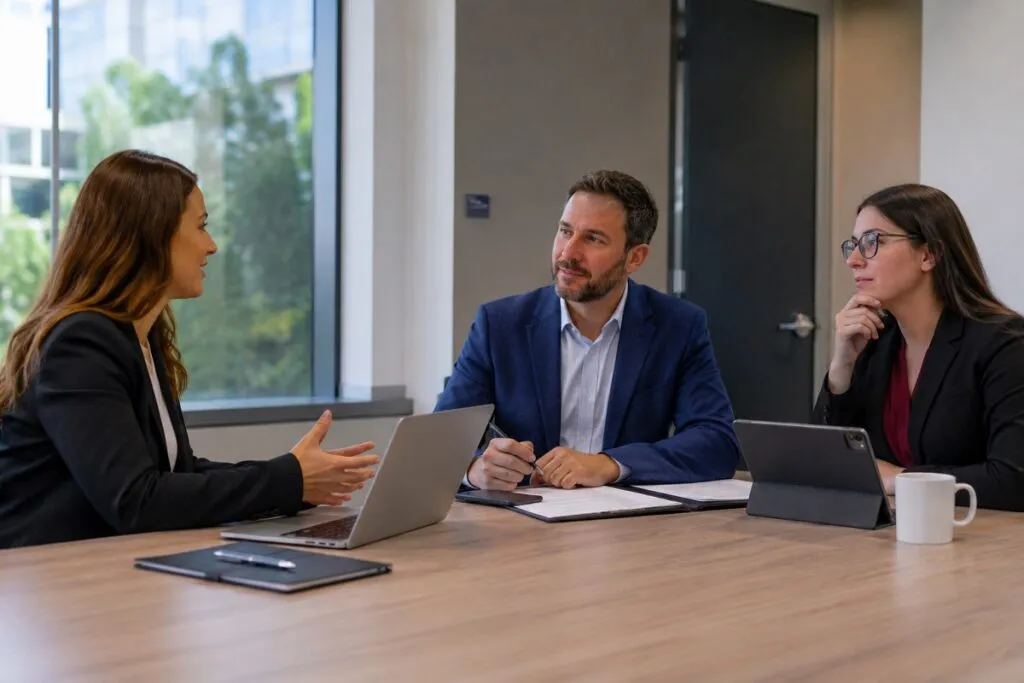
Many executives evaluate IT support staffing primarily as a labor expense. Operational leaders typically see a different picture. Every vacant support position increases business risk in ways that may not appear immediately on financial reports.
When support teams become overloaded, ticket resolution slows. Employees spend more time waiting for assistance instead of completing revenue-generating work. Small technical issues accumulate until they become larger operational problems.
Common business impacts include:
| Operational Area | Business Impact |
|---|---|
| Help desk response times | Longer employee downtime and reduced productivity |
| Password resets and account access | Delayed onboarding and interrupted workflows |
| Device deployment | Slower hiring and project implementation |
| Escalation queues | Increased pressure on senior engineers |
| User satisfaction | Reduced confidence in internal IT services |
| Security updates | Greater exposure to compliance and cybersecurity risks |
Organizations frequently discover that losing one experienced support technician affects far more than ticket volume. Senior engineers often become responsible for routine user support instead of infrastructure projects, cloud initiatives, automation, or cybersecurity improvements.
The indirect cost of lost productivity often exceeds the cost of filling the position quickly with the right candidate.
How Hybrid Work Has Changed IT Support Expectations
Hybrid work has permanently expanded the responsibilities of modern IT support teams. Supporting users inside a corporate office is only one part of today’s operational reality.
Philadelphia employers increasingly require technicians capable of assisting employees working remotely throughout Pennsylvania, New Jersey, Delaware, and beyond. This creates additional complexity involving:
- VPN connectivity
- Multifactor authentication
- Endpoint security
- Remote device management
- Microsoft Intune administration
- Cloud identity management
- Microsoft Teams support
- Remote printing and peripheral troubleshooting
Support professionals now spend considerably more time diagnosing network conditions they cannot directly observe. Strong communication skills have become just as valuable as technical knowledge because remote troubleshooting depends heavily on gathering accurate information from end users.
Organizations that continue hiring solely based on technical certifications often overlook candidates who consistently deliver better support experiences through clear communication and structured problem solving.
Philadelphia employers also report increased expectations from executives and department leaders regarding first-contact resolution. Hybrid employees often expect immediate assistance because delays affect their ability to collaborate across distributed teams.
Local Technology Environments Shape Hiring Requirements
Philadelphia businesses rarely operate within simple desktop support environments. Many organizations rely on complex combinations of cloud services, legacy infrastructure, compliance requirements, and specialized business applications.
For example, healthcare organizations frequently require technicians familiar with Epic, Citrix environments, secure clinical workstations, badge authentication, and HIPAA-sensitive support workflows. Financial firms often prioritize professionals comfortable supporting identity management, endpoint security, Microsoft 365, and strict access controls.
Meanwhile, manufacturers throughout the greater Philadelphia region may require technicians supporting production facilities where downtime affects manufacturing schedules rather than office productivity.
These operational differences influence the types of candidates employers pursue.
| Philadelphia Business Environment | Frequently Requested IT Support Experience |
|---|---|
| Healthcare systems | Epic, Citrix, HIPAA, secure endpoint support |
| Universities | High-volume user support, classroom technology, Microsoft 365 |
| Financial services | Active Directory, MFA, compliance, identity management |
| Manufacturing | Warehouse devices, network troubleshooting, production support |
| Professional services | Microsoft Teams, SharePoint, mobile device management, cloud collaboration |
An experienced recruiter understands that technical requirements vary significantly between these environments. A technician who performs exceptionally well supporting a hospital help desk may not necessarily thrive in a manufacturing operation where production uptime drives every support decision.
Tier2Tek evaluates candidates against the operational realities of each client rather than relying on generic keyword matching or certification lists.
Beyond Technical Skills: What Tier2Tek Evaluates
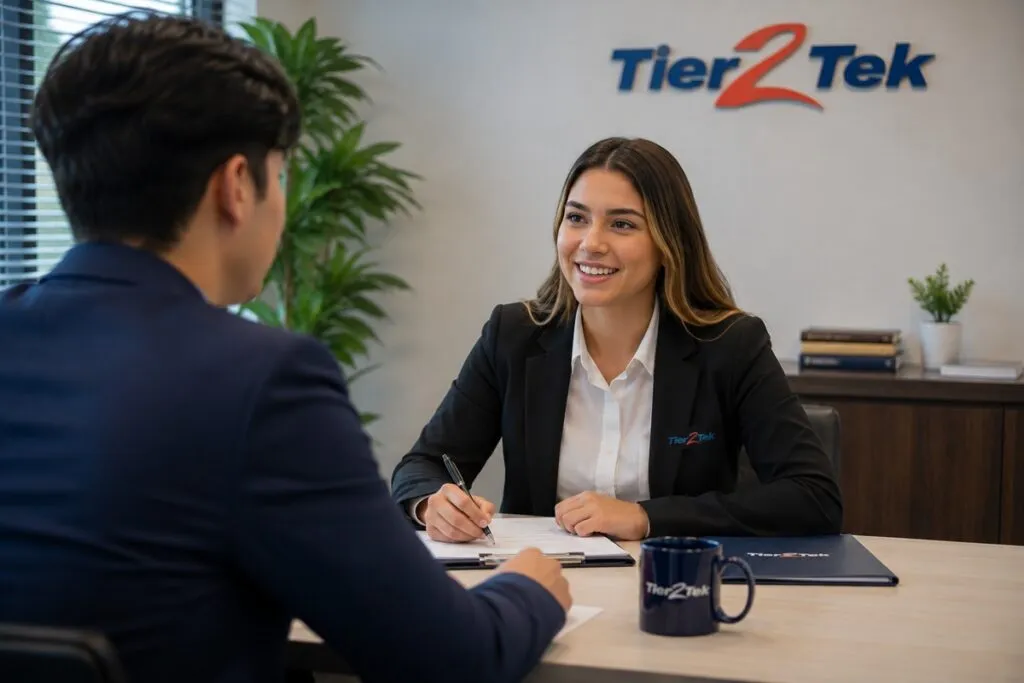
Successful IT support professionals combine technical knowledge with the ability to operate effectively in business environments where communication, prioritization, and customer service directly affect productivity.
At Tier2Tek Staffing, candidate evaluation extends well beyond resume review. Our recruiters assess how individuals approach troubleshooting, communicate with nontechnical users, prioritize competing requests, and adapt to changing operational demands.
Our evaluation process considers factors such as:
- Windows and Microsoft 365 administration
- Active Directory and Azure AD experience
- Ticketing platforms such as ServiceNow, Jira Service Management, Zendesk, Freshservice, and ConnectWise
- Remote support tools
- Hardware lifecycle support
- Mobile device management
- Network troubleshooting fundamentals
- Documentation habits
- Customer service mindset
- Escalation judgment
- Communication under pressure
- Reliability and professional accountability
We also evaluate how candidates explain previous technical problems they have solved. Experienced support professionals generally demonstrate structured troubleshooting methodologies instead of jumping directly to assumptions. This often provides stronger insight into future performance than simply reviewing certifications or years of experience.
For employers operating lean IT departments, this evaluation process helps reduce hiring risk by identifying professionals who can contribute quickly within existing support workflows rather than requiring extensive onboarding.
Philadelphia employers seeking additional guidance on building effective support teams can also explore our IT Support Staffing services.
Staffing Scalability Matters More Than Most Organizations Expect
Business technology demands rarely remain static. An acquisition, office relocation, ERP implementation, seasonal hiring initiative, or cybersecurity project can dramatically increase support volume within weeks.
Philadelphia employers frequently discover that support staffing models built for normal operations become overwhelmed during periods of rapid change.
Healthcare organizations experience spikes during clinical system upgrades. Universities see predictable surges around semester starts. Distribution and logistics companies often require additional support during peak shipping seasons, while professional services firms experience increased demand during mergers, office expansions, and software migrations.
Waiting until ticket queues grow substantially creates several operational problems:
- Longer resolution times
- Increased employee frustration
- Burnout among existing IT staff
- Delayed infrastructure initiatives
- Reduced service quality
- Higher turnover within the IT department
Scalable staffing provides flexibility without forcing permanent increases in headcount. Many organizations benefit from supplementing their existing support teams during major projects, technology rollouts, or periods of accelerated growth rather than placing additional strain on internal resources.
The objective is not simply adding people. It is maintaining consistent service levels while business demands evolve.
Common Hiring Mistakes Philadelphia Employers Continue to Make
Even organizations with mature IT departments can unintentionally increase hiring risk through inefficient recruiting practices.
One of the most common mistakes is building job descriptions that combine multiple specialized roles into one position. Employers often seek candidates with extensive desktop support experience, Azure administration, cybersecurity knowledge, network engineering, scripting ability, Microsoft Intune expertise, and server administration while offering compensation aligned with a traditional help desk role.
This significantly narrows an already competitive candidate pool.
Another frequent issue involves placing excessive emphasis on certifications while overlooking practical troubleshooting ability.
An experienced support professional who consistently resolves user issues, communicates effectively with executives, and documents solutions clearly often creates greater operational value than someone with numerous certifications but limited real-world support experience.
Philadelphia employers also lose qualified candidates through lengthy interview processes.
The strongest IT support professionals often receive multiple interviews simultaneously. Organizations requiring four or five interview rounds frequently find that preferred candidates have already accepted competing offers before hiring decisions are finalized.
Another overlooked issue is underestimating commute preferences.
Although many businesses have returned to office environments, experienced technicians increasingly evaluate commute time alongside compensation and career growth. Organizations located in Center City, King of Prussia, Conshohocken, the Navy Yard, or surrounding suburban business corridors often compete for the same regional talent pool, making workplace flexibility an increasingly important consideration.
Support Downtime Affects More Than the IT Department
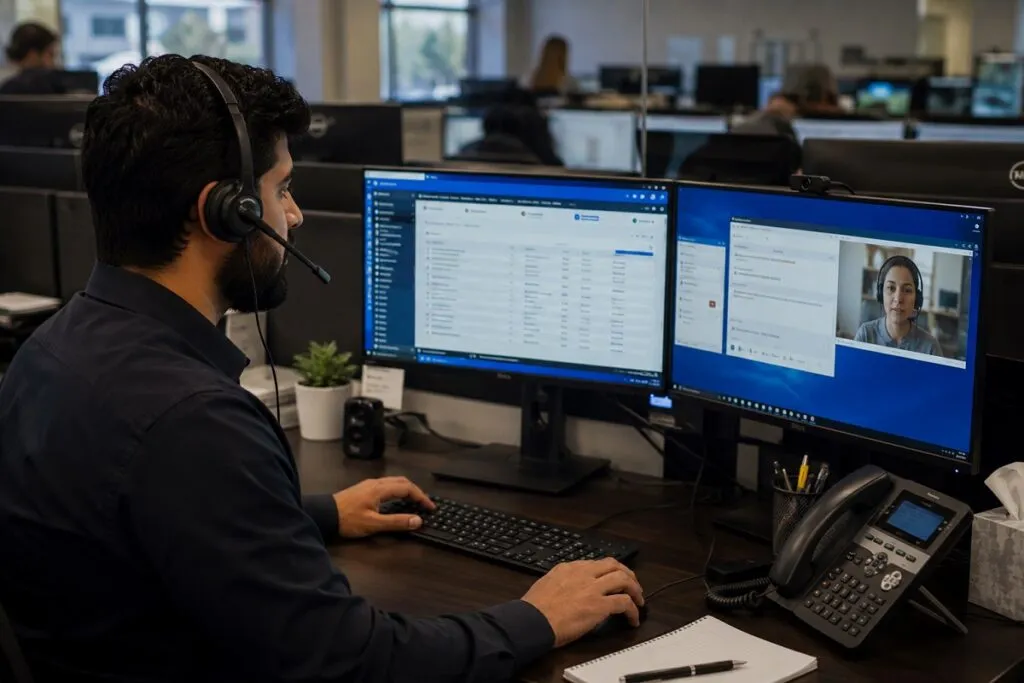
Support delays rarely remain isolated within the technology department.
When employees cannot access business systems, nearly every department experiences downstream consequences.
Sales teams lose access to CRM platforms.
Finance departments encounter delays processing transactions.
Operations teams struggle with warehouse devices or inventory systems.
Executives lose confidence in technology initiatives when recurring support issues interrupt daily business activities.
Even relatively minor technical issues can compound quickly.
Examples include:
- Delayed laptop provisioning for new employees
- Failed Microsoft 365 authentication
- Printer failures affecting shipping operations
- VPN connectivity issues for remote employees
- Mobile device enrollment delays
- Software licensing problems
- Password synchronization failures
Each incident individually may seem manageable. Collectively, they consume valuable employee time while increasing support costs.
Organizations that maintain appropriate staffing levels generally resolve routine issues before they develop into broader operational disruptions.
Balancing Internal IT Teams and External Staffing Resources
Many Philadelphia organizations eventually reach a point where existing IT teams cannot absorb additional workload without sacrificing strategic initiatives.
The decision is rarely as simple as hiring permanent employees.
Business leaders often evaluate several staffing approaches based on operational priorities.
| Business Need | Staffing Consideration |
|---|---|
| Rapid company growth | Quickly expand support capacity while maintaining service levels |
| Technology rollout | Temporary increase in experienced technicians |
| Employee turnover | Reduce vacancy duration to protect business continuity |
| Office expansion | Scale support without overburdening infrastructure teams |
| Seasonal operational demand | Add resources during predictable workload increases |
The most effective staffing strategy depends on several factors:
- Existing IT maturity
- Ticket volume
- Geographic footprint
- Compliance requirements
- Internal management capacity
- Technology roadmap
Organizations focused exclusively on minimizing hiring costs often underestimate the financial impact of prolonged vacancies.
Reducing employee downtime frequently delivers greater business value than delaying hiring decisions.
Business Continuity Depends on Consistent Support Coverage
Business continuity planning often focuses on disaster recovery, cybersecurity, backup systems, and infrastructure redundancy.
However, many organizations overlook one critical component.
People.
Even highly resilient technical environments require qualified support professionals capable of responding when employees encounter problems.
Without sufficient staffing, organizations may experience:
- Delayed incident response
- Slower onboarding
- Reduced employee productivity
- Increased security exceptions
- Deferred maintenance
- Escalation bottlenecks
- Lower user satisfaction
Philadelphia employers increasingly recognize that support staffing contributes directly to operational resilience.
Infrastructure investments produce stronger returns when organizations also maintain the personnel necessary to support those environments effectively.
Reliable support teams improve technology adoption, reduce recurring issues, and help business units maintain productivity during periods of change.
Why Employers Partner with Tier2Tek Staffing
Tier2Tek Staffing works with employers that recognize IT support hiring as an operational decision rather than simply a recruiting exercise.
Our recruiting process emphasizes business outcomes.
We evaluate whether candidates can operate successfully within the specific technical environment, service expectations, and organizational culture of each client.
Rather than relying exclusively on resumes or automated screening tools, we assess:
- Technical troubleshooting methodology
- Professional communication
- Customer service approach
- Ticket prioritization
- Documentation quality
- Team collaboration
- Adaptability to changing environments
- Long-term reliability
- Experience supporting similar business operations
This evaluation process helps employers reduce hiring risk while improving the likelihood of successful long-term placements.
Because we maintain an active network of experienced IT support professionals, many organizations receive qualified candidate introductions within 1 to 3 business days.
For employers managing large technology initiatives, office expansions, or enterprise refresh projects, Tier2Tek also supports high-volume hiring when multiple IT support professionals are needed within compressed timeframes.
Our Recruiting Standards and Editorial Commitment
Tier2Tek believes employers make better staffing decisions when information is practical, transparent, and grounded in real recruiting experience.
The guidance throughout this page reflects observations from recruiting IT support professionals across a variety of business environments, including healthcare, financial services, manufacturing, education, logistics, and professional services organizations.
Our recruiting teams continuously evaluate changing technology requirements, labor market conditions, interview trends, and employer expectations. That ongoing market visibility helps us provide staffing recommendations that align with operational realities rather than generic recruiting advice.
We review our recruiting content regularly to ensure it reflects current hiring practices, evolving technology environments, and the challenges employers are actively facing.
Frequently Asked Questions
For many openings, we can present qualified candidates within 1 to 3 business days, depending on the role and technical requirements.
Yes. Tier2Tek supports high-volume hiring for organizations opening new locations, expanding support teams, completing technology deployments, or responding to increased operational demand.
Yes. We recruit professionals for onsite, hybrid, and remote support environments based on each employer’s operational requirements.
We recruit Help Desk Technicians, Desktop Support Specialists, Service Desk Analysts, Tier 2 Support, Technical Support Specialists, Endpoint Support professionals, Field Support Technicians, and related IT support positions.
Many organizations use platforms such as ServiceNow, Jira Service Management, Zendesk, Freshservice, ConnectWise, and Microsoft-based support ecosystems, although requirements vary by industry.
Request IT Support Staffing
Whether you need to replace a critical support professional, expand your service desk, or build an IT support team for a growing operation, Tier2Tek Staffing can help you secure qualified professionals quickly while reducing hiring risk and protecting business continuity.