IT Support Staffing in New York City

Finding dependable IT support professionals in New York City has become significantly more difficult over the past several years. Competition for experienced desktop support technicians, help desk analysts, service desk specialists, and technical support engineers continues to intensify as employers compete across finance, healthcare, legal services, media, technology, education, and professional services.
Unlike many cities where hiring challenges are driven primarily by a shortage of applicants, New York City employers often face a different reality. Qualified candidates typically have multiple interviews scheduled within days of entering the market. Many receive competing offers before an organization completes a second interview or internal approval process.
For internal IT departments, this creates operational pressure that extends well beyond recruiting. Open support positions frequently lead to longer ticket resolution times, increased employee downtime, higher workloads for senior engineers, and growing burnout among existing staff. Even organizations with competitive compensation packages often struggle to secure experienced professionals before another employer does.
Tier2Tek Staffing helps organizations reduce hiring delays by providing thoroughly evaluated IT support professionals within 1 to 3 days. Whether your organization needs a single technician or high-volume hiring across multiple locations, our recruiting process is designed around the realities of today’s New York City technology labor market.
Why IT Support Hiring Is Different in New York City

New York City’s technology workforce is exceptionally large, yet employers consistently report difficulty filling IT support positions. The challenge is not simply finding candidates. It is identifying professionals who possess the right technical skills, customer service abilities, and business maturity to operate within demanding enterprise environments.
Many organizations compete against employers that can offer:
- Larger technology budgets
- Hybrid work flexibility
- Faster hiring decisions
- Better career progression
- Premium compensation packages
- Stronger employee benefits
The city’s concentration of Fortune 500 headquarters, investment firms, healthcare systems, universities, media companies, law firms, and managed service providers means experienced IT professionals rarely remain available for long.
An experienced Service Desk Analyst supporting Microsoft 365, Active Directory, Azure, VPN infrastructure, and endpoint management may receive several recruiter calls within the same week.
This pace forces hiring managers to rethink traditional recruiting timelines. Waiting several weeks between interviews often means restarting the search.
One operational reality unique to New York City is that many enterprise support teams serve employees spread across dozens of offices throughout Manhattan, Brooklyn, Queens, Jersey City, Long Island, and surrounding regions. Candidates with experience supporting distributed office environments are increasingly valuable because they understand the logistics involved in maintaining consistent support across multiple business locations.
Local Talent Shortages Continue to Affect IT Operations

The strongest shortages are typically found among professionals with three to seven years of hands-on enterprise support experience.
Many organizations are specifically seeking candidates who can immediately contribute without extensive onboarding.
Commonly requested skill combinations include:
- Microsoft 365 administration
- Active Directory
- Azure Active Directory
- Entra ID
- Intune
- Windows 11 support
- macOS support
- ServiceNow
- Jira Service Management
- SCCM
- Jamf
- Cisco VPN
- Okta
- Multi-factor authentication
- PowerShell
- Endpoint security
- Mobile device management
- Hardware lifecycle support
Finding professionals who combine these technical capabilities with strong communication skills has become increasingly difficult.
Organizations also expect IT support professionals to manage executive support requests, conference room technologies, remote workforce issues, and identity management without constant supervision.
This broader scope significantly reduces the available talent pool.
Another factor influencing shortages is the number of managed service providers operating throughout New York City. MSPs often provide technicians with exposure to multiple client environments, accelerating skill development. As these professionals gain experience, they frequently receive offers from enterprise organizations seeking internal support staff.
Where Employers Are Feeling the Most Staffing Pressure
| IT Support Function | Current Hiring Reality in New York City |
|---|---|
| Help Desk Analysts | High applicant volume but relatively few candidates with enterprise experience |
| Desktop Support | Strong competition from finance, healthcare, and legal employers |
| Executive Support | Limited candidate pool due to confidentiality and white-glove service expectations |
| Service Desk | High turnover driven by workload and career advancement opportunities |
| IT Support Leads | Difficult to hire because experienced technicians are quickly promoted internally |
These shortages often force organizations to redistribute work across existing teams, creating additional strain on senior support personnel.
Salary Competition Has Become Increasingly Aggressive
New York City remains one of the country’s most competitive technology employment markets.
Salary expectations continue to rise as employers compete for experienced professionals who can contribute immediately.
While compensation is only one factor influencing hiring success, organizations relying on salary data from previous years often struggle to attract qualified candidates.
Candidates also evaluate:
- Remote work flexibility
- Hybrid scheduling
- Commute expectations
- Career development
- Training budgets
- Technology stack
- Team stability
- Management quality
- On-call responsibilities
- Growth opportunities
In many hiring processes, the highest salary offer does not necessarily win.
Candidates frequently choose organizations that demonstrate:
- Fast interview processes
- Clear communication
- Modern technology environments
- Reasonable ticket volumes
- Supportive leadership
- Defined advancement paths
Experienced recruiters recognize that employer responsiveness has become part of the compensation package.
When interview scheduling stretches beyond two weeks, candidate acceptance rates decline noticeably.
For organizations supporting financial institutions, another hiring challenge is that many candidates have already worked within highly regulated environments. These professionals understand compliance requirements, security procedures, documentation standards, and change management practices. Employers competing for this talent often find themselves evaluating the same relatively small group of experienced candidates.
Remote, Hybrid, and Onsite Expectations Continue to Shape Hiring Decisions
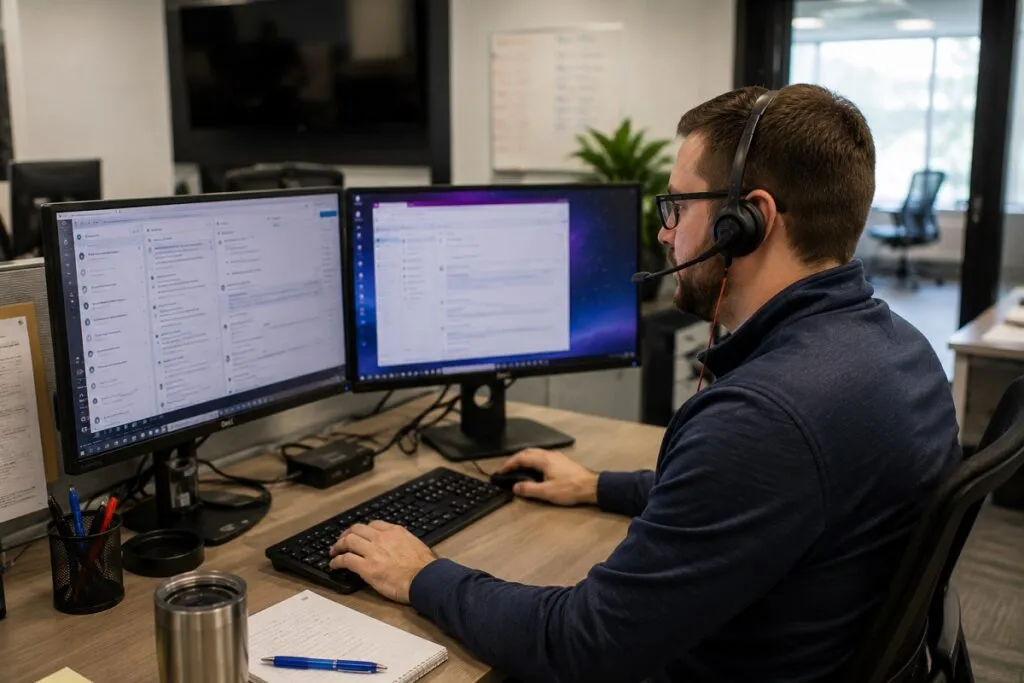
The shift toward hybrid work has permanently changed employer expectations throughout New York City.
Many organizations still require onsite support because employees regularly depend on:
- Conference room technologies
- Hardware deployments
- Executive support
- Printer management
- Network troubleshooting
- Asset inventory
- Office moves
- Device imaging
- Hands-on hardware repairs
At the same time, candidates increasingly prioritize flexibility.
Even positions requiring occasional onsite work often receive more interest than roles requiring five days in the office.
This creates difficult staffing tradeoffs.
Organizations insisting on fully onsite schedules typically experience:
- Smaller candidate pools
- Longer hiring cycles
- Higher salary expectations
- Increased offer declines
Conversely, employers offering hybrid schedules often receive stronger applicant engagement but must ensure technicians remain available for onsite incidents when necessary.
Businesses operating across Midtown, Lower Manhattan, Hudson Yards, Brooklyn, and other commercial districts also compete with employers whose office locations offer shorter commutes or better transit access. Commute time has become a meaningful factor in candidate decision-making, particularly for support professionals expected to provide daily onsite coverage.
The Cost of Leaving IT Support Positions Unfilled
Open support positions affect far more than recruiting metrics.
Most organizations first notice increasing ticket queues.
Over time, those delays begin affecting business productivity across every department.
Common operational consequences include:
- Slower incident response
- Growing ticket backlogs
- Increased password reset requests
- Delayed hardware deployments
- Longer employee onboarding
- Reduced executive support availability
- Deferred workstation replacements
- Lower end-user satisfaction
- Increased overtime
- Escalation bottlenecks
As workloads increase, senior engineers often spend more time handling routine support requests instead of focusing on infrastructure improvements, cybersecurity initiatives, cloud projects, or automation efforts.
This shift creates hidden costs that rarely appear on staffing reports but directly impact long-term IT performance.
When support teams remain understaffed for extended periods, burnout becomes a serious operational concern. High-performing technicians frequently absorb additional responsibilities until they begin exploring opportunities with organizations that offer more balanced workloads. Replacing those experienced employees often proves substantially more expensive than filling vacancies promptly.
Common IT Support Hiring Mistakes New York City Employers Continue to Make
Even experienced IT leaders can unintentionally extend hiring timelines by relying on recruiting practices that no longer align with today’s market.
One of the most common mistakes is creating overly broad job descriptions. Employers frequently combine responsibilities from desktop support, systems administration, endpoint engineering, Microsoft 365 administration, cybersecurity support, and networking into a single position. While the goal is versatility, the result is often a much smaller qualified candidate pool.
Another issue is delaying interview decisions.
Many organizations still schedule interviews over several weeks, requiring multiple approval stages before extending an offer. In New York City’s competitive technology market, highly qualified candidates often accept another opportunity before that process concludes.
Other hiring challenges include:
- Requiring every listed technology instead of prioritizing transferable skills
- Underestimating the value of customer service and communication
- Expecting senior-level experience while budgeting for mid-level compensation
- Waiting until ticket volumes become unmanageable before opening a position
- Assuming internal referrals alone will satisfy staffing needs
Organizations that hire more successfully usually distinguish between essential technical requirements and skills that can be developed after onboarding.
Strategic Staffing Decisions Have Long-Term Operational Impact
Hiring decisions influence much more than today’s workload.
Every staffing strategy involves tradeoffs between speed, cost, technical capability, and future scalability.
For example, hiring an experienced desktop support professional may immediately reduce ticket backlogs but can require a larger compensation package.
Hiring a less experienced technician may reduce recruiting costs but often increases onboarding time and places additional mentoring responsibilities on senior team members.
Organizations should evaluate questions such as:
- Is immediate ticket reduction the highest priority?
- Will the position support executives or general employees?
- Does the role require regulatory experience?
- Is after-hours support expected?
- How much time can senior engineers dedicate to training?
Businesses experiencing rapid growth may also benefit from adding multiple support professionals simultaneously instead of hiring sequentially. This approach allows onboarding, documentation, and workflow training to occur more consistently while reducing repeated recruiting cycles.
Tier2Tek supports both individual placements and high-volume hiring initiatives when organizations need to expand support teams quickly.
Technology Environments Driving Hiring Demand in New York City
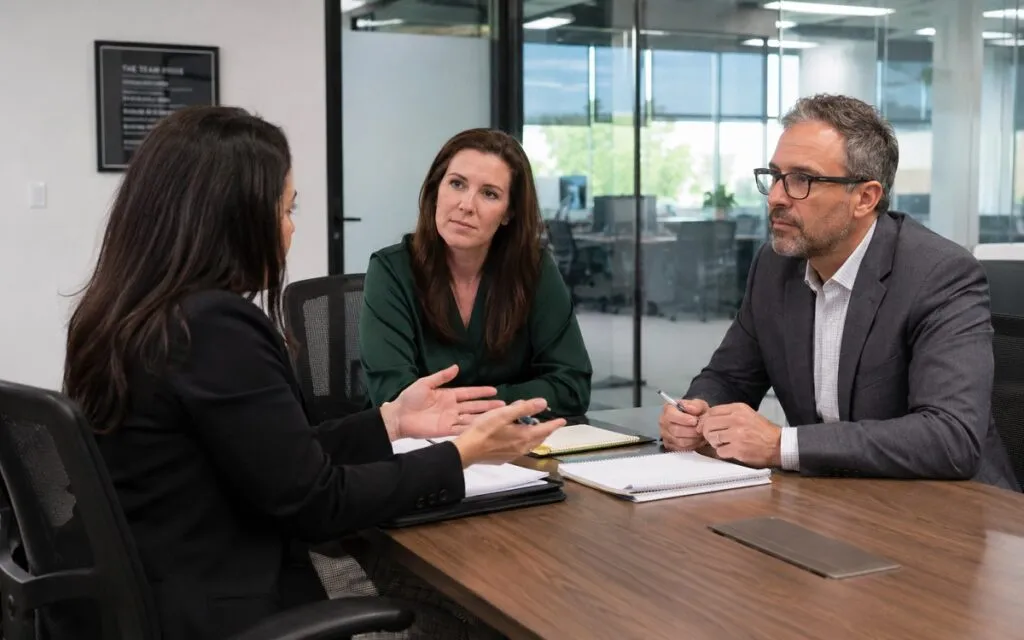
Most employers are no longer hiring technicians to perform only password resets and hardware swaps.
Today’s IT support professionals are expected to contribute across increasingly complex technology environments.
Frequently requested platforms include:
- Microsoft 365
- Microsoft Entra ID
- Active Directory
- Azure
- Intune
- ServiceNow
- Jira Service Management
- ConnectWise
- Zendesk
- SCCM
- Jamf
- VMware
- Cisco Meraki
- Okta
- CrowdStrike
- Mimecast
- Cisco AnyConnect
- PowerShell
- Remote monitoring and management platforms
Employers also value familiarity with ITIL principles, incident management, asset lifecycle management, endpoint security, identity management, and documentation standards.
Many New York City organizations have adopted cloud-first strategies while maintaining significant on-premises infrastructure. As a result, support teams regularly troubleshoot hybrid environments rather than exclusively cloud or on-premises systems.
IT professionals who can navigate both environments are often among the most sought-after candidates.
How Tier2Tek Evaluates IT Support Candidates
Technical knowledge alone rarely predicts long-term success in IT support.
Tier2Tek evaluates candidates across multiple dimensions to help employers reduce hiring risk.
Our evaluation process considers:
- Technical troubleshooting ability
- Windows and Microsoft 365 knowledge
- Active Directory administration experience
- Remote support proficiency
- Enterprise support experience
- Customer service communication
- Documentation habits
- Escalation judgment
- Problem-solving methodology
- Professionalism
- Career stability
- Adaptability within changing IT environments
We also assess whether candidates have supported environments similar to those of our clients.
For example, supporting a 75-person office differs significantly from supporting several thousand employees across multiple locations with formal change management processes and strict service level agreements.
Matching candidates to the operational realities of each employer helps improve long-term retention and overall hiring outcomes.
Because our recruiting team continuously builds relationships within the IT support community, we can often introduce qualified candidates within 1 to 3 days, including for organizations managing large-scale hiring projects.
Operational Risks Extend Beyond the Help Desk
When support teams remain understaffed, the effects eventually spread throughout the business.
Routine requests accumulate.
Project work slows.
Infrastructure improvements are postponed.
Security initiatives compete with daily operational demands.
These challenges commonly include:
| Operational Area | Potential Business Impact |
|---|---|
| Ticket Queue Growth | Longer employee downtime and slower response times |
| Employee Onboarding | Delays in workstation setup and account provisioning |
| Executive Support | Reduced responsiveness for leadership teams |
| Endpoint Management | Deferred upgrades and inconsistent device standards |
| Security Operations | Increased exposure from delayed patching and user support |
| Infrastructure Projects | Senior engineers diverted from strategic initiatives |
Many organizations focus on ticket volume alone when evaluating staffing needs.
However, experienced IT managers recognize that staffing shortages also reduce documentation quality, delay process improvements, increase technical debt, and create dependencies on a small number of senior employees.
These issues become increasingly difficult to resolve as organizations continue to grow.
Why Employers Choose Tier2Tek for IT Support Staffing
Tier2Tek understands that successful IT support hiring requires more than reviewing resumes.
We work to understand each client’s technology environment, support structure, business priorities, and hiring objectives before presenting candidates.
Employers partner with Tier2Tek because we offer:
- Qualified candidates in as little as 1 to 3 days
- High-volume hiring capabilities
- Recruiters experienced in technical staffing
- Candidates evaluated for both technical and interpersonal skills
- Support for contract, contract-to-hire, and direct hire needs
- Recruiting aligned with enterprise IT operations
Whether your organization is expanding an internal service desk, replacing critical support staff, or building an entirely new support team, our recruiting process is designed to help reduce hiring delays while maintaining quality.
For organizations seeking broader IT support staffing solutions, explore our IT Support and Service Desk Staffing services.
Frequently Asked Questions About IT Support Staffing in New York City
Many employers spend several weeks searching independently. Tier2Tek can often present qualified candidates within 1 to 3 days.
The city’s concentration of financial institutions, healthcare systems, law firms, media organizations, technology companies, and managed service providers creates sustained demand for experienced support professionals.
In many cases, yes. Fully onsite positions generally attract a smaller candidate pool than hybrid opportunities, particularly for experienced technicians.
Yes. We support both individual placements and high-volume hiring projects for organizations expanding service desks, desktop support teams, or enterprise IT operations.
Demand remains strong for Microsoft 365, Active Directory, Microsoft Entra ID, Intune, ServiceNow, SCCM, Jamf, PowerShell, endpoint management, identity management, and enterprise troubleshooting experience.
Our Editorial Standards and Recruiting Expertise
The information on this page is developed using current recruiting experience, employer hiring trends, enterprise IT staffing observations, and ongoing conversations with hiring managers across multiple industries.
Tier2Tek’s recruiting team continuously monitors changes in hiring demand, technical skill requirements, compensation trends, and operational challenges affecting IT support organizations. Our goal is to provide practical staffing insights that help employers make informed hiring decisions based on real market conditions rather than generic recruiting advice.
Request IT Support Staffing
Whether you need one experienced support professional or an entire team, Tier2Tek can help you identify qualified candidates quickly while reducing hiring delays and operational disruption.
We can provide qualified candidates within 1 to 3 days and support both individual hires and large-scale staffing initiatives.