IT Support Staffing in Las Vegas for Business Operations
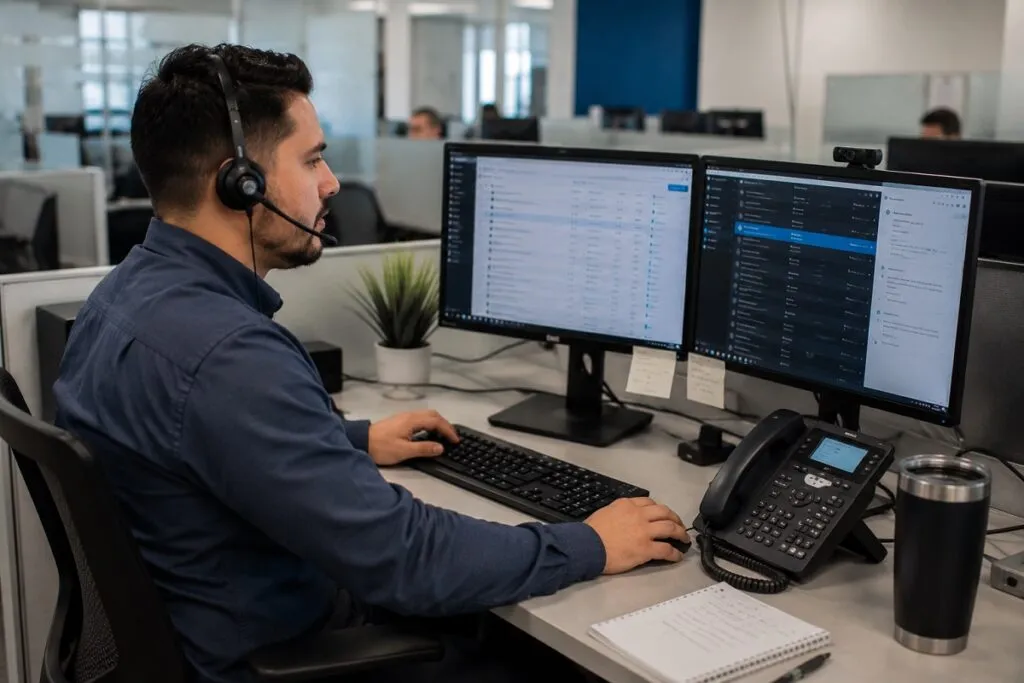
Las Vegas organizations depend on reliable IT support to keep business operations running without interruption. Whether supporting casino operations, hospitality groups, healthcare providers, logistics companies, professional services firms, or corporate headquarters, every support outage has operational consequences that extend well beyond the IT department. Delayed ticket resolution, understaffed help desks, poor escalation processes, and inconsistent desktop support often translate into lost employee productivity, customer service disruptions, compliance concerns, and increased business risk.
Tier2Tek Staffing helps organizations reduce these operational risks by identifying experienced IT support professionals who can stabilize daily support operations while supporting long-term business growth. Our recruiting approach emphasizes technical capability, communication skills, operational maturity, and the ability to perform effectively within complex production environments where downtime carries measurable financial impact.
Understanding IT Support Staffing Challenges in Las Vegas

Las Vegas presents a unique technology employment landscape. While many employers recognize the importance of dependable IT support, competition for experienced professionals has increased considerably across multiple industries.
Unlike markets dominated by large software companies, Las Vegas demand comes from a broad collection of organizations operating around the clock. Resort properties, entertainment venues, healthcare systems, manufacturing facilities, distribution centers, municipal agencies, and rapidly expanding professional service firms all compete for the same experienced support talent.
This creates several staffing challenges:
- Limited availability of experienced Tier 2 and Tier 3 support professionals
- Competition for technicians with enterprise infrastructure experience
- Rising expectations for hybrid support capabilities
- Increasing demand for customer service experience alongside technical expertise
- Longer hiring timelines for candidates with specialized platforms
Many organizations underestimate how quickly qualified candidates receive competing offers. Waiting several weeks between interviews often results in losing strong candidates before hiring decisions are finalized.
Businesses operating twenty-four hour environments experience even greater hiring pressure because support professionals with shift flexibility remain in especially high demand.
Operational Risk Begins with IT Support Coverage
Reliable IT support directly affects business continuity.
Support teams often become the first point of contact whenever technology issues threaten business operations. A small staffing gap can quickly grow into widespread operational disruption.
Common operational risks include:
| Operational Issue | Business Impact |
|---|---|
| Slow help desk response | Employee productivity declines throughout the organization |
| Insufficient desktop support | Delayed onboarding and equipment deployment |
| Escalation bottlenecks | Longer system outages and increased downtime |
| Poor documentation | Knowledge loss during employee turnover |
| Inadequate after-hours coverage | Increased operational risk for 24/7 businesses |
| Understaffed support teams | Higher burnout and increased employee attrition |
Organizations frequently attempt to compensate by asking infrastructure engineers, system administrators, or cybersecurity staff to absorb support responsibilities. While this may provide temporary relief, it often delays strategic projects while increasing burnout across technical teams.
Why Las Vegas Employers Face Different Hiring Realities
Las Vegas operates on business schedules that differ from many metropolitan areas.
Large hospitality organizations, casinos, entertainment venues, convention facilities, and tourism businesses require continuous technical support. Employees work every hour of the day, making overnight, weekend, and holiday IT coverage a normal operational requirement rather than an exception.
This changes hiring priorities.
Experienced support professionals capable of working rotating shifts, supporting executive users, and maintaining composure during high-pressure incidents remain difficult to replace.
Convention schedules also create temporary spikes in support demand. Large conferences can dramatically increase ticket volume across networking, endpoint management, conference room technology, mobile devices, and identity management systems. Organizations without scalable staffing strategies often find themselves stretched during these peak periods.
Healthcare providers across Southern Nevada introduce another layer of complexity. Support teams frequently balance clinical application support, HIPAA requirements, endpoint security, and strict uptime expectations where delays affect patient care rather than simple office productivity.
Staffing Scalability Matters More Than Most Organizations Expect

Many businesses focus exclusively on filling today’s vacancy.
Experienced IT leaders focus on building support organizations capable of adapting to future operational changes.
Growth often introduces:
- Office expansions
- New business acquisitions
- Cloud migrations
- ERP implementations
- Security initiatives
- Office relocations
- Large employee onboarding events
Each initiative increases support demand before reducing it.
Organizations that staff only for current ticket volume frequently experience service degradation during periods of growth.
Scalable staffing considers:
- Current support ratios
- Growth projections
- Ticket trends
- Escalation capacity
- Geographic coverage
- Skill redundancy
- Management bandwidth
These factors reduce operational risk while improving long-term service stability.
Remote and Hybrid Support Have Changed Employer Expectations
Remote work permanently altered IT support responsibilities.
Today’s support professionals rarely manage only office workstations.
Many organizations now support:
- Remote employees
- Hybrid workers
- Multiple office locations
- Mobile devices
- Home networks
- Cloud collaboration platforms
- Zero Trust security environments
Las Vegas employers increasingly seek technicians comfortable troubleshooting remotely while maintaining strong customer service skills.
Common technologies include:
- Microsoft Intune
- Microsoft 365
- Azure Active Directory
- Entra ID
- Microsoft Teams
- Cisco Meraki
- VMware
- Citrix
- ServiceNow
- Jira Service Management
- ConnectWise
- NinjaOne
- VMware Horizon
- Zoom
- Okta
Technical knowledge alone no longer defines successful support professionals.
Communication, documentation, prioritization, and remote troubleshooting have become equally valuable hiring considerations.
How Tier2Tek Evaluates IT Support Candidates

Tier2Tek evaluates candidates beyond certifications and resumes.
Our recruiting process examines how professionals perform inside real business environments where operational continuity depends on consistent support delivery.
Candidate evaluation includes:
- Troubleshooting methodology
- Incident prioritization
- Customer communication
- Ticket documentation quality
- Active Directory administration
- Microsoft ecosystem knowledge
- Endpoint management experience
- Hardware diagnostics
- Network troubleshooting fundamentals
- Escalation judgment
- Business professionalism
- Adaptability within changing environments
We also assess employment history for indicators of operational stability.
Candidates who have successfully supported fast-paced environments with measurable uptime expectations often transition more effectively into demanding enterprise support roles.
Common Hiring Mistakes That Increase Operational Risk
Many organizations unintentionally create hiring problems through process decisions rather than labor shortages.
Common mistakes include:
- Prioritizing certifications over demonstrated troubleshooting ability
- Underestimating communication skills
- Delaying interview scheduling
- Using unrealistic job descriptions
- Combining multiple technical positions into one role
- Ignoring shift scheduling expectations during recruiting
- Failing to evaluate documentation habits
- Overlooking long-term retention factors
Another common issue involves expecting support professionals to possess infrastructure engineering experience while offering compensation aligned with entry-level help desk positions.
This significantly reduces available candidate pools.
Successful hiring aligns technical expectations with realistic market conditions.
Employee Productivity Depends on Effective IT Support
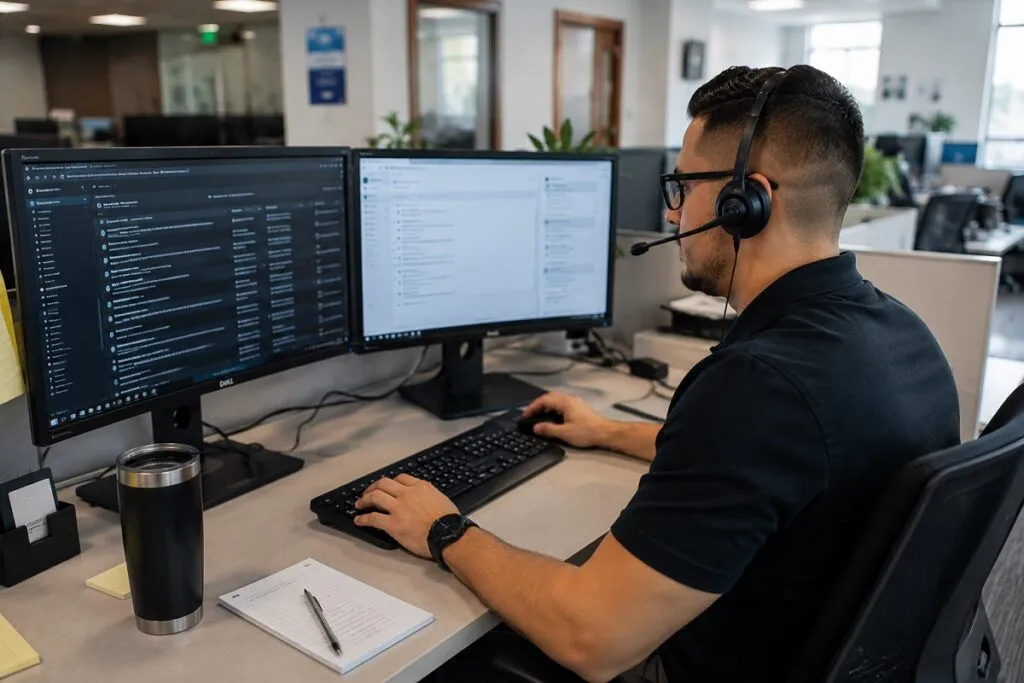
Every unresolved technology issue affects more than the employee who opened the ticket.
Delays ripple across departments.
Examples include:
- Sales teams unable to access CRM systems
- Finance personnel waiting for workstation replacements
- Healthcare staff delayed by application issues
- Operations teams unable to print shipping documentation
- Executives experiencing meeting technology failures
When support staffing falls behind, lost productivity accumulates quickly.
Organizations often measure help desk performance using ticket metrics alone.
More mature IT departments also evaluate:
- Time to restore productivity
- Employee satisfaction
- First-contact resolution
- Escalation frequency
- Repeat incidents
- Business interruption duration
These metrics better reflect operational effectiveness.
Local Labor Market Observations
Las Vegas continues attracting employers expanding regional operations due to favorable business conditions and population growth.
Technology hiring has broadened alongside that expansion.
Rather than competing primarily with technology companies, employers increasingly compete with hospitality corporations, healthcare systems, logistics providers, financial organizations, and national companies establishing regional service operations.
Many experienced support professionals also prefer employers offering predictable schedules instead of continuous overnight rotations. Organizations that require extensive after-hours support without clearly communicating those expectations often experience higher turnover after hiring.
Businesses opening satellite offices in the Las Vegas market frequently assume local support hiring mirrors larger technology hubs. In practice, candidates with strong enterprise experience often receive multiple opportunities from employers seeking similar Microsoft, endpoint management, and customer support skill sets, making hiring speed a significant competitive factor.
Selecting the Right Staffing Strategy
Different business situations require different staffing approaches.
| Business Situation | Staffing Consideration |
|---|---|
| Rapid company growth | Build scalable support teams before ticket volume spikes |
| High employee turnover | Focus on operational continuity and knowledge retention |
| Multi-site operations | Recruit candidates with remote support experience |
| 24/7 business operations | Prioritize shift flexibility and documentation quality |
| Cloud transformation | Blend traditional desktop support with modern endpoint management skills |
| Security modernization | Recruit support staff comfortable with identity management and endpoint security |
Strategic staffing decisions reduce long-term disruption while improving service consistency.
Why Businesses Partner with Tier2Tek Staffing
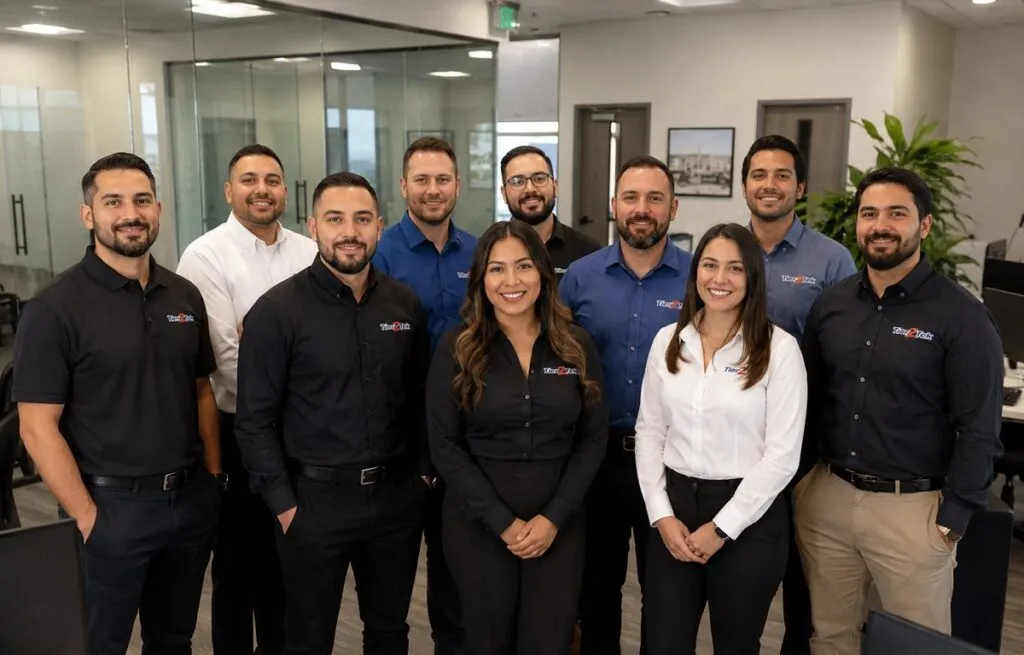
Tier2Tek understands that IT support staffing influences far more than ticket resolution.
Reliable support professionals contribute directly to:
- Business continuity
- Employee productivity
- User satisfaction
- Technology adoption
- Operational resilience
- Security readiness
- Infrastructure stability
Our recruiting process emphasizes long-term hiring success rather than resume volume.
Because we specialize in technology recruiting, we understand how support teams interact with infrastructure, cloud platforms, cybersecurity initiatives, endpoint management, and business operations.
That technical understanding allows us to evaluate candidates using operational criteria recognized by experienced IT leaders.
For organizations seeking broader IT support recruiting solutions, visit our hub for additional staffing insights and service information.
Editorial Standards and Recruiting Expertise
Tier2Tek develops staffing content using insights from experienced technology recruiters, employer hiring trends, enterprise IT operations, and evolving workforce conditions. Our editorial process emphasizes practical guidance that reflects how IT departments operate in real business environments rather than generic recruiting advice.
Our recruiters regularly engage with hiring managers, infrastructure leaders, service desk managers, and technology executives, helping us understand how operational continuity, technical skills, communication ability, and organizational fit influence long-term hiring success.
Frequently Asked Questions
Competition remains strong for professionals with enterprise Microsoft experience, customer-facing support skills, endpoint management knowledge, and experience supporting multi-site organizations. Hiring timelines often extend when employers require specialized experience combined with shift flexibility.
Hospitality, gaming, healthcare, logistics, manufacturing, financial services, professional services, and regional corporate headquarters all contribute to sustained hiring demand.
No. Remote support has expanded responsibilities rather than eliminating them. Organizations still require professionals capable of supporting distributed employees, managing endpoints, handling executive support, coordinating hardware logistics, and maintaining operational continuity.
Many employers prioritize Microsoft 365 administration, Active Directory, Entra ID, endpoint management, ServiceNow, networking fundamentals, hardware troubleshooting, documentation, customer communication, and structured troubleshooting methodologies.
We assess technical knowledge alongside communication ability, troubleshooting methodology, documentation practices, operational judgment, professionalism, adaptability, and experience working within production business environments.
Experienced IT support professionals often receive multiple interview requests quickly. Lengthy hiring processes increase the likelihood that qualified candidates accept competing offers before decisions are finalized.
Request IT Support Staffing
Whether your organization needs to strengthen help desk operations, improve business continuity, support expansion, or reduce operational risk, Tier2Tek Staffing helps employers identify experienced IT support professionals who align with technical requirements and long-term business objectives.