IT Support Staffing in Indianapolis
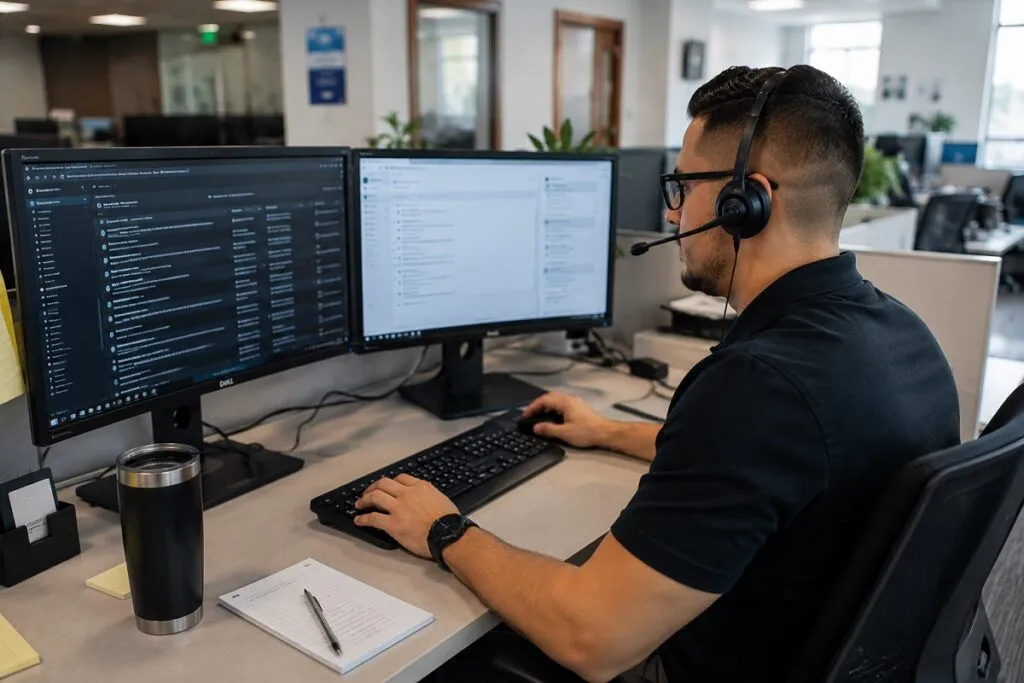
Businesses across Indianapolis depend on responsive IT support teams to keep operations running across corporate offices, manufacturing facilities, healthcare environments, distribution centers, financial institutions, and hybrid workforces. Downtime affects production schedules, customer service, logistics, and regulatory compliance long before it becomes an infrastructure problem. Employers need IT support professionals who can resolve incidents efficiently, communicate effectively with users, understand operational priorities, and escalate issues appropriately.
Tier2Tek Staffing helps Indianapolis employers hire experienced IT support professionals who understand enterprise support operations, structured troubleshooting, endpoint management, ticket lifecycle management, and business continuity expectations. Our recruiting process focuses on identifying candidates who can contribute immediately within real-world support environments rather than simply matching technical keywords on a resume.
Supporting Modern IT Operations Across Indianapolis
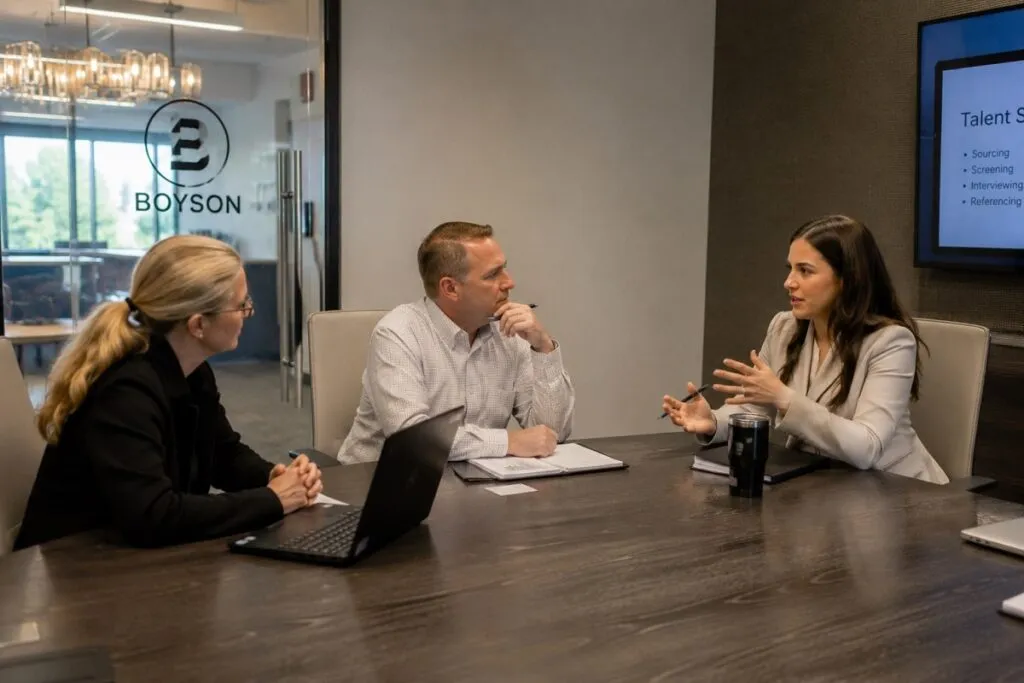
Indianapolis has developed one of the Midwest’s most diverse business environments. Large healthcare systems, pharmaceutical manufacturers, logistics organizations, advanced manufacturing facilities, insurance companies, higher education institutions, motorsports organizations, and growing technology companies all rely on dependable IT support operations.
While these organizations operate in different industries, many share similar operational realities:
- Hybrid workforces requiring remote endpoint support
- Multiple office and production locations
- Large Windows-based environments
- Microsoft 365 administration
- Active Directory identity management
- Mobile device support
- Cloud application troubleshooting
- Security-first desktop management
- Vendor coordination
- Asset lifecycle management
Many Indianapolis employers also operate facilities outside downtown, including Fishers, Carmel, Greenwood, Plainfield, Whitestown, and the northwest logistics corridor. IT support professionals frequently travel between offices or support distributed users who work across multiple locations rather than a single corporate campus.
Experienced hiring managers understand that successful support technicians must adapt quickly between office users, warehouse employees, executives, remote workers, and production environments without disrupting business operations.
Infrastructure Environments IT Support Teams Commonly Support
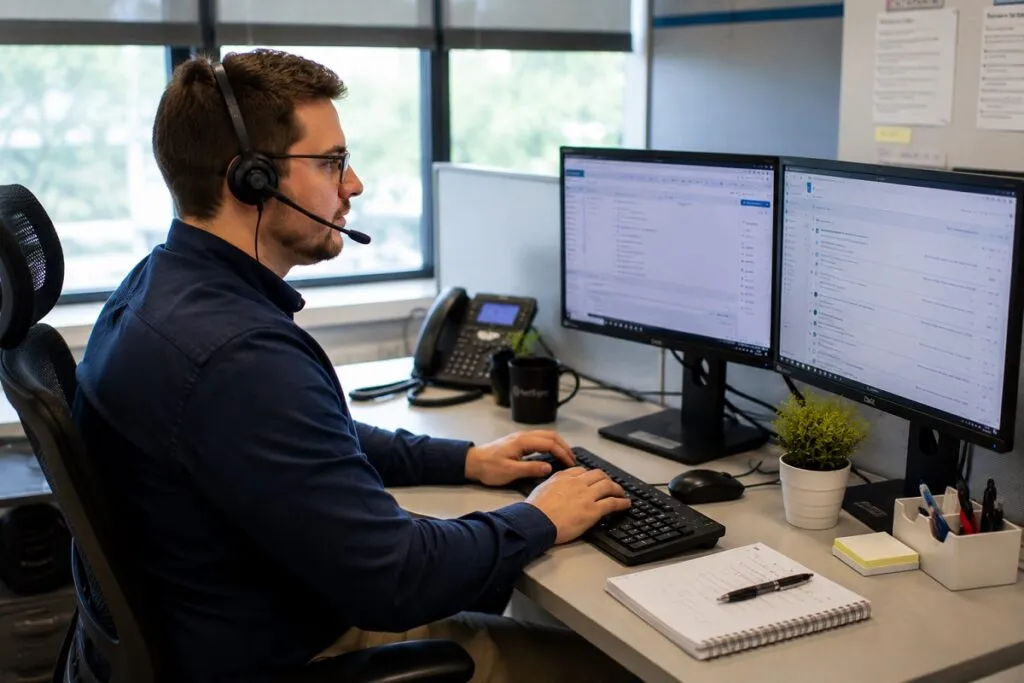
Indianapolis employers rarely operate simple desktop environments. Most support teams work across layered infrastructure where desktop issues often intersect with networking, identity services, cloud platforms, cybersecurity, and business applications.
Typical infrastructure environments include:
| Infrastructure Area | Operational Reality |
|---|---|
| Microsoft 365 | Outlook, Teams, SharePoint, OneDrive administration and troubleshooting |
| Active Directory | User provisioning, group policy, password management, authentication |
| Microsoft Entra ID | Hybrid identity management and conditional access |
| Windows 10 & Windows 11 | Enterprise endpoint deployment and lifecycle management |
| VMware and Hyper-V | Basic virtual infrastructure awareness for escalation |
| Intune and MECM | Endpoint deployment, compliance, software distribution |
| Cisco, Meraki and Aruba | Network troubleshooting and user connectivity |
| VPN and Remote Access | Hybrid workforce connectivity and authentication |
| Azure Services | Cloud application support and identity integration |
| Endpoint Security | Microsoft Defender, CrowdStrike, SentinelOne and MFA support |
Many Indianapolis organizations continue operating hybrid infrastructures that combine on premises servers with Microsoft Azure services. Support technicians frequently determine whether incidents originate from local infrastructure, cloud authentication, endpoint configuration, or third-party SaaS applications before escalating to infrastructure engineers.
This ability to narrow the scope of an issue significantly reduces resolution times and improves service desk efficiency.
One operational characteristic seen across many Indianapolis employers is the continued presence of legacy manufacturing software alongside newer cloud platforms. IT support professionals often move between supporting modern Microsoft environments and specialized production applications that cannot tolerate unnecessary changes or downtime.
How Support Workflows Function in Indianapolis IT Departments
Effective support organizations follow structured workflows that minimize disruption while maintaining service level expectations.
Most enterprise support environments include:
- Incident intake
- Initial triage
- User verification
- Remote troubleshooting
- Knowledge base consultation
- Escalation when required
- Resolution validation
- Documentation
- Ticket closure
- Trend analysis
Support professionals are expected to determine whether an issue belongs within desktop support, networking, systems administration, cybersecurity, application support, or outside vendor management.
Strong technicians understand that resolving the immediate problem is only one objective. Proper documentation ensures recurring issues can be identified, automation opportunities developed, and future incidents resolved more efficiently.
Many Indianapolis employers have invested heavily in ITIL-based service management practices, making documentation quality nearly as important as technical troubleshooting skills.
Hybrid Support Has Changed Employer Expectations
Hybrid work has permanently changed IT support operations.
Support teams now manage users working from:
- Corporate offices
- Home offices
- Customer locations
- Manufacturing facilities
- Distribution centers
- Healthcare campuses
- Executive travel
This creates additional troubleshooting variables including:
- Residential internet connections
- Personal networking equipment
- VPN reliability
- MFA authentication
- Remote printing
- Video conferencing
- Endpoint compliance
- Device encryption
- Cloud synchronization
Employers increasingly value technicians who communicate clearly with remote users while maintaining structured troubleshooting processes instead of relying on trial-and-error support.
Operational Bottlenecks That Affect Indianapolis IT Departments
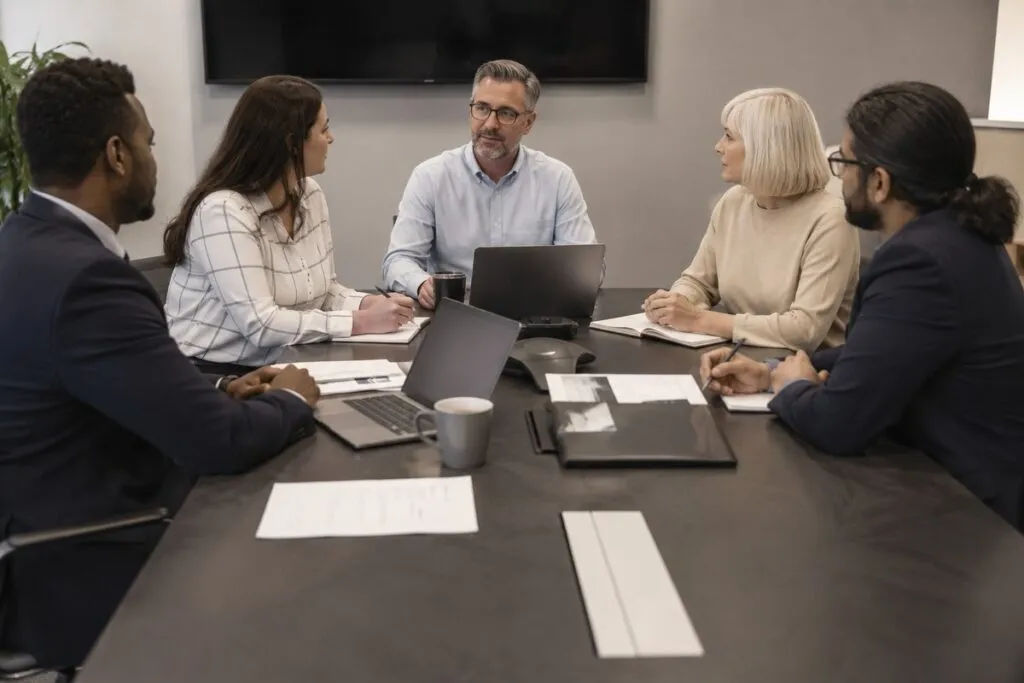
Several recurring operational challenges influence hiring decisions across Indianapolis.
Rather than simply increasing headcount, IT leaders often seek candidates capable of reducing friction throughout support operations.
Common bottlenecks include:
- High ticket volumes following Microsoft updates
- User onboarding delays
- Equipment procurement coordination
- Executive support requests
- Inconsistent ticket documentation
- Escalation delays
- Software deployment failures
- Identity synchronization issues
- Multi-factor authentication enrollment
- Printer support across multiple facilities
- Asset inventory accuracy
Distribution and logistics organizations around Indianapolis frequently operate around the clock. That means support teams often inherit tickets across shifts, making documentation quality particularly important. Poor ticket notes can extend outages because technicians spend valuable time recreating previous troubleshooting efforts rather than continuing the resolution process.
Healthcare organizations present another operational reality. Support staff often balance strict security controls with the need to restore access quickly for clinicians and administrative personnel. Employers therefore place significant value on technicians who understand urgency without bypassing change management or security procedures.
Business Continuity Depends on Strong Front Line Support
Many organizations associate business continuity with infrastructure engineers.
In reality, service desk and desktop support teams play an equally important role.
Front line technicians often identify:
- Hardware failures
- Security incidents
- Network outages
- Storage issues
- Authentication failures
- Email disruptions
- Cloud synchronization problems
- Malware symptoms
- Application failures
Early recognition allows infrastructure teams to respond before small incidents become enterprise outages.
Well-trained support professionals also ensure users receive timely communication during major incidents, reducing duplicate tickets and improving overall confidence in the IT organization.
Platforms Commonly Used by Indianapolis Employers
Support professionals hired in Indianapolis frequently work within standardized enterprise toolsets.
Common platforms include:
- ServiceNow
- Jira Service Management
- Zendesk
- Freshservice
- ConnectWise Manage
- Microsoft Endpoint Manager
- Intune
- SCCM
- Microsoft Teams
- TeamViewer
- BeyondTrust
- Bomgar
- Remote Desktop
- Cisco AnyConnect
- VMware Horizon
- Azure Virtual Desktop
- Okta
- Duo Security
Experience across multiple platforms demonstrates adaptability, but employers generally prioritize structured troubleshooting and documentation over familiarity with a single ticketing system.
How Tier2Tek Evaluates IT Support Candidates
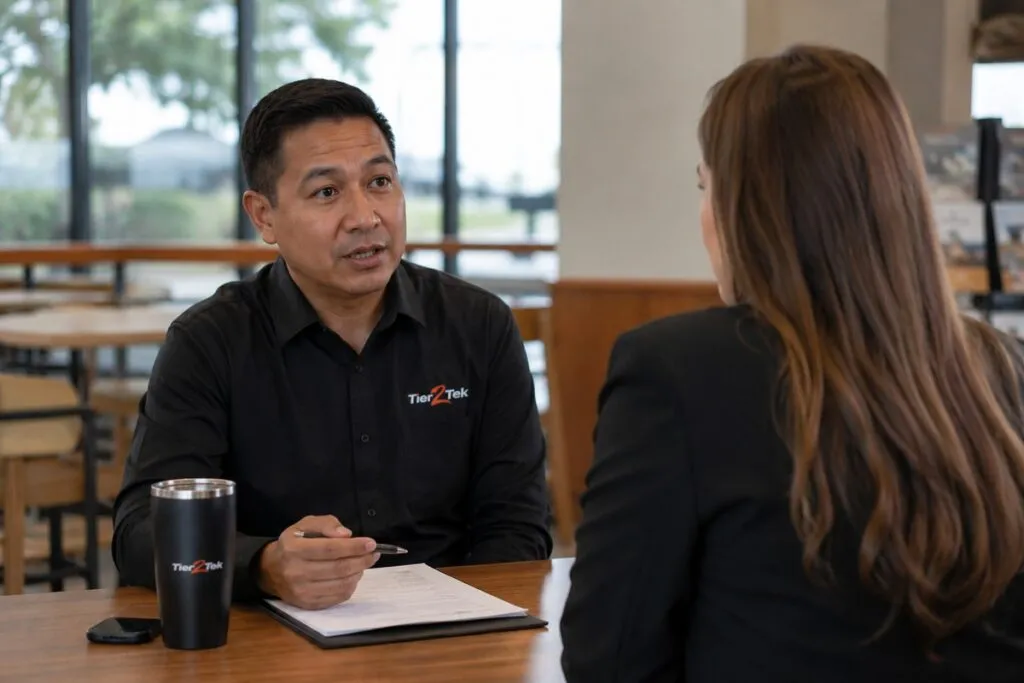
Technical knowledge alone rarely predicts long-term success within enterprise support teams.
Tier2Tek evaluates candidates across multiple operational dimensions.
Technical troubleshooting
Candidates discuss real support scenarios involving:
- Windows troubleshooting
- Microsoft 365
- Active Directory
- Network connectivity
- Endpoint management
- Hardware diagnostics
- Remote support
Operational discipline
We assess how candidates:
- Document tickets
- Prioritize incidents
- Manage competing requests
- Follow escalation procedures
- Work within SLAs
- Handle recurring problems
Communication skills
Support professionals represent the IT department during stressful situations.
We evaluate:
- User communication
- Executive professionalism
- Listening skills
- Documentation quality
- Customer service approach
Team collaboration
Enterprise support depends upon effective collaboration between:
- Desktop support
- Service desk
- Infrastructure
- Security
- Application support
- Network engineering
- Vendors
Candidates who understand cross-functional operations generally integrate more effectively into existing IT teams.
Staffing Tradeoffs Employers Should Consider
Hiring decisions often involve balancing immediate technical needs against long-term operational flexibility.
| Hiring Priority | Operational Tradeoff |
|---|---|
| Highly specialized technician | Faster on specific technologies but narrower support range |
| Broad enterprise support professional | Greater flexibility across diverse ticket queues |
| Strong customer service focus | Improved user satisfaction with moderate technical growth potential |
| Deep technical expertise | Better escalation quality but potentially less end-user engagement |
| Local onsite experience | Faster adaptation to distributed facilities and hybrid environments |
The best hiring decision depends upon ticket volume, escalation structure, existing team composition, and future technology initiatives rather than simply selecting the candidate with the longest resume.
Why Employers Choose Tier2Tek for IT Support Staffing
Tier2Tek understands that successful support hiring requires more than identifying certifications or software familiarity.
We evaluate candidates based on how they operate inside real enterprise environments.
That includes understanding:
- Incident prioritization
- Escalation discipline
- Root cause thinking
- Knowledge sharing
- Documentation quality
- Business communication
- Operational maturity
- Team collaboration
- Continuous improvement mindset
Because we recruit across a wide range of IT support roles, we recognize the differences between organizations that require high-volume service desk specialists and those seeking experienced desktop professionals supporting executives, manufacturing operations, or multi-site enterprises.
For employers building broader support organizations, our Service Desk Staffing expertise provides additional hiring resources through our main hub page.
Our Editorial Standards and Recruiting Expertise
Tier2Tek develops hiring content with input from experienced technical recruiters who work directly with employers and IT professionals across enterprise support environments. Our content reflects practical recruiting experience, current infrastructure trends, operational hiring expectations, and established IT service management practices rather than generic staffing language.
We regularly review evolving technologies, enterprise support workflows, and employer expectations to keep our staffing guidance aligned with today’s IT operations.
Frequently Asked Questions
We recruit service desk analysts, desktop support technicians, help desk specialists, technical support representatives, field support technicians, endpoint support professionals, IT support specialists, and team leads supporting enterprise environments.
Yes. Many Indianapolis employers maintain hybrid support models requiring technicians who can effectively support both remote employees and onsite operations across multiple facilities.
We discuss real operational scenarios involving Windows, Microsoft 365, Active Directory, networking, endpoint management, ticket prioritization, escalation practices, and communication with end users.
Yes. Many employers operate offices, warehouses, healthcare facilities, manufacturing plants, or regional locations requiring technicians comfortable supporting distributed users and coordinating with centralized infrastructure teams.
Yes. We regularly recruit professionals experienced with ServiceNow, Jira Service Management, Zendesk, Freshservice, ConnectWise, and other enterprise service management platforms.
Recruiting timelines depend on the complexity of the position, technical requirements, and hiring process. We begin candidate sourcing promptly after understanding your operational environment, technical expectations, and team structure.
Request IT Support Staffing
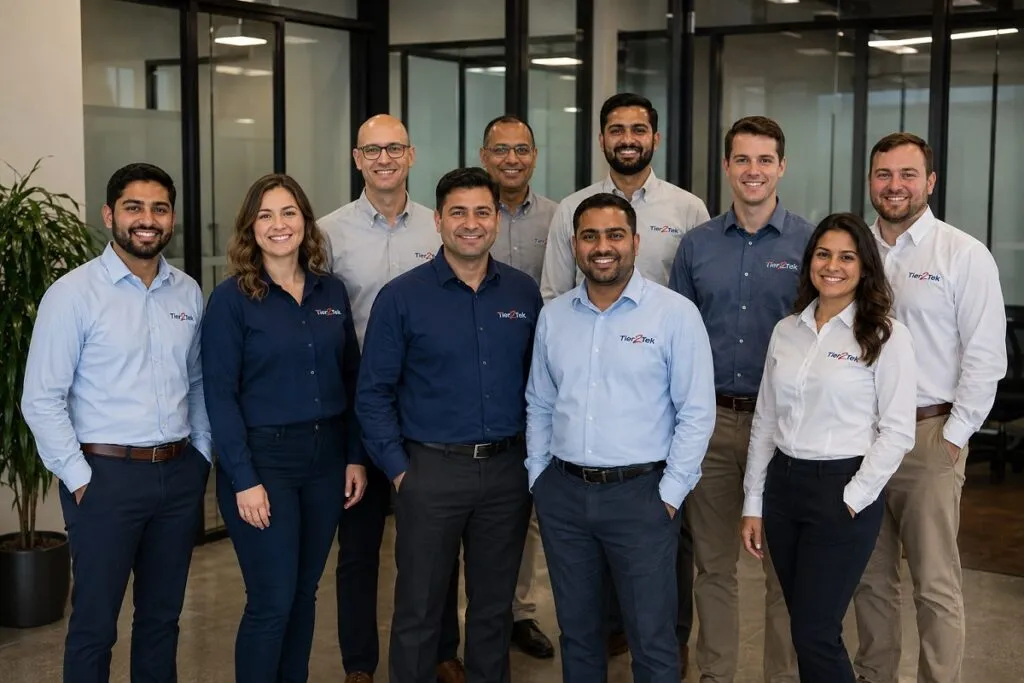
Whether you need experienced desktop support professionals, service desk analysts, or enterprise IT support specialists, Tier2Tek helps identify candidates who understand real operational environments, structured troubleshooting, and business-focused support delivery.