IT Support Staffing in Cleveland for Business Operations
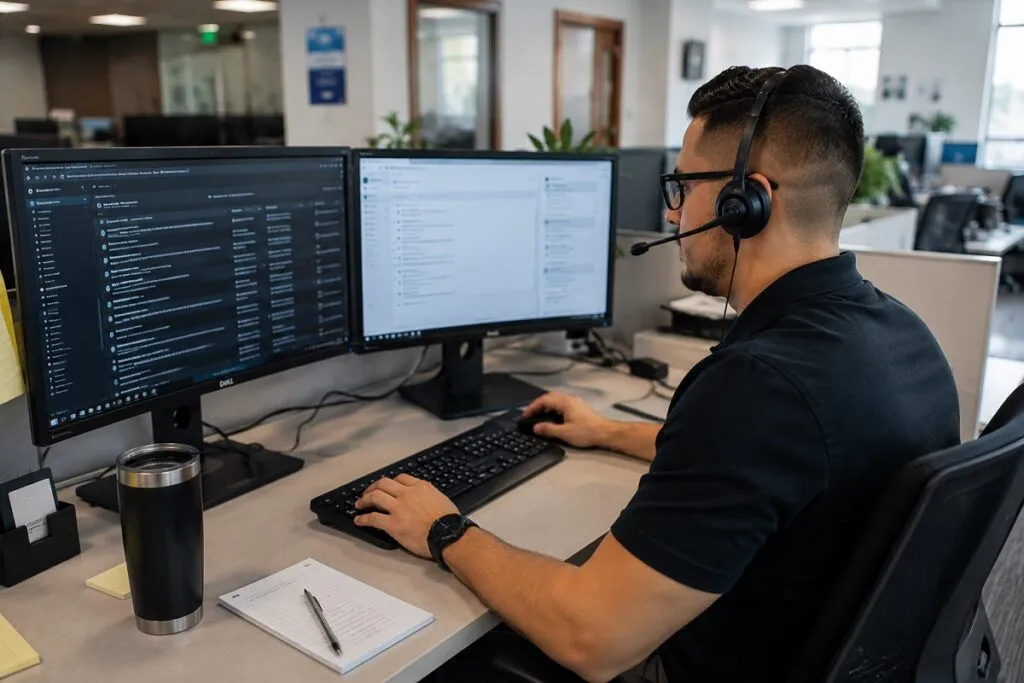
Reliable IT support is one of the most important operational safeguards for organizations across Cleveland. Whether supporting manufacturing facilities, healthcare networks, financial institutions, logistics operations, or corporate headquarters, every unresolved technical issue directly affects employee productivity, customer service, cybersecurity, and business continuity.
Finding experienced IT support professionals in the Cleveland market has become increasingly complex. Employers are competing for technicians who can support hybrid workforces, cloud environments, Microsoft ecosystems, endpoint security, mobile devices, enterprise applications, and increasingly complex support workflows. Hiring delays often create operational risks that extend far beyond an understaffed help desk.
Tier2Tek Staffing helps organizations reduce those risks by identifying IT support professionals who can perform effectively within real business environments, not simply candidates whose resumes contain the right technical keywords.
Why IT Support Staffing Has Become a Business Risk in Cleveland

Many Cleveland organizations no longer view IT support as a purely technical function. It has become an operational discipline directly connected to revenue protection, employee productivity, cybersecurity, compliance, and customer experience.
A delayed password reset may prevent an employee from processing orders. A slow hardware replacement can delay production. Poor ticket prioritization may leave critical infrastructure issues unresolved while less important requests consume support resources.
The challenge is rarely technology alone. It is staffing.
Experienced IT support professionals who understand business operations remain difficult to hire because employers increasingly expect candidates to support:
- Microsoft 365
- Active Directory
- Azure environments
- Endpoint management
- Intune
- VPN connectivity
- Hybrid collaboration platforms
- Ticketing systems
- Multi-site user environments
- Security awareness initiatives
Candidates with both technical depth and customer-facing communication skills are consistently among the most competitive talent segments in Northeast Ohio.
For many organizations, every additional week an IT support position remains open increases ticket backlog, employee frustration, and operational exposure.
Cleveland Employers Face Unique Technology Hiring Challenges
Cleveland’s economy creates staffing dynamics that differ from many technology markets.
The region supports a diverse combination of advanced manufacturing, healthcare systems, financial services, insurance, higher education, logistics, and corporate operations. Each sector places different expectations on IT support teams.
Manufacturing employers often require technicians comfortable supporting production environments where downtime affects operational throughput.
Healthcare organizations require familiarity with compliance, medical device connectivity, and high-priority clinical support.
Financial institutions typically expect stronger security awareness, user authentication expertise, and experience supporting regulated environments.
Because many experienced support professionals possess transferable skills across these industries, employers frequently compete for the same limited talent pool.
An additional challenge involves organizations that operate multiple facilities across Greater Cleveland. IT support teams are often expected to travel between offices, warehouses, distribution centers, or manufacturing plants while also supporting remote users. This operational flexibility narrows the available candidate pool even further.
Operational Consequences of Understaffed IT Support

Business leaders often underestimate how quickly understaffed support teams affect overall operations.
| Operational Issue | Business Impact |
|---|---|
| Growing ticket backlog | Lower employee productivity and slower issue resolution |
| Delayed onboarding | New hires become productive more slowly |
| Burnout among senior technicians | Higher turnover and loss of institutional knowledge |
| Slow hardware deployment | Project delays and missed operational deadlines |
| Inconsistent documentation | Increased dependency on individual employees |
| Escalation bottlenecks | Critical incidents remain unresolved longer |
Most organizations initially absorb these issues without recognizing their cumulative cost.
Employees lose small amounts of productive time throughout the day while waiting for support. Managers spend more time coordinating technical problems. IT leaders shift attention away from strategic initiatives toward operational firefighting.
Eventually these small inefficiencies become measurable business costs.
One observation frequently seen among Cleveland employers is the growing dependence on lean internal IT teams supporting multiple facilities with limited redundancy. A single unexpected resignation can immediately increase ticket response times across several locations because specialized knowledge often resides with only one technician.
Remote and Hybrid Support Changes Hiring Requirements
The shift toward hybrid work has permanently changed IT support staffing.
Many Cleveland businesses now require technicians who can successfully support both office-based employees and distributed workforces.
Modern support professionals may troubleshoot:
- Home network connectivity
- VPN authentication
- Microsoft Teams issues
- Cloud application access
- Mobile device management
- Remote desktop environments
- Multi-factor authentication
- Endpoint security
- Video conferencing platforms
These responsibilities require stronger communication skills than traditional desktop support positions.
Employers increasingly value technicians who can guide users through complex technical issues remotely while maintaining professionalism and minimizing employee downtime.
Candidates who demonstrate patience, documentation discipline, and structured troubleshooting processes often outperform technically stronger candidates with weaker communication abilities.
Staffing Scalability During Business Growth
Business growth creates staffing challenges that many organizations underestimate.
A company opening new facilities, acquiring another business, implementing ERP software, or expanding remote operations often experiences a dramatic increase in support demand before additional hiring begins.
This creates temporary operational gaps that place significant pressure on existing IT teams.
Common scaling events include:
- Office expansions
- ERP implementations
- Cloud migrations
- Hardware refresh projects
- Security initiatives
- Mergers and acquisitions
- New warehouse openings
- New manufacturing lines
- Employee onboarding surges
Strategic staffing helps organizations increase support capacity before these events begin rather than after operational bottlenecks appear.
Common Hiring Mistakes Cleveland Employers Make
Several hiring patterns repeatedly slow IT support recruitment across Northeast Ohio.
One common mistake is evaluating candidates almost entirely on certifications.
While certifications demonstrate technical knowledge, they rarely measure troubleshooting ability, communication style, prioritization skills, or customer service under pressure.
Another frequent issue involves unrealistic job descriptions.
Organizations sometimes combine desktop support, systems administration, cybersecurity, networking, Microsoft 365 administration, Azure support, hardware deployment, and application administration into a single position.
These expectations dramatically reduce available candidate pools.
Another challenge involves hiring solely for immediate technical needs while overlooking long-term adaptability.
Technology environments evolve continuously. Organizations benefit from technicians who learn quickly rather than individuals whose experience matches only today’s infrastructure.
A reality unique to Cleveland’s employer market is that experienced support professionals often receive opportunities from healthcare systems, manufacturing companies, and regional financial organizations simultaneously. Lengthy interview processes frequently result in losing qualified candidates before final hiring decisions are made.
How Tier2Tek Evaluates IT Support Candidates

Technical hiring requires more than resume screening.
Tier2Tek evaluates candidates across multiple dimensions that affect long-term operational success.
Our assessment process includes consideration of:
- Troubleshooting methodology
- Communication with non-technical users
- Ticket documentation habits
- Escalation judgment
- Microsoft ecosystem experience
- Active Directory administration
- Remote support capability
- Security awareness
- Customer service mindset
- Stability and career progression
- Adaptability to changing environments
We also examine the environments where candidates have previously worked.
Supporting 300 users across multiple manufacturing facilities requires different operational experience than supporting a small office.
Likewise, supporting regulated healthcare environments presents different challenges than supporting logistics operations.
Understanding these distinctions allows stronger alignment between candidate capabilities and employer expectations.
Business Systems Commonly Supported by Cleveland Employers
The Cleveland market includes organizations operating diverse technology stacks.
| Frequently Supported Platforms | Typical Business Environment |
|---|---|
| Microsoft 365 | Corporate offices and professional services |
| Active Directory | Enterprise user management |
| Azure | Hybrid cloud environments |
| VMware | Corporate infrastructure |
| Cisco networking | Multi-site operations |
| Intune | Endpoint management |
| ServiceNow | Enterprise ticket management |
| Jira Service Management | Technology organizations |
| ConnectWise | Managed service providers |
| SCCM | Device deployment and management |
Rather than focusing on software familiarity alone, employers increasingly seek technicians who understand how these platforms support broader business operations.
For example, an Intune deployment is not simply a device management project. It directly affects onboarding efficiency, security compliance, remote workforce productivity, and endpoint lifecycle management.
Strategic Staffing Decisions Affect Long-Term Operations

Every staffing decision creates operational tradeoffs.
Hiring too slowly increases workload for existing employees.
Hiring too quickly without proper evaluation increases turnover risk.
Promoting internal staff too early may create support gaps elsewhere.
Relying exclusively on contractors may reduce institutional knowledge over time.
Business leaders increasingly balance these competing priorities while maintaining service levels, project delivery, and cybersecurity readiness.
Effective staffing requires understanding how today’s hiring decision affects operations six months from now, not simply filling today’s vacancy.
Business Continuity Depends on Strong IT Support
Organizations often focus business continuity planning on infrastructure.
However, people remain equally important.
Without experienced support professionals:
- Incident response slows.
- Hardware replacements take longer.
- User productivity declines.
- Security issues remain unresolved.
- New employee onboarding is delayed.
- Critical applications experience longer disruptions.
Operational resilience depends on maintaining sufficient staffing capacity to respond quickly when unexpected technical issues occur.
One trend increasingly visible across Cleveland organizations is the growing expectation that IT support teams participate in cybersecurity response, endpoint monitoring, and identity management alongside traditional help desk responsibilities. This broader operational role requires candidates who understand both technology and business risk.
Why Employers Partner with Tier2Tek Staffing
Tier2Tek Staffing focuses on identifying professionals capable of succeeding inside real business environments.
Rather than relying solely on resume matching, we evaluate technical capability, communication style, operational maturity, documentation habits, and adaptability.
Our recruiters understand the practical differences between supporting healthcare users, manufacturing operations, financial environments, professional services firms, and distributed workforces.
This operational perspective helps employers reduce hiring risk while improving long-term team stability.
For organizations seeking broader IT support recruiting expertise, visit our primary hub for IT Support Staffing.
Our Editorial Standards and Recruiting Expertise
Tier2Tek develops staffing content using input from experienced technical recruiters, employer hiring trends, and operational hiring observations gathered from enterprise IT environments. Our editorial approach emphasizes accuracy, practical business insight, and current staffing realities rather than generic recruiting advice.
Our recruiting teams continuously evaluate changing employer expectations, evolving technology platforms, and regional labor market conditions to ensure our guidance reflects the operational challenges organizations actually face.
Frequently Asked Questions
Competition across healthcare, manufacturing, financial services, logistics, and professional services creates sustained demand for experienced support professionals. Employers often compete for candidates with similar technical and communication skills.
Timeframes vary depending on technical requirements, compensation, interview speed, and market conditions. Positions requiring hybrid infrastructure experience, Microsoft cloud expertise, or multi-site support generally require longer hiring cycles.
Employers consistently value communication, troubleshooting methodology, documentation quality, customer service, prioritization, adaptability, and professionalism alongside technical expertise.
Not entirely. Remote support introduces additional requirements involving communication, endpoint management, cloud platforms, identity management, and collaboration technologies. Employers still require technicians capable of supporting complex user environments effectively.
Tier2Tek assesses technical capability alongside operational fit, communication skills, business awareness, troubleshooting processes, documentation habits, and the complexity of environments candidates have previously supported. This helps reduce hiring risk and improves long-term placement success.
Request IT Support Staffing
Whether you need to strengthen your help desk, expand desktop support, improve hybrid workforce coverage, or build a scalable IT support organization, Tier2Tek Staffing helps employers identify professionals who contribute to operational stability from day one.