Hire IT Support Specialists in Atlanta
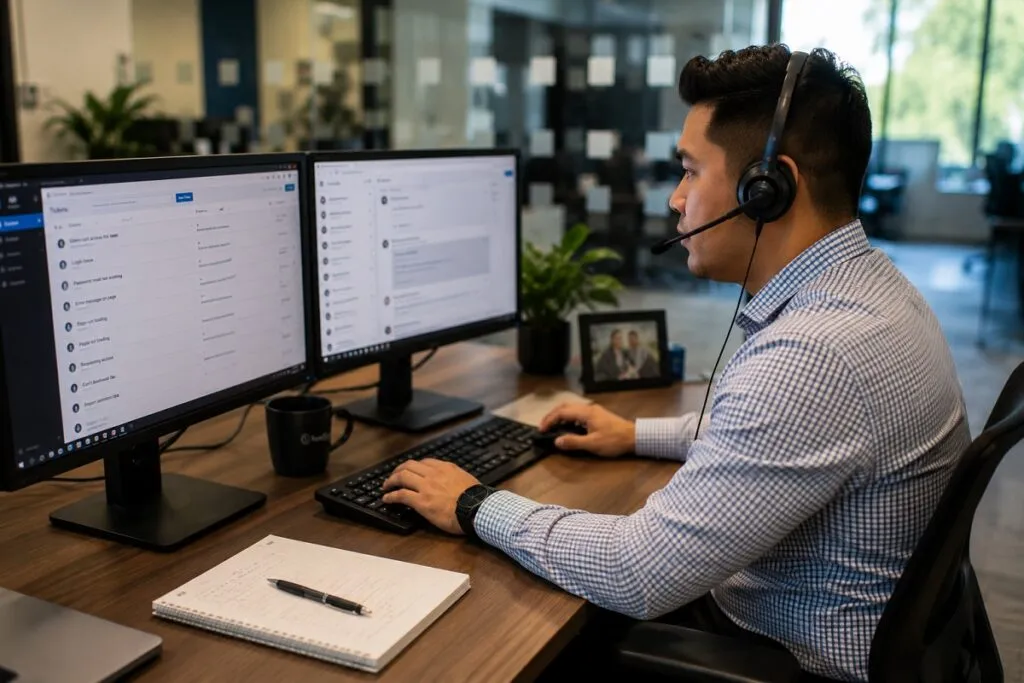
Atlanta employers continue to face one of the most competitive IT support hiring markets in the Southeast. Organizations across finance, healthcare, logistics, manufacturing, higher education, media, and technology are competing for the same pool of experienced support professionals, creating longer hiring cycles and increasing pressure on internal IT teams.
Many hiring managers discover that staffing challenges extend well beyond filling an open position. Delayed hiring often results in growing ticket queues, slower response times, increased employee frustration, and higher workloads for existing technicians. As these pressures build, retaining experienced support staff becomes just as difficult as attracting new talent.
Tier2Tek Staffing helps employers reduce these risks by identifying IT support professionals who can contribute quickly within enterprise, mid-market, and managed IT environments. Our recruiting process focuses on technical capability, communication skills, customer service, troubleshooting methodology, and long-term fit rather than resumes alone.
Why Atlanta Employers Are Competing for the Same IT Support Talent

Atlanta’s business community has become increasingly technology dependent. Major corporate headquarters, regional offices, healthcare systems, logistics providers, fintech companies, and managed service providers all require reliable IT support teams to maintain daily operations.
Unlike software engineering positions, IT support roles often require professionals who can work directly with employees, maintain physical infrastructure, support office technology, and resolve issues that cannot be handled remotely. That significantly reduces the available talent pool for employers requiring onsite or hybrid coverage.
Competition is especially strong for professionals with experience supporting:
- Microsoft 365
- Active Directory
- Azure Active Directory and Entra ID
- Intune
- Windows 11 enterprise environments
- ServiceNow
- Jira Service Management
- Cisco and Meraki networking
- VMware
- Endpoint security platforms
- Multi-site enterprise environments
Many candidates receive multiple interview requests within days of entering the market. Employers that require numerous interview rounds frequently lose qualified candidates before extending an offer.
Atlanta’s concentration of Fortune 500 headquarters also influences hiring expectations. Candidates who have supported large enterprise environments are regularly recruited by organizations offering broader career paths, creating additional pressure on employers trying to retain experienced technicians.
Staffing Gaps Create Operational Problems Faster Than Many Organizations Expect

IT support vacancies rarely remain isolated to a single position. One open role often shifts work across the entire service desk, increasing ticket volumes for every remaining technician.
As queues expand, technicians spend more time resolving urgent incidents and less time completing preventative maintenance, documentation, device lifecycle projects, and user education. Deferred work gradually increases operational risk.
Common effects include:
- Longer first response times
- Delayed workstation deployments
- Slower onboarding for new employees
- Increased password and account management delays
- Escalation bottlenecks
- Reduced customer satisfaction scores
- Higher technician burnout
Organizations operating multiple Atlanta offices often experience additional strain because technicians split time between locations, leaving fewer resources available for walk-up support and onsite troubleshooting.
Remote Hiring Has Changed Atlanta’s IT Support Labor Market
Many employers expected remote work to increase available talent. Instead, it has changed candidate expectations while making experienced professionals more selective.
Technicians who previously accepted fully onsite positions can now compare opportunities from employers across the country. Local businesses are no longer competing solely with neighboring companies. They frequently compete with organizations offering remote roles based in larger technology markets.
This shift has created several hiring realities.
| Hiring Challenge | Operational Impact |
|---|---|
| Fully onsite requirements | Smaller candidate pool and longer hiring timelines |
| Hybrid schedules | Stronger applicant interest but continued competition |
| Remote national employers | Increased salary expectations |
| Lengthy interview processes | Higher offer decline rates |
| Limited advancement opportunities | Lower retention after hiring |
Some Atlanta employers continue requiring five-day onsite coverage because of hardware deployments, executive support, healthcare compliance, manufacturing operations, or secure environments. Those requirements are often necessary, but they require a stronger recruiting strategy and faster hiring decisions.
Salary Competition Extends Beyond Base Compensation
Compensation expectations have continued evolving as employers compete for experienced support professionals.
Candidates increasingly evaluate total employment value rather than salary alone. Flexible schedules, training opportunities, certification reimbursement, career progression, retirement benefits, and leadership quality all influence offer decisions.
Organizations that benchmark compensation against outdated salary ranges frequently struggle to attract technicians with enterprise experience.
Another challenge unique to Atlanta is the diversity of employers seeking similar technical skills. A desktop support technician may receive interest from a hospital, a logistics company, a financial institution, an MSP, and a global corporate headquarters during the same week. Although the daily responsibilities differ, the underlying technical skill set remains highly transferable.
For hiring managers, this means compensation discussions should account for market competition rather than internal historical pay structures.
Atlanta Employers Are Raising Expectations for IT Support Professionals

Today’s IT support teams are expected to do far more than reset passwords and troubleshoot laptops.
Many organizations now expect technicians to contribute to endpoint security, device management, cloud administration, identity management, automation, asset lifecycle management, and compliance initiatives while maintaining strong customer service.
Hiring managers frequently seek candidates with experience supporting:
- Microsoft Endpoint Manager
- Intune deployments
- Azure administration
- Conditional Access policies
- Multi-factor authentication
- ServiceNow workflows
- SCCM or MECM
- Mobile device management
- PowerShell automation
- Cybersecurity awareness initiatives
These expanding responsibilities have narrowed the available talent pool. Candidates who combine technical depth with strong communication skills remain among the most difficult professionals to hire in Atlanta.
One trend our recruiters continue to observe is that employers increasingly prioritize technicians who can confidently support executive leadership. In Atlanta’s headquarters environment, supporting executives often requires professionalism, discretion, and the ability to resolve high-impact issues under tight time constraints. Those soft skills are difficult to teach and frequently become the deciding factor between otherwise similar candidates.
Common Hiring Mistakes That Slow IT Support Recruiting
Hiring delays often stem from process issues rather than candidate shortages. Even organizations with competitive compensation can lose strong applicants if the hiring experience creates unnecessary friction.
One common mistake is building job descriptions around an ideal candidate instead of the work that actually needs to be completed. Requiring every possible technology narrows the applicant pool without improving hiring outcomes.
Another challenge is expecting one technician to perform multiple specialized roles. Many employers combine help desk, desktop support, systems administration, networking, security, and project work into a single position. Qualified candidates recognize unrealistic expectations and frequently withdraw before interviews begin.
Other hiring mistakes include:
- Waiting several weeks between interviews
- Delaying feedback after technical interviews
- Requiring excessive certifications for support roles
- Ignoring communication skills during technical evaluations
- Hiring solely on technical knowledge
- Underestimating cultural and team fit
- Waiting until ticket volumes become unmanageable before opening a requisition
Organizations that define priorities early and move decisively generally experience shorter hiring cycles.
Business Continuity Depends on More Than Keeping the Help Desk Staffed

An understaffed IT support team affects nearly every department. Employees wait longer for assistance, projects lose momentum, and routine maintenance is postponed while technicians focus on immediate incidents.
Over time, small operational delays compound into larger business risks. Device refreshes slip behind schedule, documentation becomes outdated, software deployments take longer, and security updates compete with daily support demands.
For businesses operating across metro Atlanta, support coverage also becomes more complex. Multiple offices, warehouse locations, healthcare facilities, or distribution centers require technicians who can prioritize issues across different environments while maintaining consistent service levels.
The operational impact often extends beyond IT.
| Business Function | Impact of IT Support Shortages |
|---|---|
| Employee onboarding | Delayed account setup and workstation deployment |
| Executive support | Slower response to business-critical issues |
| Security operations | Patch management and endpoint updates fall behind |
| Infrastructure projects | Resources shift from planned work to reactive support |
| Customer-facing teams | Reduced productivity caused by unresolved technical issues |
| Compliance initiatives | Documentation and audit preparation become more difficult |
Many employers initially view support hiring as a staffing issue. In practice, it becomes an operational resilience issue that affects productivity across the organization.
Retention Has Become Just as Important as Recruiting
Replacing experienced technicians is expensive, but retaining them has become increasingly difficult.
Support professionals often leave because workloads continue increasing without additional staffing. Constant escalations, large ticket backlogs, and limited opportunities for career advancement contribute to burnout.
In Atlanta’s competitive market, experienced technicians rarely remain available for long. Recruiters regularly contact professionals who have built strong reputations supporting enterprise environments, and many receive unsolicited opportunities before actively beginning a job search.
Successful employers typically invest in retention through:
- Clear advancement paths
- Ongoing technical training
- Certification reimbursement
- Cross-training opportunities
- Reasonable ticket distribution
- Consistent leadership communication
- Modern support tools and automation
Retention also improves when technicians have time to solve root causes instead of spending every day reacting to incoming tickets.
The Tools Experience Atlanta Employers Want to See
Technical aptitude remains essential, but employers increasingly prioritize candidates who have worked within structured enterprise support environments.
Recruiters frequently encounter hiring managers looking for professionals who can step into existing workflows with minimal onboarding.
Common platforms requested by Atlanta employers include:
- ServiceNow
- Jira Service Management
- ConnectWise Manage
- Microsoft Intune
- Microsoft Endpoint Configuration Manager
- Microsoft 365 Administration
- Entra ID
- Active Directory
- VMware
- Cisco Meraki
- CrowdStrike
- SentinelOne
- Okta
- PowerShell
- Bomgar and BeyondTrust
- TeamViewer
Experience with these platforms demonstrates familiarity with enterprise support processes, change management, asset management, and standardized service delivery.
For organizations supporting regulated industries such as healthcare and financial services, experience working within documented procedures and compliance requirements is often just as valuable as technical expertise.
Strategic Staffing Decisions Require Balancing Speed, Experience, and Long-Term Growth
Every hiring decision involves tradeoffs. Filling an opening quickly may reduce ticket backlogs, but hiring someone without the right technical foundation can increase training time and create additional workload for senior staff.
Waiting for the perfect candidate presents a different risk. Extended vacancies place more pressure on existing technicians, increase overtime, and can eventually affect employee satisfaction across the organization.
Atlanta employers increasingly evaluate candidates based on the overall value they bring to the support organization rather than focusing on one technical specialty.
Questions experienced hiring managers often consider include:
- Can this technician communicate effectively with nontechnical users?
- Have they supported similar enterprise environments?
- Can they prioritize competing issues independently?
- Will they strengthen team collaboration?
- Can they grow into future leadership responsibilities?
The strongest hiring outcomes typically result from balancing technical capability with adaptability, customer service, and long-term retention potential.
One pattern we frequently observe across Atlanta organizations is that IT leaders increasingly hire for learning ability alongside current skills. As Microsoft cloud platforms, endpoint management, and cybersecurity tools continue evolving, technicians who consistently adapt often provide greater long-term value than candidates whose experience is limited to one technology stack.
How Tier2Tek Evaluates IT Support Candidates
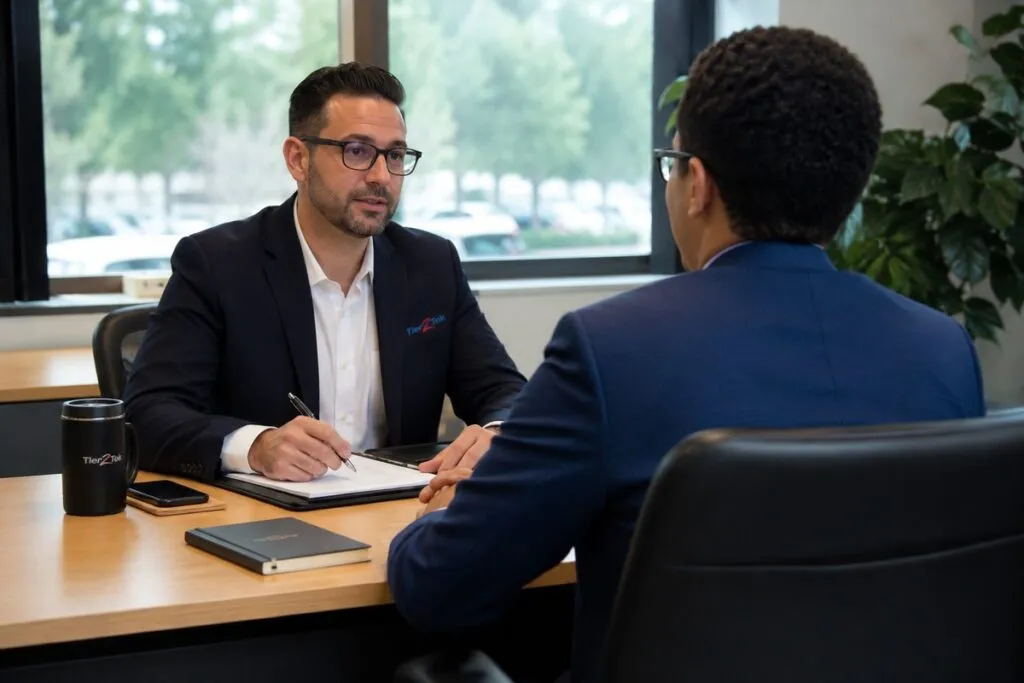
Technical knowledge alone rarely predicts long-term success in an IT support role. Employers need professionals who can troubleshoot efficiently, communicate clearly, and remain composed when supporting users under pressure.
Tier2Tek evaluates candidates using a recruiting process built around real operational expectations rather than keyword matching.
Our recruiters assess areas including:
- Technical troubleshooting methodology
- Customer service and communication skills
- Experience supporting enterprise environments
- Ticket management discipline
- Documentation habits
- Escalation judgment
- Adaptability to changing technologies
- Professionalism with executives and end users
- Team collaboration
- Employment stability and career progression
We also evaluate how candidates explain previous technical issues they have resolved. Clear explanations often demonstrate stronger analytical thinking than memorized technical answers.
When appropriate, we verify experience with technologies commonly used by Atlanta employers, including Microsoft 365, Intune, Active Directory, Entra ID, ServiceNow, VMware, Cisco networking, endpoint security platforms, and remote support tools.
Our goal is not simply to present resumes. We identify professionals who can integrate into existing support teams, contribute quickly, and remain successful as business needs evolve.
For employers facing urgent hiring needs, we can typically present qualified candidates within 1 to 3 business days. We also support high-volume hiring initiatives for organizations expanding IT operations, opening new locations, or onboarding large numbers of employees.
Why Employers Partner with Tier2Tek for IT Support Staffing
Organizations often contact us after experiencing lengthy vacancies, declining applicant quality, or repeated hiring delays. They need recruiters who understand IT support operations rather than general staffing.
Our recruiting approach is informed by how enterprise IT departments actually function. We understand the differences between help desk, desktop support, service desk, field support, technical support, and endpoint administration because employers evaluate these roles differently.
Clients rely on Tier2Tek because we understand hiring priorities such as:
- Service desk performance metrics
- SLA-driven support environments
- Escalation workflows
- ITIL-based service management
- Enterprise endpoint management
- Hybrid infrastructure support
- Executive support requirements
- Multi-site operations
- Customer service expectations
- Team culture and long-term retention
Whether an organization needs one experienced technician or an entire support team, our recruiting process is designed to reduce hiring risk while helping employers move faster in a competitive market.
If you are also evaluating broader IT support staffing strategies, explore our page for additional insights into service desk recruiting, hiring trends, and support team planning.
Our Editorial Standards and Recruiting Expertise
Tier2Tek develops staffing content for employers using input from experienced IT recruiters, hiring managers, labor market research, and current technology hiring trends.
Our goal is to provide practical guidance that reflects the challenges organizations face when building technical teams. Rather than relying on generic staffing advice, we focus on operational realities such as hiring competition, workforce availability, retention risks, and evolving employer expectations.
We regularly review our content to reflect changes in enterprise technologies, recruiting practices, and labor market conditions so employers can make informed staffing decisions with greater confidence.
Frequently Asked Questions
For many searches, we can present qualified candidates within 1 to 3 business days, depending on the position and hiring requirements.
Yes. We regularly assist employers with high-volume hiring for service desks, desktop support teams, enterprise rollouts, office expansions, and multi-location operations.
Yes. We recruit for onsite, hybrid, and remote environments while considering how each work model affects candidate availability and hiring timelines in the Atlanta market.
We recruit Help Desk Technicians, Service Desk Analysts, Desktop Support Technicians, Technical Support Specialists, Field Support Technicians, IT Support Specialists, and other end-user support professionals.
Our recruiters assess technical knowledge, troubleshooting ability, communication skills, enterprise support experience, customer service, documentation practices, and overall alignment with each client’s technical environment and culture.
We recruit IT support professionals for healthcare, financial services, logistics, manufacturing, technology companies, education, professional services, and many other industries throughout the Atlanta area.
Request IT Support Staffing
Whether you need to reduce ticket backlogs, expand your service desk, replace key support staff, or build an IT team for future growth, Tier2Tek can help you secure experienced professionals quickly and efficiently.