What Hiring Managers Should Know
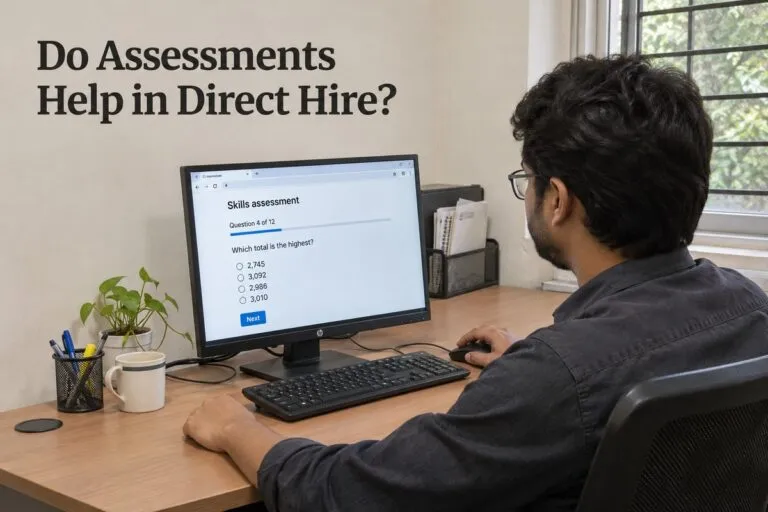
Do assessments help in direct hire? In most cases, yes. A good assessment shows you how a candidate works before you make an offer. That means fewer surprises after the start date.
Direct hire is a big commitment. You are bringing someone on as a full-time employee, and you want the right fit from day one. Resumes and interviews are helpful, but they only show part of the picture. Assessments fill in the rest.
This article covers what the data says, which tests work best for CAD and IT support roles, and how to use them the right way.
How Assessments Improve Direct Hire Results
Assessments give you proof, not just promises. A candidate can say they know AutoCAD or Active Directory. A test shows if they really do.
Better Hiring Decisions
Interviews can be tricky. Some people talk well but struggle on the job. Others are quiet but very skilled. An assessment helps you look past first impressions.
Here is what assessments can give you:
- A clear view of real skills
- A fair way to compare candidates side by side
- Less guessing and less gut feeling
- More confidence when you make an offer
Fewer Bad Hires
A bad hire costs more than most teams expect. When you test skills early, you catch gaps before they become problems. This is one of the biggest reasons hiring managers and HR teams use assessments in direct hire.
What the Data Says About Hiring Assessments
Numbers help show why testing matters. Here are some facts worth knowing.
The Cost of a Bad Hire
The U.S. Department of Labor has been often cited as estimating that a bad hire can cost about 30 percent of that person’s first-year pay. If the job pays $70,000, that is around $21,000 lost.
Other research is even higher. Gallup has noted that replacing an employee can cost anywhere from half to two times their yearly salary. That includes recruiting time, training, and lost work.
Which Hiring Methods Predict Job Success
Large studies of hiring methods have looked at what best predicts job performance. A well-known review by researchers Schmidt and Hunter found these results:
- Work sample tests scored about 0.54
- Structured interviews scored about 0.51
- Unstructured interviews scored about 0.38
A higher number means a stronger link to job success. Work samples and structured interviews beat casual conversations by a wide margin. Newer research has adjusted some of these numbers, but the main message still holds. Hands-on tests and structured methods work better than informal chats.
Types of Assessments for CAD and IT Support Hires
Not every test fits every job. The best assessment looks like the real work.
CAD Skills Tests
For CAD designers, drafters, and technicians, a hands-on test is the strongest choice. Ask the candidate to complete a short task in the software your team uses.
Good CAD test ideas include:
- Creating a simple part or drawing from a sketch
- Fixing errors in a sample file
- Applying standards like layers, dimensions, and title blocks
- Answering a few questions about software tools and workflows
Keep the test close to real projects. A 30 to 45 minute task is often enough.
IT Support Technical Tests
For help desk, desktop support, and systems roles, mix questions with real scenarios. Show a problem and ask how the candidate would solve it.
You can test:
- Troubleshooting steps for common issues
- Basic network and password reset knowledge
- Ticket handling and clear notes
- Comfort with tools like Windows, Microsoft 365, and remote support software
Soft Skills and Behavior Assessments
Technical skill is only half the story. IT support staff talk to users all day. CAD teams work with engineers and project managers. Short behavior questions or role-play tasks can show communication, patience, and teamwork.
When Assessments Can Fall Short
Assessments are helpful, but they are not magic. A weak test can do more harm than good.
Tests That Are Too Long
Great candidates often have more than one offer. If your test takes three hours, they may walk away. Keep it short and focused.
Tests That Do Not Match the Job
A test on skills the job never uses wastes time. It can also push away strong people. Build each assessment around the real duties of the role.
Using One Tool Alone
A test score should not make the whole decision. Use it with interviews, work history, and reference checks. Each piece adds to the picture.
Best Practices for Using Assessments in Direct Hire
A few simple habits make assessments work much better.
Keep It Short and Relevant
Aim for a test that takes under an hour. Use real examples from your own projects or help desk tickets.
Score Every Candidate the Same Way
Set a clear scoring guide before testing begins. This keeps results fair and helps your team compare candidates without bias.
Combine Tests with Structured Interviews
Ask every candidate the same core questions. Then use the assessment to dig deeper into what you see. Structured interviews and work samples are two of the strongest tools you can use together.
Give Candidates a Good Experience
Explain why you are testing and what to expect. Share timing and tools up front. Candidates appreciate a clear and respectful process, and that helps your employer brand.
Getting More From Assessments With a Direct Hire Staffing Partner
Building and scoring assessments takes time. Many hiring managers and HR teams are already stretched thin. A staffing partner who knows your field can take much of that work off your plate.
Pre-Screened Candidates
A specialized recruiter can test skills before a resume ever reaches your desk. That means you meet people who already passed a technical check.
Faster Hiring Without Cutting Corners
Good assessments and a focused search can shorten the time to hire. You spend your time on interviews with strong candidates instead of sorting through weak matches.
Better Fit for CAD and IT Support Roles
At Tier2Tek, we focus on direct hire staffing for CAD and IT support positions. Our team understands the tools, titles, and skills these roles need. That helps us screen for real ability, not just keywords on a resume.
So, do assessments help in direct hire? Yes, when they are short, fair, and tied to the real job. They reduce bad hires, save money, and give you more confidence in every offer. Pair them with structured interviews and a partner who knows your industry, and your hiring process gets stronger.
If you are ready to hire your next CAD or IT support professional, contact Tier2Tek to talk about your open roles.