
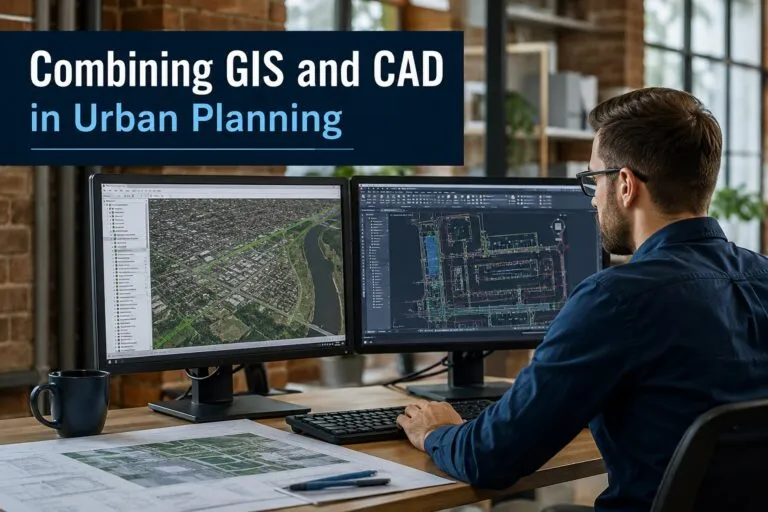
Combining GIS and CAD in urban planning has become a practical approach for creating more accurate, data-driven, and efficient development projects. Urban planners, engineers, architects, and municipal agencies increasingly rely on the integration of Geographic Information Systems (GIS) and Computer-Aided Design (CAD) to improve planning accuracy, streamline workflows, and support informed decision-making. By bringing together spatial intelligence and detailed design capabilities, organizations can better manage land use, infrastructure development, transportation systems, and community growth.
Urban planning projects often involve large amounts of geographic data, engineering drawings, zoning information, utility networks, and environmental considerations. Integrating GIS and CAD allows professionals to work with these datasets in a connected environment, helping teams coordinate more effectively while reducing errors and duplication of work.
How GIS and CAD Integration Improves Urban Planning Workflows

Urban planning requires both geographic analysis and detailed design. GIS provides spatial context, while CAD delivers precision engineering and architectural drawings.
When these systems work together, planners can:
- Visualize proposed developments within their real-world geographic environment
- Analyze demographic, environmental, and infrastructure data alongside design plans
- Improve collaboration between planners, engineers, surveyors, and architects
- Reduce inconsistencies between planning data and construction documents
- Accelerate project approvals through more accurate presentations and reporting
- Support long-term asset management and infrastructure planning
The result is a more connected planning process from concept development through implementation.
Enhancing Site Selection and Land Use Planning
Site selection is one of the most important phases of urban development. GIS and CAD integration allows planners to evaluate multiple factors before moving forward with detailed designs.
GIS datasets can provide information such as:
- Population density
- Transportation accessibility
- Environmental constraints
- Utility availability
- Flood risk zones
- Zoning regulations
- Land ownership patterns
Once suitable locations are identified, CAD tools can be used to create precise site layouts, road alignments, building footprints, and utility plans.
This combined approach helps planning teams identify opportunities and constraints early in the project lifecycle, reducing costly revisions later.
Better Evaluation of Development Scenarios
Urban planners frequently compare multiple development options before selecting a preferred solution.
By combining GIS analysis with CAD designs, stakeholders can assess:
- Traffic impacts
- Infrastructure requirements
- Environmental effects
- Community accessibility
- Population growth projections
These insights support evidence-based decisions and help planners justify recommendations to public officials and community members.
Improving Infrastructure Planning and Design
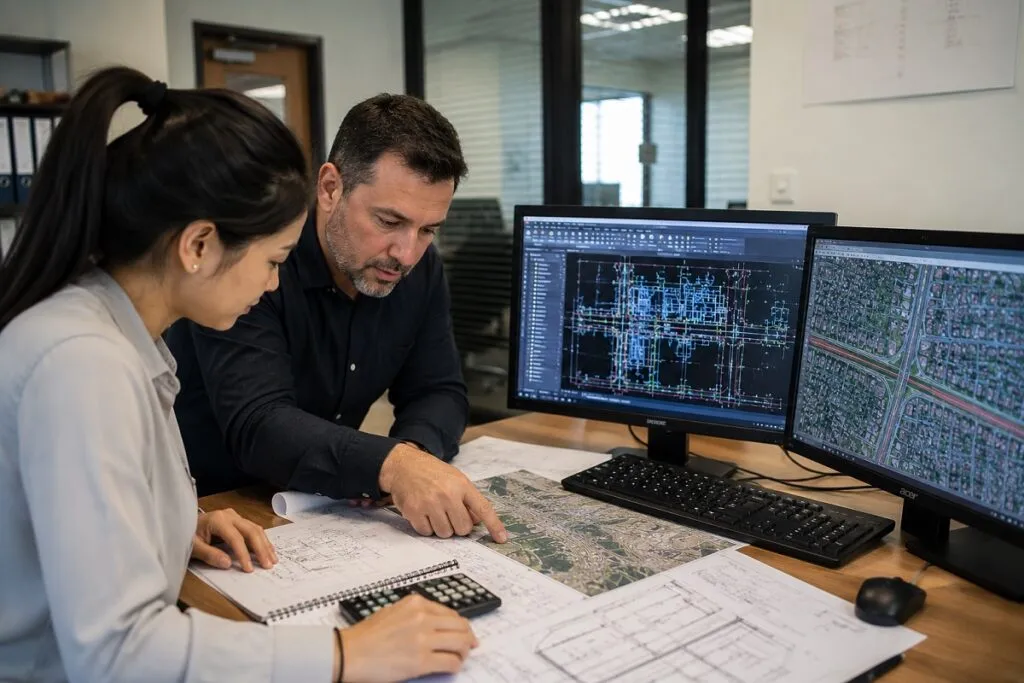
Infrastructure planning depends heavily on accurate geographic and engineering information. Roads, bridges, water systems, drainage networks, and public transportation projects all benefit from GIS and CAD integration.
GIS helps planners understand existing conditions and network relationships. CAD provides the detailed technical drawings needed for construction and implementation.
Transportation Network Planning
Transportation planning requires extensive analysis of geographic data and engineering design.
Integrated GIS and CAD workflows allow teams to:
- Map existing transportation corridors
- Analyze traffic patterns
- Design road improvements
- Evaluate transit accessibility
- Model pedestrian and bicycle networks
This level of coordination helps create transportation systems that better serve growing urban populations.
Utility Network Coordination
Urban development projects often involve complex utility infrastructure.
Integrated workflows help planners coordinate:
- Water distribution systems
- Sewer networks
- Stormwater management
- Electrical infrastructure
- Telecommunications systems
- Gas pipelines
Accurate coordination reduces conflicts between utilities and minimizes disruptions during construction.
Supporting Smart City Initiatives
Many cities are investing in smart city strategies to improve operational efficiency and quality of life. GIS and CAD integration plays a significant role in supporting these initiatives.
Spatial analysis combined with detailed infrastructure models allows cities to manage assets more effectively and make data-driven decisions.
Examples include:
- Intelligent transportation systems
- Utility monitoring programs
- Public safety planning
- Urban mobility projects
- Infrastructure maintenance scheduling
- Digital city modeling
Municipal governments can use integrated datasets to improve planning accuracy while enhancing service delivery.
Strengthening Environmental and Sustainability Planning
Environmental considerations are central to modern urban planning. Combining GIS and CAD helps organizations evaluate environmental impacts before development begins.
GIS can identify environmentally sensitive areas, while CAD supports the design of solutions that minimize negative effects.
Environmental Assessments
Integrated planning workflows support the analysis of:
- Wetlands
- Protected habitats
- Floodplains
- Air quality concerns
- Water resources
- Soil conditions
By incorporating these factors into design development, planning teams can create projects that align with sustainability objectives and regulatory requirements.
Green Infrastructure Design
Urban planners increasingly incorporate green infrastructure into development projects.
Examples include:
- Rain gardens
- Green roofs
- Urban forests
- Bioswales
- Stormwater retention systems
- Public green spaces
GIS analysis helps identify suitable locations, while CAD enables detailed design and implementation planning.
Enhancing Collaboration Across Project Teams

Urban planning projects involve multiple stakeholders, including planners, engineers, architects, surveyors, developers, and government agencies.
One of the biggest advantages of combining GIS and CAD is improved collaboration across disciplines.
Shared data environments allow teams to:
- Access current project information
- Reduce duplicate data entry
- Maintain consistent project records
- Improve communication between departments
- Resolve conflicts earlier in the planning process
This collaborative approach helps keep projects on schedule and within budget.
Reducing Data Silos
Disconnected systems often create inefficiencies and inconsistencies.
When GIS and CAD platforms are integrated, organizations can establish a single source of truth for planning and design information. This improves data quality and ensures that decision-makers are working with accurate information.
Supporting Zoning and Regulatory Compliance
Zoning regulations and land development requirements are critical components of urban planning.
GIS provides access to regulatory boundaries, zoning districts, and planning overlays, while CAD allows planners to design projects that comply with applicable requirements.
Benefits include:
- Faster compliance reviews
- More accurate permit submissions
- Improved documentation
- Reduced approval delays
- Better stakeholder transparency
This integration can significantly streamline the regulatory review process.
Improving Visualization and Public Engagement
Public engagement is an important aspect of successful urban planning. Residents, business owners, and elected officials often need clear visual representations of proposed developments.
Combining GIS and CAD improves project visualization by presenting designs within their geographic context.
More Effective Project Presentations
Integrated visualizations can help stakeholders understand:
- Building placement
- Transportation improvements
- Utility infrastructure changes
- Environmental impacts
- Community benefits
Clear visual communication often leads to more productive public meetings and stronger stakeholder support.
Better Decision-Making Through Spatial Context
When design plans are viewed alongside geographic information, decision-makers gain a more complete understanding of project impacts.
This broader perspective supports smarter planning decisions and helps identify potential challenges before construction begins.
Data Accuracy and Project Efficiency Benefits
Data accuracy is essential for successful urban planning outcomes. Integrating GIS and CAD reduces the risk of discrepancies between planning data and engineering drawings.
Key efficiency benefits include:
- Reduced manual data conversion
- Faster project delivery
- Improved design accuracy
- Better resource allocation
- Enhanced quality control
- Lower project costs
Organizations that adopt integrated GIS and CAD workflows often experience significant improvements in productivity and project performance.
Applications Across Urban Development Projects
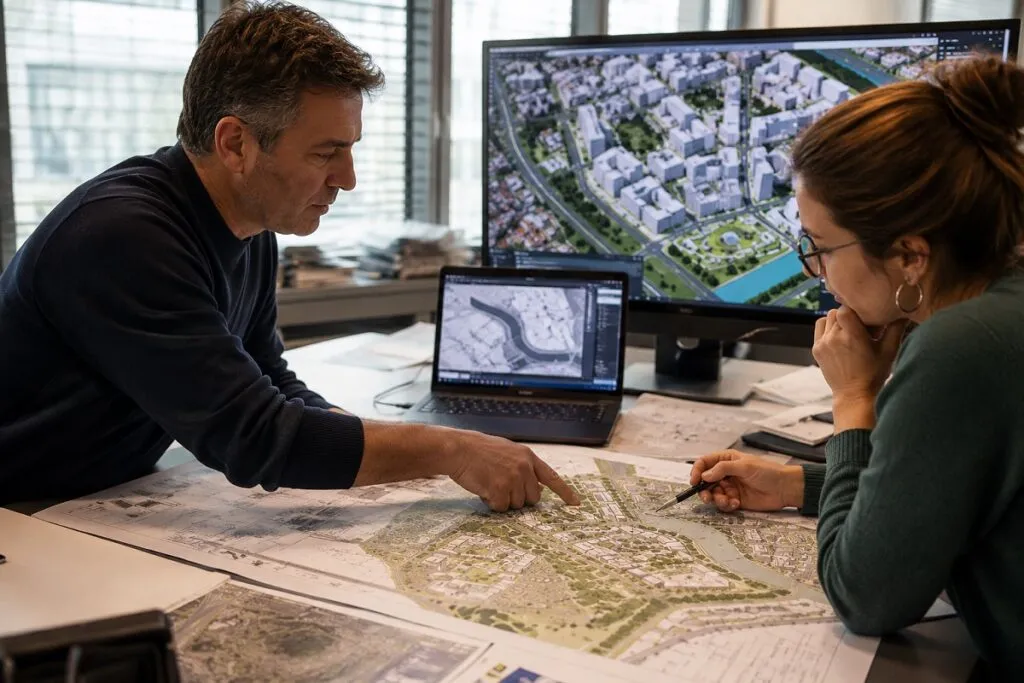
The combination of GIS and CAD supports a wide range of urban planning initiatives.
Common applications include:
- Residential developments
- Commercial projects
- Mixed-use communities
- Transportation infrastructure
- Utility expansion projects
- Parks and recreation planning
- Redevelopment programs
- Smart city initiatives
- Transit-oriented development
- Regional planning efforts
The ability to connect geographic intelligence with detailed design information makes integrated workflows valuable across virtually every phase of urban development.
Combining GIS and CAD in urban planning enables organizations to create more informed, efficient, and coordinated development strategies. By linking spatial analysis with detailed design capabilities, planning teams can improve site selection, infrastructure planning, environmental assessments, regulatory compliance, and stakeholder engagement. As urban areas continue to grow and evolve, integrated GIS and CAD workflows provide the accuracy, collaboration, and operational efficiency needed to support successful planning and development outcomes.