Find the CAD Right Candidates For Your Business
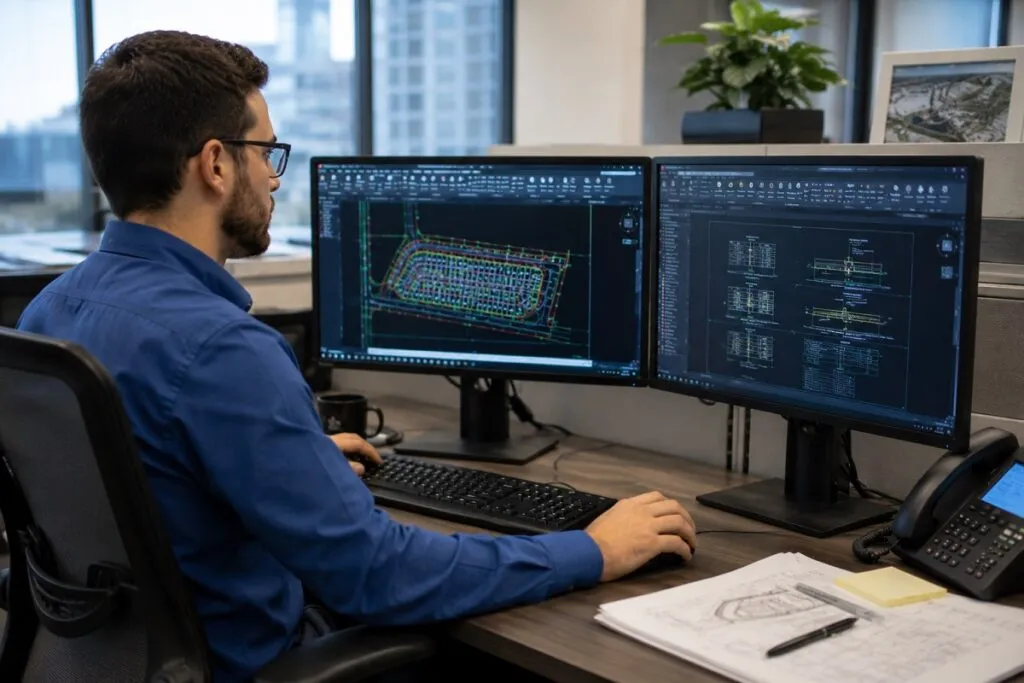
Washington, D.C. engineering and design firms operate in one of the most compliance-driven project environments in the country. CAD hiring in the region is shaped by federal infrastructure programs, secure government facilities, transit modernization, commercial redevelopment, data center expansion across the DMV corridor, and ongoing public works tied to agencies, contractors, and institutional owners.
Tier2Tek Staffing helps employers hire CAD professionals for permanent engineering and design roles across Washington, D.C., Northern Virginia, and suburban Maryland. We support firms that need technically capable drafters, BIM specialists, design technicians, and CAD designers who can function inside complex project delivery environments where deadlines, revisions, documentation standards, and coordination requirements leave little room for onboarding mistakes.
Why CAD Hiring Is Different in Washington, D.C.

Engineering and design hiring in Washington is heavily influenced by projects connected to federal agencies, defense contractors, transit systems, higher education campuses, healthcare systems, utilities, and mixed-use redevelopment. The work often involves overlapping stakeholder groups, strict documentation standards, phased approvals, and multidisciplinary coordination across architecture, MEP, civil, structural, and construction teams.
Many employers in the D.C. market are not simply hiring someone who can draft in AutoCAD. They are hiring for operational reliability inside highly structured project environments.
That distinction matters.
A CAD technician supporting WMATA transit upgrades works differently than a manufacturing CAD designer in the Midwest. Likewise, a BIM coordinator supporting secure government facilities must understand clash detection, model version control, and consultant coordination in ways that extend far beyond software familiarity.
Local employers increasingly expect candidates to understand:
- Sheet set organization and drawing standards
- BIM coordination workflows
- Construction document production
- Revit worksharing environments
- Civil 3D surface and corridor management
- Coordination between field revisions and design updates
- QA/QC review processes
- Multi-office collaboration structures
- Deadline compression during permit and bid phases
Many hiring delays occur because employers screen for software keywords instead of project execution capability.
The Industries Driving CAD Demand in the D.C. Region
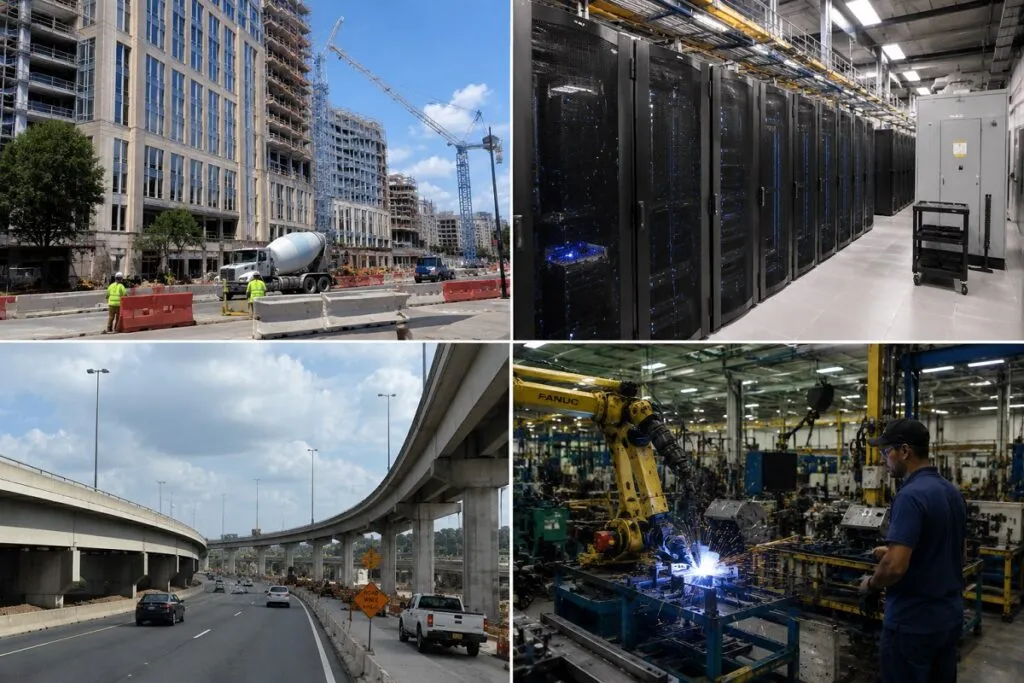
Washington, D.C. has one of the most diversified technical project ecosystems in the United States. CAD staffing demand comes from several overlapping sectors.
| Industry Sector | Common CAD Hiring Needs | Operational Reality |
|---|---|---|
| Federal Construction | Revit designers, BIM coordinators, MEP drafters | Security protocols, phased approvals, consultant-heavy coordination |
| Civil Infrastructure | Civil 3D designers, utility drafters, transportation CAD technicians | Utility conflicts, stormwater revisions, DOT standards |
| Data Centers | Electrical CAD designers, BIM modelers, coordination specialists | Accelerated schedules and high-volume revision cycles |
| Architecture Firms | Revit technicians, production drafters | Permit deadlines and documentation consistency |
| Government Contractors | Secure facility designers, facilities CAD support | Clearance preferences and documentation control |
| Commercial Development | Structural and MEP drafting support | Fast-paced tenant improvement cycles |
| Manufacturing & Fabrication | SolidWorks designers, mechanical drafters | Shop drawing accuracy and fabrication coordination |
The Northern Virginia data center market alone continues to affect hiring competition throughout the region. Mechanical, electrical, and BIM professionals with hyperscale facility experience are routinely recruited by competing firms before projects even reach full staffing phases.
That pressure impacts employers across the broader D.C. engineering market.
Operational CAD Workflows Employers Need Candidates to Understand
Many CAD recruiting problems originate from a mismatch between portfolio appearance and operational readiness.
Strong candidates in Washington, D.C. usually demonstrate experience working within real project delivery systems rather than isolated drafting tasks.
Common workflow environments in the region include:
- Revit collaboration across architecture, structural, and MEP teams
- BIM 360 and Autodesk Construction Cloud coordination
- Civil 3D workflows tied to utility and transportation design
- Sheet issuance tracking during construction administration
- Redline incorporation from engineers and field teams
- Existing conditions modeling for renovation projects
- Construction set production for government submissions
- Coordination between survey, civil, and utility stakeholders
- Clash detection meetings using Navisworks
- Facilities documentation for long-term maintenance environments
Hiring managers often underestimate how difficult it is to transition candidates from smaller drafting environments into highly coordinated enterprise project structures.
Someone who performs well in a five-person design office may struggle inside a multi-office BIM production team supporting federal projects with layered review protocols.
CAD Software Most Commonly Requested by D.C. Employers
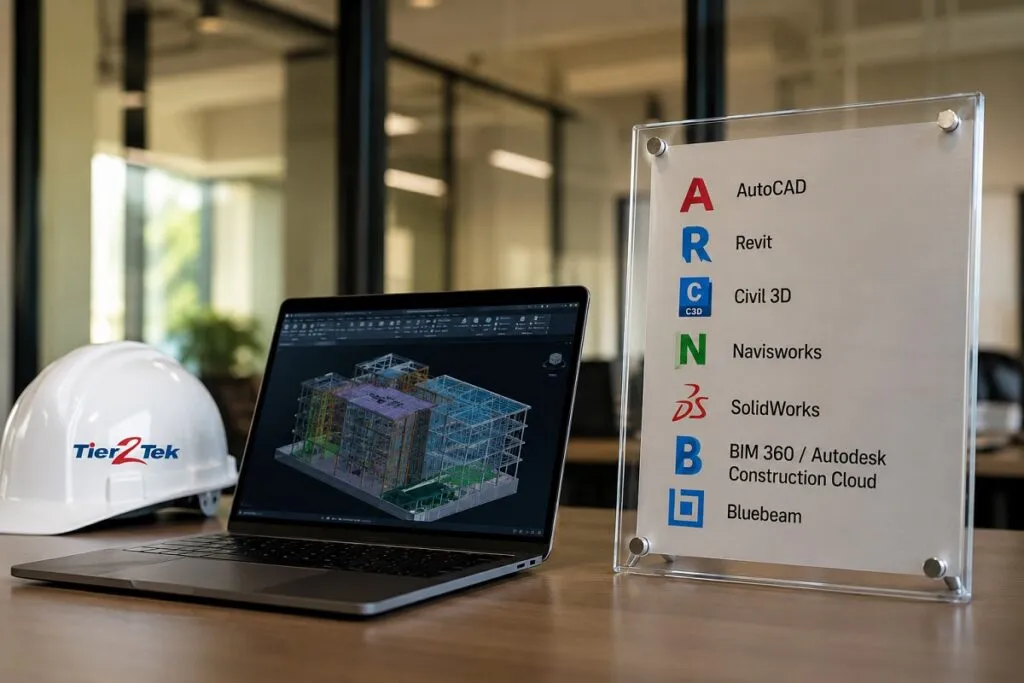
Washington employers typically hire around project delivery platforms rather than standalone software knowledge.
The strongest candidates often combine drafting ability with coordination awareness.
| Platform | Typical Use in D.C. Market |
|---|---|
| AutoCAD | Construction documentation, facilities drafting, as-builts |
| Revit | Architecture, MEP, BIM coordination |
| Civil 3D | Transportation, utilities, grading, stormwater |
| Navisworks | Clash detection and model coordination |
| BIM 360 / Autodesk Construction Cloud | Distributed project collaboration |
| SolidWorks | Manufacturing and fabrication design |
| MicroStation | Transportation and infrastructure projects |
| Bluebeam | Markups and document coordination |
Employers hiring only for “Revit experience” frequently overlook whether candidates have actually participated in live coordination environments involving consultants, RFIs, and construction administration workflows.
That gap becomes expensive during compressed project schedules.
Hiring Challenges Specific to the Washington, D.C. Market
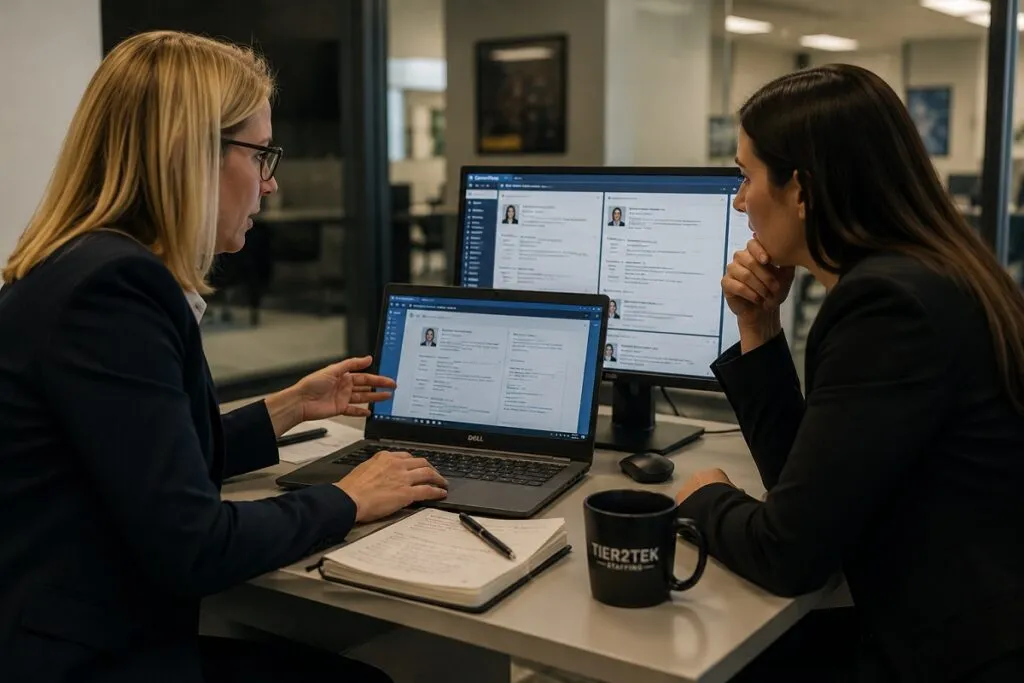
The D.C. labor market creates several recurring CAD staffing issues that engineering leaders recognize immediately.
Mid-level BIM talent remains difficult to secure
Senior BIM managers are expensive and heavily recruited. Junior drafters are available, but firms often struggle to find mid-level professionals who can independently produce coordinated documentation without constant oversight.
Infrastructure expansion is increasing competition
Transportation upgrades, utility modernization, and regional development continue pulling experienced Civil 3D professionals into competing offers across Maryland and Northern Virginia.
Security-related projects narrow the candidate pool
Federal and defense-related work often favors candidates familiar with secure project environments, documentation controls, and consultant coordination standards tied to government work.
Many candidates are technically proficient but operationally weak
Some candidates know the software but lack experience functioning within live project delivery cycles. Employers frequently discover this after hiring when revision management, coordination meetings, or production deadlines begin slipping.
Common Hiring Mistakes Engineering Firms Make
Several hiring patterns repeatedly create problems for employers in the Washington market.
Over-prioritizing software certifications
Certifications rarely predict production reliability. Employers often benefit more from candidates who understand project coordination realities than those with extensive software badges.
Hiring solely from architecture portfolios
Many portfolios look polished but do not reveal whether the candidate contributed meaningfully to construction documentation, consultant coordination, or permit production.
Underestimating communication requirements
CAD professionals in D.C. frequently interact with engineers, PMs, field teams, consultants, and government stakeholders. Technical communication matters.
Waiting too long during hiring cycles
Strong CAD candidates in the D.C. region often receive multiple interviews quickly, particularly in BIM-heavy environments. Delayed internal approvals regularly cost firms their preferred hires.
Ignoring workflow compatibility
A candidate accustomed to highly autonomous drafting work may struggle in rigid QA/QC environments with layered review structures.
How Tier2Tek Evaluates CAD Candidates

Tier2Tek Staffing evaluates CAD candidates based on how they operate inside actual engineering and project environments, not just resume software lists.
Our screening process examines:
- Project types supported
- Drawing production responsibilities
- BIM coordination exposure
- Construction documentation experience
- Revision management practices
- Cross-functional communication ability
- Model management workflows
- Deadline accountability
- QA/QC participation
- Version control discipline
We also assess whether candidates understand the operational side of engineering work, including how drawings move from conceptual development through permit submission, construction coordination, and field revision cycles.
Learn more about our candidate evaluation approach.
What Strong CAD Teams Look Like in Washington, D.C.
The strongest engineering teams in the region typically balance technical drafting capability with coordination discipline.
Experienced hiring managers often prioritize professionals who can:
- Reduce revision bottlenecks
- Maintain drawing consistency under deadline pressure
- Coordinate effectively with PMs and engineers
- Identify constructability issues early
- Support BIM collaboration without constant supervision
- Handle documentation turnover between project phases
- Adapt to changing stakeholder requirements
In Washington, projects frequently evolve under shifting regulatory, funding, and stakeholder conditions. CAD professionals who remain organized through those transitions create measurable operational value.
Strategic Hiring Tradeoffs Employers Face
Many employers in the D.C. market eventually confront the same staffing question:
Should we hire for technical software depth or project adaptability?
The answer depends heavily on the structure of the existing team.
A mature BIM environment may tolerate someone with narrower industry experience if their Revit production capabilities are advanced. Smaller firms often need broader operational versatility because individual team members wear multiple hats across documentation, coordination, and client support.
Another common tradeoff involves hiring local versus relocation candidates.
Local candidates often understand regional permitting structures, consultant ecosystems, and infrastructure workflows. Relocation candidates may bring stronger technical depth but require longer onboarding periods tied to local project expectations.
CAD Staffing Support for Washington Engineering Employers
Tier2Tek Staffing supports employers hiring for:
- CAD Designers
- CAD Drafters
- BIM Coordinators
- Revit Technicians
- Civil 3D Designers
- Structural Drafters
- MEP Designers
- Mechanical CAD Designers
- Electrical CAD Specialists
- SolidWorks Designers
- Design Engineers
- BIM Managers
We also support engineering and technical hiring initiatives through our broader engineering recruiting services.
For employers building long-term technical teams, our direct-hire staffing model is designed around permanent placement support.
A Practical Approach to Technical Recruiting
Tier2Tek Staffing focuses on technical recruiting processes grounded in operational understanding rather than resume volume.
Our recruiting methodology is shaped by real-world engineering workflows, project coordination environments, and production expectations commonly found inside architecture, civil engineering, infrastructure, and manufacturing organizations.
We also maintain internal publishing and quality standards designed to improve accuracy and consistency across technical staffing content.
Frequently Asked Questions
BIM coordinators, Civil 3D designers, and experienced Revit professionals remain among the most competitive technical hires in the D.C. region due to infrastructure growth, federal construction activity, and data center expansion.
Some employers do, particularly for facilities, as-built, and legacy drafting environments. However, many architecture and engineering firms increasingly prefer candidates with Revit or BIM coordination experience.
Many candidates interview well around software terminology but struggle inside live project workflows involving revisions, consultant coordination, deadline compression, and QA/QC standards.
Qualified CAD professionals are often off the market quickly due to strong demand across engineering, construction, and BIM-driven projects. Tier2Tek can typically deliver qualified candidates within 1 to 3 business days. Hiring timelines then depend largely on the employer’s interview and decision-making process, as top candidates frequently receive multiple opportunities simultaneously.
Architecture, civil engineering, MEP consulting, transportation infrastructure, government contracting, utilities, manufacturing, and hyperscale data center construction all contribute heavily to CAD hiring demand.
Build a Stronger CAD Team in Washington, D.C.
Engineering and design projects move faster when technical staff understand both the software and the operational realities behind the work.
Tier2Tek Staffing helps Washington, D.C. employers hire CAD professionals capable of contributing inside real project environments where coordination, accuracy, and documentation discipline matter.