
The environmental impact of CAD-driven projects is becoming a key consideration for hiring managers, especially those recruiting CAD professionals and IT support staff. As sustainability requirements increase across engineering, manufacturing, and construction, companies are under pressure to hire talent that can design efficiently, reduce waste, and support environmentally responsible workflows.
This shift is directly affecting hiring strategies. Organizations are no longer just looking for technical proficiency. They need candidates who understand how design decisions influence material usage, energy consumption, and lifecycle costs. For hiring managers, this adds complexity to candidate evaluation, extends time-to-fill, and raises the stakes for making the right direct hire decision.
Why Environmental Impact Matters in CAD Hiring

CAD-driven projects influence environmental outcomes at every stage, from conceptual design to production and maintenance. Hiring the wrong CAD professional can lead to inefficiencies that increase costs and environmental risk.
For hiring managers, this translates into measurable business impact:
- Over-engineered designs that increase material waste
- Inefficient layouts that drive higher energy consumption
- Poor documentation that leads to rework and delays
- Lack of compliance with environmental regulations
Candidates must demonstrate more than software proficiency. They need to show how they apply CAD tools to optimize sustainability outcomes.
The Growing Skill Gap in Sustainable CAD Design
Finding CAD professionals who understand environmental impact is difficult. Many candidates are trained in drafting and modeling but lack experience in sustainability-focused design.
Common hiring challenges include:
- Limited experience with energy modeling tools
- Lack of exposure to sustainable materials or LEED standards
- Inability to quantify environmental impact within designs
- Weak collaboration with environmental engineers
This gap increases time-to-fill and often leads to compromised hires.
Working with specialized CAD recruitment services can help identify candidates who already have experience in environmentally responsible design workflows.
How CAD Decisions Drive Environmental Outcomes
Hiring managers need to understand how CAD professionals directly influence environmental performance. This helps refine job descriptions and screening criteria.
Key areas where CAD impacts sustainability:
Material Optimization
CAD professionals determine material usage through design precision. Poor modeling can result in excess material waste.
Energy Efficiency
Design layouts affect airflow, insulation, and system efficiency. Skilled CAD designers integrate these considerations early.
Lifecycle Planning
CAD models influence maintenance, durability, and long-term environmental impact.
Manufacturing Efficiency
Design complexity affects production processes and energy usage.
When candidates cannot demonstrate experience in these areas, the risk of hiring increases significantly.
The Role of IT Support in Sustainable CAD Environments

IT support teams play a critical role in maintaining CAD infrastructure that supports environmentally efficient workflows. Hiring managers often overlook this connection.
CAD environments require:
- High-performance computing systems
- Cloud-based collaboration tools
- Version control systems to prevent rework
- Energy-efficient hardware and virtualization
Without skilled IT support, CAD teams experience downtime, inefficiencies, and increased resource consumption.
Partnering with an experienced IT support staffing agency ensures your infrastructure supports sustainable design initiatives.
Hiring Challenges for Environmentally Aware CAD Roles
Difficulty Finding Qualified Candidates
Most CAD professionals do not list sustainability experience clearly on resumes. Hiring managers must dig deeper during screening.
Longer Time-to-Fill
Niche skill requirements reduce the candidate pool, especially for direct hire roles.
Poor Candidate Quality
Generalist candidates may lack the ability to apply environmental principles in real-world projects.
Retention Risks
Candidates without alignment to sustainability goals may struggle in organizations with strong environmental mandates.
Using direct hire staffing solutions can reduce these risks by pre-screening candidates for both technical and environmental competencies.
How to Evaluate CAD Candidates for Environmental Impact Skills
Hiring managers need structured evaluation methods to assess sustainability knowledge.
Portfolio Review
Look for:
- Projects involving energy-efficient design
- Material reduction strategies
- Compliance with environmental standards
Technical Screening
Ask candidates to explain:
- How they optimize designs for sustainability
- Tools they use for environmental analysis
- Trade-offs between cost and environmental impact
Behavioral Questions
Focus on:
- Collaboration with environmental teams
- Problem-solving in resource-constrained projects
- Decision-making under sustainability requirements
Software Proficiency
Evaluate experience with:
- Simulation tools
- Energy modeling platforms
- Advanced CAD optimization features
Candidates who cannot connect their work to environmental outcomes are likely not a strong fit.
Screening IT Support Candidates for CAD Environments
IT support hiring also requires specialized evaluation when CAD systems are involved.
Key areas to assess:
- Experience supporting CAD applications like AutoCAD, SolidWorks, or Revit
- Understanding of GPU-intensive workloads
- Knowledge of cloud-based CAD environments
- Ability to troubleshoot performance issues
For service desk roles, consider working with a specialized provider to ensure candidates can support complex technical environments.
Geographic Hiring Trends for CAD and IT Talent
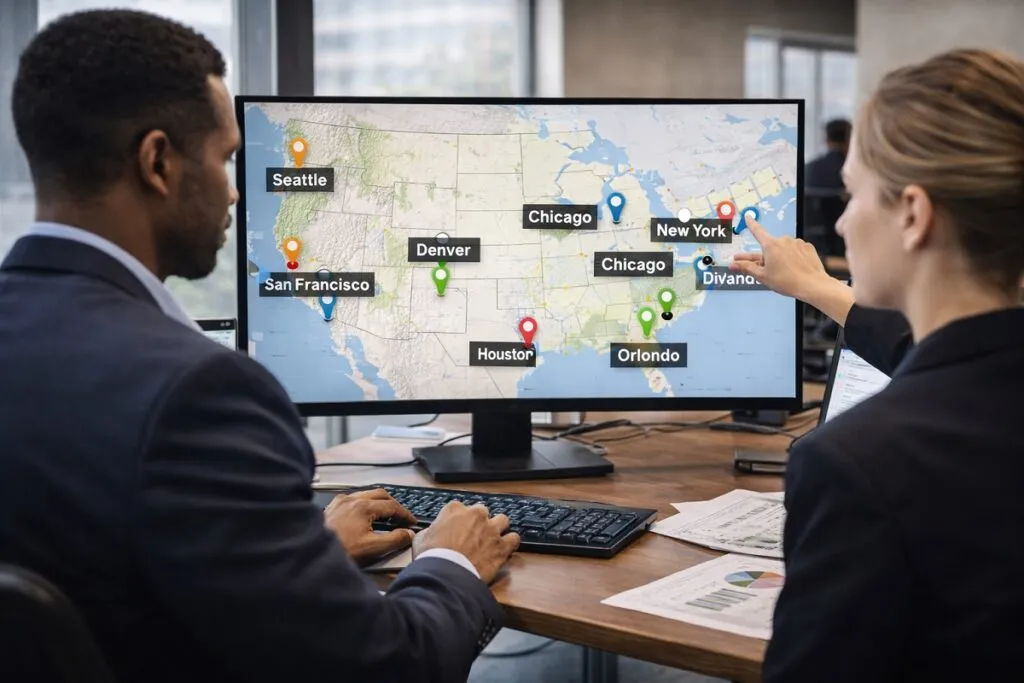
Environmental regulations and sustainability initiatives vary by region, which impacts hiring demand.
Cities with strong demand for environmentally skilled CAD professionals include:
- Denver due to green building initiatives
- Houston due to energy sector transformation
- New York City due to strict environmental regulations
Hiring managers in these markets often face increased competition for talent.
For example, companies hiring in Colorado may benefit from targeted support to access local candidates with sustainability experience.
Similarly, IT infrastructure support roles in high-demand areas like Denver require candidates who can manage complex, environmentally optimized systems.
The Cost of a Bad Hire in CAD-Driven Projects
A poor hiring decision in a CAD role has direct environmental and financial consequences.
Risks include:
- Increased material waste
- Higher energy consumption
- Project delays due to redesign
- Compliance failures
For IT roles, the impact includes:
- System inefficiencies
- Increased downtime
- Higher operational costs
Direct hire mistakes are expensive and difficult to reverse, which is why many organizations rely on specialized staffing partners.
Why Direct Hire Staffing Reduces Risk

Direct hire staffing provides a more strategic approach to filling CAD and IT roles.
Benefits include:
- Access to pre-vetted candidates with relevant experience
- Reduced time-to-fill through targeted sourcing
- Improved quality of hire
- Lower turnover rates
Specialized recruiters understand how to evaluate candidates for both technical skills and environmental awareness.
This is especially important for organizations where sustainability is tied to compliance, brand reputation, or operational efficiency.
How to Improve Your Hiring Process for Environmentally Impactful CAD Projects
To build a stronger hiring process, focus on aligning technical requirements with environmental goals.
Refine Job Descriptions
Include:
- Sustainability responsibilities
- Required experience with environmental tools
- Collaboration expectations with engineering teams
Standardize Screening
Develop consistent evaluation criteria for:
- Environmental impact knowledge
- CAD optimization skills
- Real-world project experience
Use Technical Assessments
Incorporate scenario-based tests that require candidates to:
- Reduce material usage
- Improve energy efficiency
- Optimize design constraints
Partner with Specialized Recruiters
Working with experts in CAD and IT staffing helps reduce hiring friction and improves candidate quality.
Track Hiring Metrics
Monitor:
- Time-to-fill
- Quality of hire
- Retention rates
Use this data to continuously refine your hiring strategy.
Need Help Hiring CAD or IT Support Talent?
If you are struggling to find CAD professionals or IT support staff who understand the environmental impact of their work, partnering with a specialized direct hire firm can help you reduce hiring risk and improve outcomes.
Content reviewed and published by Tier2Tek Staffing Editorial Team .