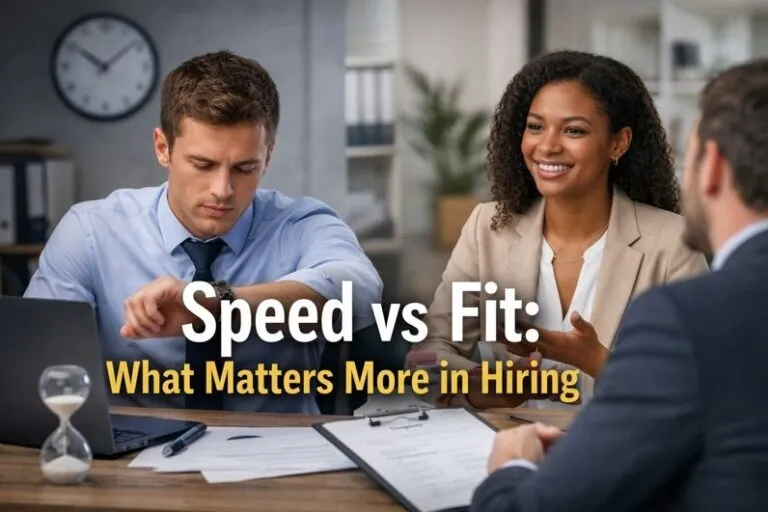
Speed vs Fit: What Matters More in Hiring is one of the most debated questions in modern recruitment. Hiring teams are under pressure to move fast while also being expected to make high-quality, long-lasting hires. Choosing between speed of hiring and candidate fit is rarely a simple decision, and prioritizing one at the expense of the other can have measurable consequences for performance, retention, and overall business outcomes.
Recruiters, founders, and HR leaders often struggle with this balance, especially in competitive labor markets where top candidates have multiple offers. Understanding how speed and fit interact is critical for building strong teams without sacrificing momentum.
The Cost of Hiring Too Slowly
Slow hiring processes often feel safer, but they come with hidden risks that many organizations underestimate.
Extended time-to-hire can negatively impact business performance in several ways.
- Top candidates leave the market quickly and accept other offers
- Open roles put extra strain on existing teams
- Revenue, productivity, and growth initiatives stall
- Employer brand perception declines
Research from the Society for Human Resource Management shows that the average cost-per-hire can exceed $4,700, and prolonged vacancies significantly increase this cost. According to a study cited by the Society for Human Resource Management, unfilled roles can cost organizations hundreds of dollars per day in lost productivity.
Speed matters because delays compound. Every additional interview round or approval layer increases the likelihood of losing strong candidates who value decisive employers.
The Risks of Hiring Too Fast
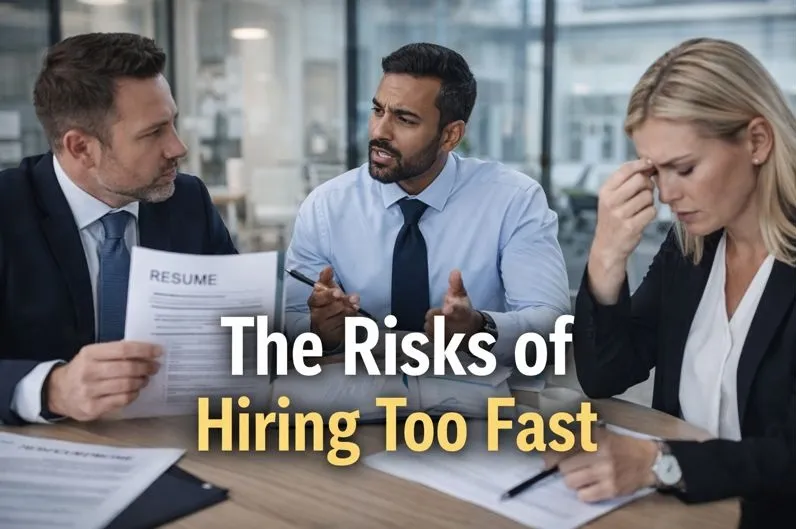
While speed is essential, prioritizing it without discipline can lead to poor hiring outcomes.
Rushed hiring decisions often result in:
- Skills mismatch with role requirements
- Misalignment with team dynamics
- Cultural friction
- Higher turnover within the first year
A widely cited analysis by the U.S. Department of Labor estimates that a bad hire can cost up to 30 percent of the employee’s first-year earnings. Poor hiring fit increases the likelihood of disengagement, performance issues, and eventual replacement.
Fast hiring that ignores fit tends to solve short-term staffing problems while creating long-term operational ones.
Why Hiring Fit Impacts Retention and Performance
Fit is closely linked to employee retention, engagement, and long-term success. When candidates align with role expectations, team norms, and organizational values, they are more likely to perform well and stay longer.
Strong hiring fit typically leads to:
- Faster onboarding and ramp-up time
- Higher job satisfaction
- Better collaboration and communication
- Lower voluntary turnover
According to a Gallup study on employee engagement, employees who feel aligned with their organization’s values and expectations are significantly more engaged and productive. Engagement directly correlates with profitability and customer satisfaction.
Fit is not about sameness or hiring people who think alike. It is about alignment with how work gets done and what success looks like in a specific role.
Speed vs Fit Is Not an Either-Or Decision

The most effective hiring strategies recognize that speed and fit are not opposing forces. The real challenge lies in designing a hiring process that delivers both.
High-performing organizations optimize for:
- Speed through clarity and structure
- Fit through targeted evaluation and consistency
The goal is not to slow down hiring to improve fit, or rush decisions to improve speed. The goal is to eliminate inefficiencies that slow hiring without adding value.
Where Hiring Processes Lose Time Without Improving Fit
Many hiring delays do not improve decision quality. They simply add friction.
Common time-wasters include:
- Unclear job requirements leading to misaligned candidates
- Too many interview rounds with overlapping questions
- Decision-making bottlenecks caused by unclear ownership
- Interviewers lacking evaluation criteria
Harvard Business Review has highlighted that structured hiring processes outperform unstructured ones in both speed and quality. Their research on structured interviews shows that clear criteria and consistency reduce bias while improving hiring accuracy.
Removing unnecessary steps allows teams to move faster without compromising fit.
How to Hire Faster Without Sacrificing Fit

Speed improves when the hiring process is intentional rather than reactive.
Define Success Before Posting the Role
Hiring teams should align on what success looks like in the role within the first 6 to 12 months.
This includes:
- Key outcomes the hire must deliver
- Non-negotiable skills and experience
- Behaviors required to succeed in the team
Clear definitions reduce time wasted interviewing candidates who were never a strong fit.
Use Structured Interviews
Structured interviews increase both speed and fit by keeping evaluations focused.
Benefits include:
- Comparable candidate assessments
- Faster interviewer alignment
- Reduced bias and indecision
Each interviewer should assess specific competencies rather than repeating the same general questions.
Limit Interview Rounds to What Matters
More interviews do not automatically produce better hires.
High-quality hiring processes typically include:
- One skills-focused interview
- One team or stakeholder interview
- One final decision-maker conversation
Anything beyond that should have a clear purpose tied to evaluating fit or performance.
When Speed Should Take Priority

There are situations where hiring speed carries more weight than perfect fit.
Examples include:
- High-volume roles with standardized responsibilities
- Temporary or contract positions
- Rapid growth phases where capacity is critical
- Roles with strong onboarding and training support
In these cases, baseline fit and skill sufficiency may be enough, as long as performance can be evaluated quickly after hiring.
According to LinkedIn’s Global Talent Trends report, companies that reduce time-to-hire without sacrificing assessment quality see improved candidate experience and offer acceptance rates.
Speed signals organizational confidence and respect for candidates’ time.
When Fit Should Take Priority
Some roles demand a stronger emphasis on fit due to their impact and complexity.
These include:
- Leadership and management roles
- Positions with high autonomy or influence
- Small teams where one hire significantly affects dynamics
- Roles tied closely to company values and culture
In these cases, the cost of a mis-hire is significantly higher than the cost of a longer hiring process. Fit becomes critical for trust, decision-making, and long-term stability.
The Impact on Employer Brand
Speed vs fit decisions influence how candidates perceive an organization.
Slow, disorganized hiring signals:
- Indecision
- Poor internal alignment
- Low respect for candidate experience
Overly fast, careless hiring signals:
- Lack of rigor
- Role ambiguity
- High turnover risk
According to research from Glassdoor, candidates who have a positive hiring experience are more likely to accept offers and recommend the employer, even if they are not hired.
Balancing speed and fit strengthens employer branding and candidate trust.
Metrics That Help Balance Speed and Fit

Organizations that successfully balance speed and fit rely on data, not instincts alone.
Key hiring metrics include:
- Time-to-hire
- Quality of hire
- First-year turnover rate
- Hiring manager satisfaction
- New hire performance at 90 and 180 days
Tracking these metrics reveals whether faster hiring is actually producing better outcomes or creating downstream issues.
Making Better Hiring Decisions Under Pressure
Hiring pressure often leads to shortcuts that hurt fit or unnecessary delays that hurt speed.
The best hiring decisions happen when:
- Criteria are defined upfront
- Interviewers are aligned
- Decisions are made promptly after interviews
- Accountability is clear
Speed improves naturally when teams trust their process and data.
Striking the Right Balance
Speed vs Fit: What Matters More in Hiring ultimately depends on role impact, business context, and organizational maturity. The strongest hiring strategies do not treat speed and fit as competing priorities. They design systems that deliver both.
Organizations that hire well move quickly because they know what they are looking for. They prioritize fit because they understand the long-term cost of getting it wrong. When speed and fit are aligned, hiring becomes a competitive advantage rather than a recurring challenge.
Content reviewed and published by Tier2Tek Staffing Editorial Team .