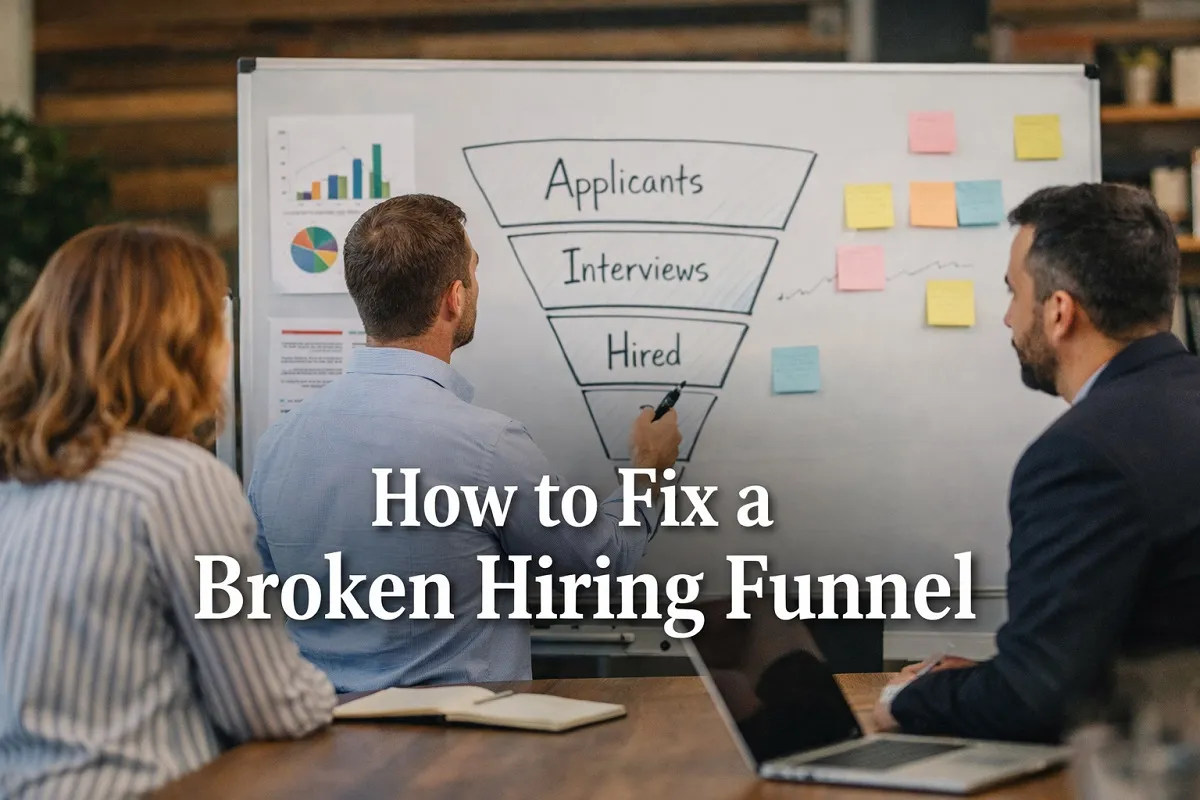
Fixing a broken hiring funnel requires a clear look at how candidates move through each stage of recruitment and where they drop off. Many hiring managers struggle with talent acquisition pipelines that generate applications but fail to produce qualified hires. Addressing a broken hiring funnel means improving recruitment processes, strengthening candidate experience, and aligning hiring teams around efficient hiring practices. When every stage of the funnel works correctly, organizations attract stronger candidates, reduce time to hire, and build a more consistent recruitment pipeline.
Identify Where Candidates Are Dropping Off
A broken hiring funnel often reveals itself through specific weak points in the recruitment process. Hiring managers should begin by analyzing where candidates disengage or disappear.
Common drop off points include:
- Low application completion rates
- Candidates declining interview requests
- Strong applicants failing during screening stages
- High offer rejection rates
- Delays between interview stages
Data plays an essential role in identifying these issues. According to the Society for Human Resource Management (SHRM), organizations that track recruiting metrics such as time to fill, application completion rate, and interview to hire ratio gain clearer visibility into hiring bottlenecks.
Reviewing these metrics reveals exactly where the hiring funnel needs improvement.
Improve Job Descriptions to Attract the Right Candidates
A hiring funnel often breaks at the very top when job descriptions attract the wrong candidates. Poorly written listings create high application volume but low candidate quality.
Effective job descriptions should:
- Clearly outline responsibilities and expectations
- Highlight essential qualifications rather than long wish lists
- Include salary ranges when possible
- Emphasize company culture and career growth
- Use relevant hiring keywords for search visibility
Optimized job descriptions help attract candidates who actually fit the role. This reduces screening workload and improves the quality of the recruiting pipeline.
Hiring managers should also remove unnecessary requirements that discourage qualified applicants from applying.
Simplify the Application Process
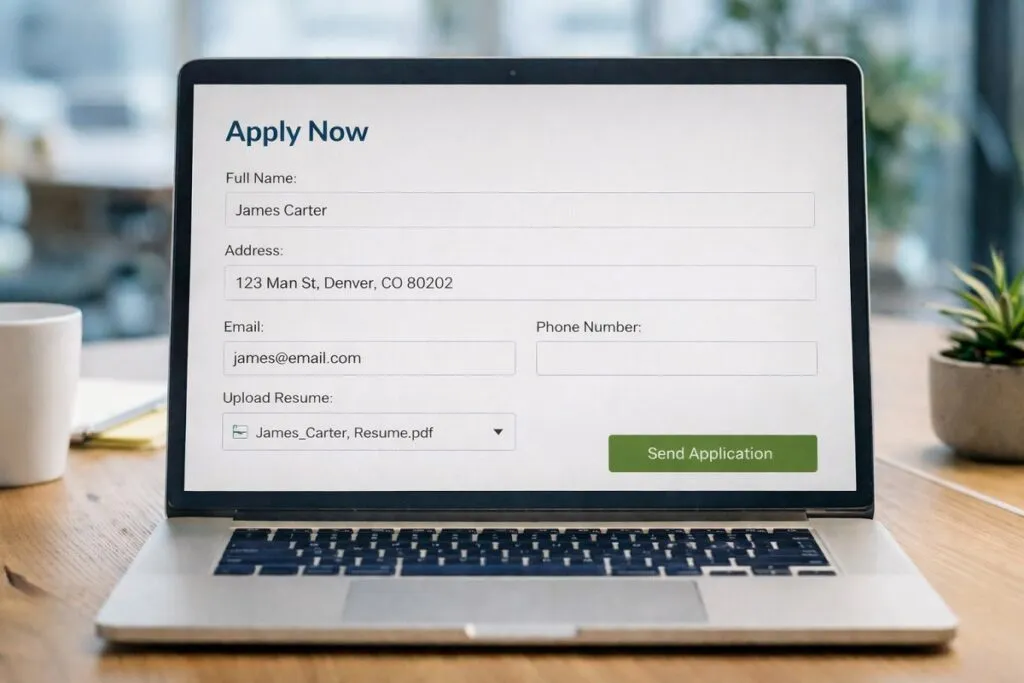
Complex applications are one of the fastest ways to break a hiring funnel. When candidates encounter lengthy forms, account creation requirements, or repetitive fields, many abandon the application entirely.
A streamlined application process improves conversion rates significantly.
Consider implementing:
- One page application forms
- Resume parsing to auto fill fields
- Mobile friendly application pages
- Limited required fields during the initial submission
Research from the shows that overly rigid hiring systems and complex screening processes often filter out capable candidates before they ever reach recruiters.
Reducing friction during application submission keeps qualified candidates moving through the hiring funnel.
Strengthen Candidate Screening Processes
Screening is where many hiring funnels begin to fail. If screening criteria are inconsistent or unclear, recruiters may pass over strong candidates or advance unqualified applicants.
Structured screening methods improve hiring accuracy and funnel efficiency.
Recommended practices include:
- Using standardized evaluation scorecards
- Defining must have qualifications before reviewing applications
- Aligning recruiters and hiring managers on candidate expectations
- Avoiding unnecessary screening steps
Consistency during screening allows organizations to move qualified candidates forward faster.
Reduce Delays Between Hiring Stages
Time delays between hiring stages cause candidates to disengage or accept competing offers. Slow hiring processes often lead to losing top talent.
To fix this issue, hiring managers should shorten decision timelines and improve communication between stakeholders.
Strategies to reduce delays:
- Schedule interviews within 3 to 5 days of screening
- Pre block interview time on hiring managers calendars
- Use shared evaluation scorecards for faster feedback
- Automate scheduling through recruiting software
When interview scheduling and feedback move quickly, candidates remain engaged and motivated throughout the hiring process.
Improve the Interview Experience

A weak interview process can break the hiring funnel even after candidates reach later stages.
Candidates evaluate employers during interviews just as much as employers evaluate candidates.
Strong interview experiences include:
- Clear interview structure
- Prepared interviewers
- Defined evaluation criteria
- Respectful and timely communication
- Transparent discussion of the role and expectations
Disorganized interviews or inconsistent questioning create confusion and reduce hiring confidence.
Hiring teams should ensure every interview stage has a clear purpose.
Align Hiring Teams on Candidate Evaluation
Hiring funnels often break due to misalignment between recruiters and hiring managers. Without shared expectations, strong candidates may be rejected unnecessarily.
Alignment can be improved through structured hiring frameworks.
Key alignment steps include:
- Conducting intake meetings before opening roles
- Defining ideal candidate profiles
- Establishing evaluation scorecards
- Clarifying deal breaker qualifications
- Setting expectations for interview feedback timelines
When hiring teams share the same criteria, candidates move through the hiring funnel more efficiently.
Strengthen Employer Branding
Employer branding directly impacts the success of a hiring funnel. Candidates research companies before accepting interviews or offers.
Weak employer branding can cause qualified candidates to drop out before later stages of the funnel.
Ways to improve employer brand visibility:
- Showcase employee testimonials
- Highlight career development opportunities
- Share company culture through social media
- Maintain active and updated career pages
- Encourage employee generated content
A strong employer reputation attracts better candidates and improves offer acceptance rates.
Use Recruitment Data to Continuously Improve the Funnel

Fixing a broken hiring funnel requires ongoing measurement and adjustment. Hiring managers should regularly analyze recruiting data to identify trends and opportunities for improvement.
Important recruiting metrics include:
- Time to hire
- Cost per hire
- Candidate drop off rate
- Interview to hire ratio
- Offer acceptance rate
Tracking these metrics provides insight into which parts of the hiring funnel need refinement.
Recruitment analytics also help organizations forecast hiring needs and optimize talent acquisition strategies.
Build a Consistent Candidate Communication Process
Poor communication frequently causes candidates to abandon the hiring process. Applicants expect timely updates and transparency throughout recruitment.
A structured communication process keeps candidates engaged.
Best practices include:
- Sending interview confirmations quickly
- Providing timelines for hiring decisions
- Offering prompt feedback after interviews
- Informing candidates when processes change
Clear communication builds trust and strengthens the overall candidate experience.
Evaluate Offer Competitiveness
Even when candidates reach the final stage, a hiring funnel can fail if compensation or benefits are not competitive.
Hiring managers should regularly review:
- Salary benchmarks for the role
- Total compensation packages
- Benefits and perks
- Remote work or flexibility options
Competitive offers improve acceptance rates and prevent the hiring funnel from breaking at the final stage.
Fixing a broken hiring funnel requires a systematic approach that addresses candidate attraction, screening efficiency, interview quality, and team alignment. By identifying weak points in the recruitment pipeline and improving each stage, hiring managers can build a more reliable hiring process that attracts stronger candidates and converts them into successful hires. Organizations that optimize their hiring funnel reduce recruitment costs, shorten time to hire, and create a more consistent flow of qualified talent.
Content reviewed and published by Tier2Tek Staffing Editorial Team .