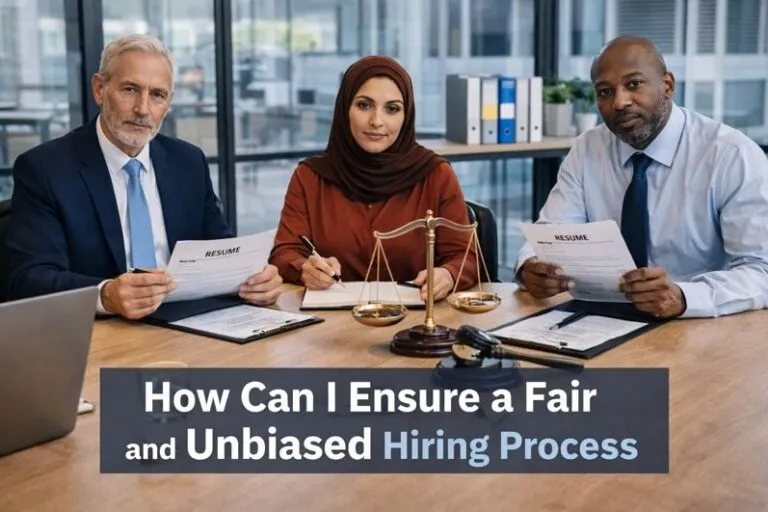
How can I ensure a fair and unbiased hiring process is a critical question for organizations aiming to build diverse, high-performing teams while reducing legal and reputational risk. Hiring decisions that are objective, structured, and evidence-based help organizations attract stronger candidates, improve employee retention, and foster trust in the recruitment process.
A fair hiring process does not happen by accident. It requires intentional systems, clear criteria, and accountability at every stage of recruitment, from job descriptions to final offers.
Establish Clear, Job-Related Hiring Criteria
Hiring bias often enters the process when expectations are vague or subjective. Clearly defined criteria ensure every candidate is assessed against the same standards.
Strong hiring criteria should be:
- Directly tied to job responsibilities and outcomes
- Based on skills, experience, and competencies
- Written before reviewing any applications
Avoid criteria based on personality assumptions, cultural fit without definition, or vague ideas of potential. According to guidance from the U.S. Equal Employment Opportunity Commission, hiring decisions should be based on job-related factors and consistent with business necessity.
Write Inclusive and Bias-Free Job Descriptions
Job postings often shape who applies and who self-selects out. Certain words and phrases can unintentionally discourage qualified candidates from underrepresented groups.
Effective job descriptions:
- Use neutral, inclusive language
- Focus on essential qualifications rather than exhaustive wish lists
- Avoid gender-coded or age-related terms
- Clearly state commitment to equal opportunity
Research from Harvard Business Review shows that overly aggressive or gendered wording in job ads can significantly reduce applicant diversity.
Standardize Resume Screening

Unstructured resume reviews are one of the most common entry points for unconscious bias. Standardization creates consistency and fairness.
Ways to improve resume screening include:
- Using predefined scoring rubrics
- Reviewing resumes against the same checklist
- Screening for skills and experience before education or personal details
Some organizations choose blind resume screening, removing names, addresses, and graduation years. Studies cited by the National Bureau of Economic Research suggest that anonymized resumes can reduce bias related to gender and ethnicity, as documented by the National Bureau of Economic Research.
Use Structured Interviews Instead of Informal Conversations
Structured interviews are one of the most effective tools for ensuring unbiased hiring decisions. They focus on job-relevant questions asked in the same order for every candidate.
Key elements of structured interviews:
- Identical questions for all candidates
- Questions tied to specific competencies
- Standardized scoring for each response
According to research summarized by the Society for Human Resource Management, structured interviews are significantly more predictive of job performance than unstructured interviews.
Train Hiring Teams on Unconscious Bias
Even well-intentioned hiring managers are influenced by unconscious bias. Awareness and training help teams recognize and interrupt these patterns.
Effective bias training focuses on:
- Common bias types such as affinity bias and confirmation bias
- Real hiring scenarios and decision points
- Practical techniques for slowing down decisions
The Chartered Institute of Personnel and Development emphasizes that bias training should be paired with structural changes to hiring systems, not used as a standalone solution.
Rely on Skills-Based Assessments
Skills-based hiring reduces reliance on assumptions and personal impressions. Practical assessments show how candidates perform tasks relevant to the role.
Examples include:
- Work samples
- Case studies
- Job simulations
- Technical or skills tests
The World Economic Forum reports that skills-based assessments improve hiring fairness and better predict on-the-job success, as referenced by the World Economic Forum https://www.weforum.org.
Create Diverse Interview Panels

Interview panels that lack diversity can unintentionally reinforce bias. Including multiple perspectives helps balance individual assumptions and improves decision quality.
Benefits of diverse interview panels:
- Broader evaluation viewpoints
- Reduced influence of individual bias
- Increased candidate trust in the process
McKinsey research shows that diverse teams are more likely to make better decisions and identify top talent, as highlighted by McKinsey & Company.
Document Hiring Decisions Thoroughly
Documentation creates accountability and transparency. Every hiring decision should be supported by clear, job-related reasoning.
Good documentation includes:
- Interview scores and notes
- Assessment results
- Reasons for advancing or rejecting candidates
This practice not only improves fairness but also protects organizations in the event of audits or discrimination claims. The U.S. Department of Labor recommends maintaining clear hiring records as part of equitable employment practices, according to the Department of Labor.
Monitor Hiring Data for Bias Patterns
Fair hiring processes rely on ongoing evaluation. Tracking hiring data helps identify patterns that may signal bias.
Metrics to monitor:
- Applicant demographics by stage
- Interview-to-offer ratios
- Time-to-hire differences across groups
Analyzing this data enables organizations to correct issues early. Guidance from the Office of Federal Contract Compliance Programs emphasizes data analysis as a core component of equitable hiring systems, as outlined by the OFCCP.
Ensure Consistent Offer and Compensation Practices
Bias does not end with candidate selection. Compensation and offer terms must also be consistent and equitable.
Best practices include:
- Salary bands tied to role level
- Clear criteria for offers and bonuses
- Avoiding reliance on salary history
Research published by the Economic Policy Institute shows that structured pay practices help reduce wage gaps, as discussed by the Economic Policy Institute.
Build Accountability Into the Hiring Process

Ensuring a fair and unbiased hiring process requires ownership at every level. Assign responsibility for maintaining standards and reviewing outcomes.
Accountability measures may include:
- HR oversight of hiring decisions
- Regular audits of hiring practices
- Leadership review of diversity and equity metrics
Organizations that embed accountability into hiring systems are more likely to sustain fair practices over time, according to analysis from Deloitte https://www.deloitte.com.
A fair and unbiased hiring process is built through structure, consistency, and evidence-based decisions. By aligning hiring practices with objective criteria, standardized assessments, and ongoing evaluation, organizations can create hiring systems that are equitable, defensible, and effective while attracting the best talent available.
Content reviewed and published by Tier2Tek Staffing Editorial Team.