
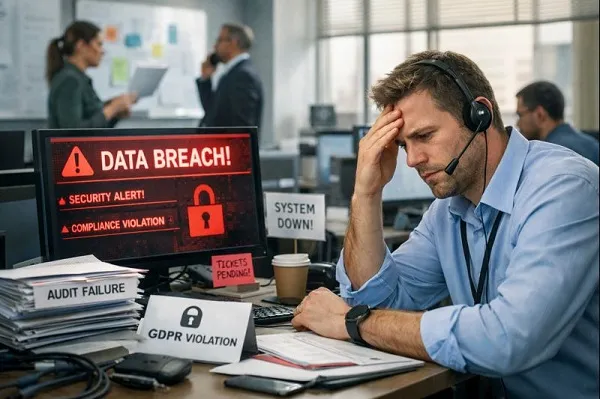
Compliance risks of understaffed IT support are a growing concern for organizations that rely on technology to manage data, maintain security, and meet regulatory obligations. When IT teams lack sufficient staffing, compliance gaps often emerge quietly, increasing exposure to audits, penalties, data breaches, and operational disruptions.
How Understaffed IT Support Creates Compliance Vulnerabilities
An understaffed IT department is often forced into a reactive mode. Critical compliance tasks are deprioritized in favor of urgent troubleshooting, leaving organizations exposed to regulatory risks.
Limited staffing affects visibility, consistency, and control across systems. Compliance failures rarely come from a single event but from accumulated oversights.
Reduced Oversight and Accountability
When there are too few IT professionals, oversight becomes fragmented. Key responsibilities may be shared informally or left unattended.
Common issues include:
- Inconsistent enforcement of security policies
- Limited documentation of system changes
- Lack of clear ownership for compliance-related tasks
This environment increases the likelihood of errors that go undetected until an audit or incident occurs.
Delayed Security Updates and Patch Management
Patch management is a critical compliance requirement in many regulations, including HIPAA, PCI DSS, and ISO standards. Understaffed IT support teams often struggle to keep systems updated.
Delays in applying security patches can lead to:
- Known vulnerabilities remaining exploitable
- Increased risk of malware and ransomware attacks
- Non-compliance with regulatory patch timelines
Auditors frequently flag outdated systems as evidence of inadequate controls.
Regulatory Frameworks Impacted by IT Staffing Shortages

Compliance risks tied to understaffed IT support affect organizations across industries. Regulatory bodies expect proactive system management regardless of team size.
Data Protection and Privacy Regulations
Data protection laws require strict controls over how sensitive information is stored, accessed, and protected. Understaffed IT teams may not have the capacity to consistently enforce these controls.
Key risk areas include:
- Improper access controls
- Incomplete encryption practices
- Delayed response to data access requests
Failure to meet these requirements can result in significant fines and reputational damage.
Industry-Specific Compliance Standards
Many industries operate under strict technical and security standards. Insufficient IT support directly undermines compliance efforts.
Examples of compliance risks include:
- Incomplete audit trails in financial systems
- Unmonitored access to patient records
- Insufficient logging and monitoring of system activity
Staffing gaps often translate into missed compliance checkpoints.
Incident Response and Breach Notification Failures

Timely incident response is a core compliance requirement across multiple regulations. Understaffed IT support teams may lack the bandwidth to detect, investigate, and report incidents within mandated timelines.
Slower Detection of Security Incidents
Monitoring systems require continuous attention. When staffing is limited, alerts may be missed or reviewed too late.
This can result in:
- Extended dwell time for attackers
- Greater data loss or system damage
- Increased regulatory scrutiny
Delayed detection often escalates a manageable incident into a reportable breach.
Missed Reporting Deadlines
Many regulations impose strict timelines for breach notification. Understaffed IT teams may struggle to gather forensic data, assess impact, and coordinate reporting.
Consequences of missed deadlines include:
- Regulatory penalties
- Mandatory third-party audits
- Increased legal exposure
Compliance failures during incident response are often cited as aggravating factors.
Inadequate Access Management and Identity Controls

Access control is a foundational compliance requirement. Understaffed IT support teams may not consistently review or update user permissions.
Orphaned Accounts and Excess Privileges
Without sufficient staffing, user access reviews are often delayed or skipped.
Risks include:
- Former employees retaining system access
- Users holding privileges beyond their job role
- Shared accounts without accountability
Auditors frequently identify access management gaps as high-risk compliance violations.
Weak Enforcement of Authentication Policies
Implementing and maintaining strong authentication requires ongoing effort.
Common compliance issues include:
- Inconsistent multi-factor authentication deployment
- Password policies not enforced uniformly
- Legacy systems exempt from security standards
Understaffed teams may lack the time to remediate these weaknesses.
Documentation and Audit Readiness Challenges

Compliance relies heavily on accurate documentation. Understaffed IT support teams often prioritize system uptime over recordkeeping.
Incomplete Change Management Records
Change management is critical for demonstrating control over systems.
Staffing shortages can lead to:
- Undocumented configuration changes
- Missing approvals or testing records
- Inability to reconstruct events during audits
Auditors often interpret poor documentation as evidence of systemic control failures.
Difficulty Supporting Compliance Audits
Audits require preparation, evidence collection, and coordination. Understaffed teams may struggle to meet audit demands without disrupting daily operations.
Challenges include:
- Delayed responses to auditor requests
- Incomplete evidence submissions
- Increased audit findings due to time constraints
These issues can prolong audits and increase compliance costs.
Business Continuity and Disaster Recovery Risks

Many compliance frameworks require documented and tested disaster recovery plans. Understaffed IT support teams may not have the resources to maintain these plans effectively.
Infrequent Testing of Recovery Procedures
Disaster recovery testing is often postponed due to staffing limitations.
This leads to:
- Unverified backup integrity
- Unclear recovery time objectives
- Gaps between documented plans and actual capabilities
Compliance audits frequently assess whether recovery plans are actively tested and updated.
Backup Management and Data Retention Failures
Backup and retention policies require consistent monitoring.
Understaffed teams may face:
- Failed backups going unnoticed
- Retention schedules not enforced
- Inability to restore data within required timeframes
These failures can result in both operational disruption and compliance violations.
Third-Party Risk Management Gaps

Vendor and third-party access must be monitored and controlled to meet compliance requirements. Understaffed IT support teams may not adequately manage these relationships.
Limited Oversight of Vendor Access
Without sufficient staff, third-party access reviews may be infrequent or incomplete.
Risks include:
- Vendors retaining access after contract termination
- Inadequate monitoring of vendor activity
- Lack of alignment with internal security policies
Third-party breaches often expose organizations to shared compliance liability.
Insufficient Security Assessments
Compliance standards often require regular vendor risk assessments.
Staffing constraints may result in:
- Outdated security questionnaires
- Missing risk documentation
- Failure to address known vendor vulnerabilities
Regulators increasingly scrutinize third-party risk management programs.
Operational Strain and Compliance Fatigue

Understaffed IT support teams operate under constant pressure. This environment increases the likelihood of mistakes and compliance lapses.
Burnout and Human Error
Sustained understaffing leads to fatigue and reduced attention to detail.
Consequences include:
- Misconfigured systems
- Missed alerts
- Inconsistent policy enforcement
Human error remains a leading cause of compliance incidents.
Reactive Rather Than Proactive Compliance
With limited staff, IT teams often address compliance only after issues arise.
This reactive approach:
- Increases remediation costs
- Expands audit findings
- Signals weak governance to regulators
Proactive compliance requires adequate staffing and capacity.
Financial and Reputational Consequences

Compliance failures tied to understaffed IT support extend beyond regulatory penalties.
Organizations may face:
- Fines and sanctions
- Legal costs and settlements
- Loss of customer trust
- Increased insurance premiums
These impacts often exceed the cost of investing in sufficient IT staffing.
Compliance risks of understaffed IT support are not theoretical. They surface through missed controls, delayed responses, and incomplete oversight that accumulate over time. Organizations that rely on minimal IT staffing often discover vulnerabilities only after audits, incidents, or regulatory action. Addressing these risks requires recognizing IT support as a core compliance function, not just an operational expense, and ensuring teams have the capacity to maintain security, documentation, and regulatory alignment consistently.
Content reviewed and published by Tier2Tek Staffing Editorial Team .