Hire Safety Engineers Who Understand Operational Risk, Compliance, and Production Realities
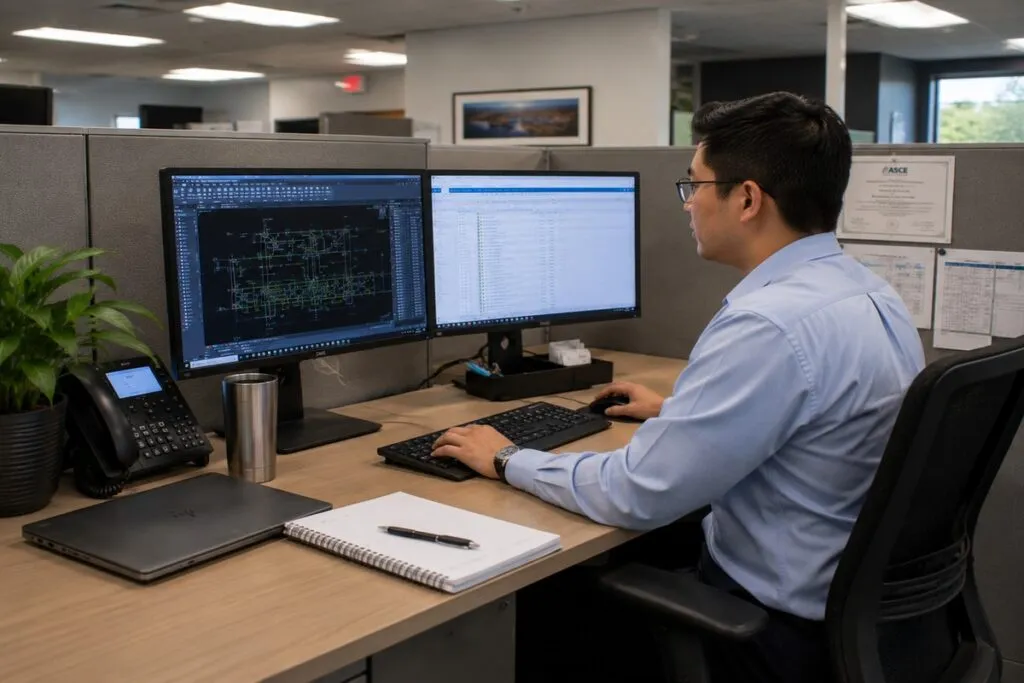
Hiring a Safety Engineer is rarely about filling a vacancy. It is about protecting people, maintaining production, controlling regulatory exposure, and supporting operational performance without creating unnecessary process friction. Organizations that rely on manufacturing, construction, energy production, transportation, chemicals, pharmaceuticals, food processing, utilities, logistics, and heavy industrial operations often discover that the wrong safety hire creates hidden costs long before an incident occurs. Production delays, compliance findings, contractor management failures, inconsistent investigations, and poor safety culture frequently trace back to technical capability gaps that were not obvious during the hiring process.
At Tier2Tek Staffing, we recruit Safety Engineers with a practical understanding of how safety functions inside real operating environments rather than solely within regulatory frameworks. We evaluate how candidates influence operations, communicate with production teams, collaborate with engineering leadership, interpret regulations, manage risk, and support continuous improvement without disrupting business objectives. Employers benefit from candidates who understand that successful safety programs balance operational efficiency with regulatory compliance instead of treating them as competing priorities.
Unlike general recruiters who match resumes to job descriptions, our recruiting process focuses on the realities employers experience every day. We assess whether candidates have worked through shutdowns, managed contractor safety, participated in design reviews, supported capital projects, investigated incidents, implemented corrective actions, and earned credibility with frontline personnel. These distinctions often determine whether a Safety Engineer becomes a trusted operational partner or an isolated compliance administrator.
Safety Engineering Changes Across Every Operating Environment

The title “Safety Engineer” covers dramatically different responsibilities depending on industry, operational maturity, regulatory exposure, and project complexity. Employers frequently discover this after interviewing candidates whose experience appears strong on paper but does not align with their actual operational environment.
For example, a Safety Engineer supporting an automated manufacturing facility spends considerable time evaluating machine guarding, robotics integration, lockout procedures, ergonomics, and production workflow improvements. Meanwhile, a Safety Engineer within a chemical processing plant focuses heavily on process hazards, management of change, process safety management, mechanical integrity, and emergency response planning. Construction environments demand expertise in contractor oversight, fall protection, excavation safety, crane operations, confined spaces, and rapidly changing jobsite conditions.
Successful hiring begins with understanding these operational differences.
| Operating Environment | Safety Engineering Priorities | Common Hiring Risks |
|---|---|---|
| Manufacturing | Machine safety, automation, LOTO, ergonomics, production support | Candidate understands regulations but lacks production experience |
| Chemical Processing | Process Safety Management, HAZOP, MOC, hazardous materials | Strong EHS background but limited process safety knowledge |
| Construction | Contractor management, temporary hazards, OSHA compliance | Candidate has plant experience but limited field leadership |
| Energy & Utilities | Electrical safety, switching procedures, confined spaces, outage planning | Limited understanding of high-risk maintenance activities |
| Food & Pharmaceutical | GMP integration, sanitation, validation support, documentation | Compliance experience without operational problem solving |
These distinctions significantly influence recruiting strategy. The strongest candidates understand not only regulatory requirements but also how operational pressures affect safety decisions throughout the organization.
Where Safety Engineers Influence the Project Lifecycle
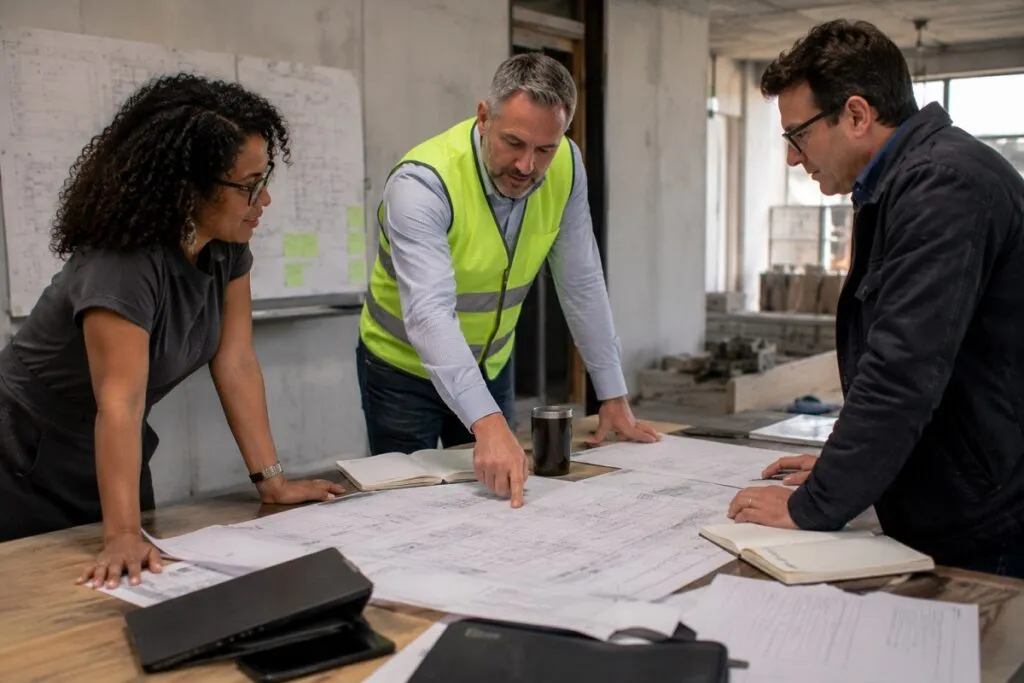
Many organizations underestimate how early Safety Engineers should become involved in engineering and capital projects. When safety participation begins only during construction or commissioning, organizations often inherit expensive design issues that require operational workarounds after startup.
Experienced Safety Engineers contribute throughout the entire project lifecycle.
Front-End Planning
Early project planning often includes:
- Preliminary hazard identification
- Regulatory impact assessments
- Safety design reviews
- Facility layout evaluations
- Equipment access planning
- Emergency response considerations
At this stage, experienced Safety Engineers identify risks before they become engineering constraints.
Detailed Engineering
As engineering progresses, Safety Engineers frequently participate in:
- Process Hazard Analysis
- Design reviews
- Machine guarding evaluations
- Human factors assessments
- Hazardous energy control planning
- Contractor safety planning
Candidates who have participated in multidisciplinary engineering reviews generally communicate far more effectively with mechanical, electrical, civil, and process engineers than candidates whose experience centers primarily on compliance audits.
Construction and Installation
Project execution introduces changing hazards that require continuous oversight.
Responsibilities commonly include:
- Contractor orientation
- Permit coordination
- Daily field observations
- Incident response
- Temporary risk assessments
- Regulatory inspections
- Corrective action management
Employers often prefer candidates who understand construction sequencing because they recognize how work activities create evolving hazards throughout installation.
Startup and Operational Handover
Commissioning introduces one of the highest risk periods in many facilities.
Experienced Safety Engineers support:
- Pre-startup safety reviews
- Emergency procedure validation
- Operator training
- Equipment verification
- Lockout program development
- Initial operating procedure reviews
Candidates who have successfully managed startup activities typically demonstrate stronger operational judgment than candidates whose experience has been limited to mature facilities.
Compliance Is Only One Part of the Job
Many hiring managers mistakenly prioritize regulatory knowledge above operational capability. While OSHA compliance remains essential, effective Safety Engineers spend much of their time preventing business disruption before regulators ever become involved.

Strong candidates understand how multiple regulatory frameworks overlap depending on industry.
Common areas include:
- OSHA General Industry Standards
- OSHA Construction Standards
- Process Safety Management
- EPA Risk Management Programs
- NFPA fire protection standards
- ANSI machine safety standards
- ISO 45001 Occupational Health and Safety Management Systems
- Environmental permitting requirements
- State-specific occupational safety regulations
- Corporate governance requirements
However, regulatory knowledge alone rarely distinguishes exceptional candidates.
Experienced Safety Engineers recognize situations where regulations establish minimum requirements while operational risk demands significantly higher internal standards. They understand how insurance carriers, corporate audits, customer requirements, and industry best practices frequently exceed regulatory expectations.
This practical judgment often separates candidates who simply maintain compliance from those who actively reduce organizational risk.
The Operational Constraints Safety Engineers Navigate Every Day

Safety decisions rarely occur in isolation. Nearly every recommendation affects production schedules, maintenance windows, engineering resources, capital budgets, contractor availability, or customer commitments.
Successful Safety Engineers understand these competing priorities.
Instead of recommending ideal solutions without considering operational realities, experienced professionals evaluate:
- Production downtime costs
- Maintenance scheduling limitations
- Equipment availability
- Contractor mobilization timelines
- Supply chain constraints
- Engineering resource availability
- Capital expenditure approval cycles
- Labor shortages
- Facility shutdown schedules
Recruiters who specialize in technical staffing recognize these experiences during candidate interviews. Applicants who describe only policies and procedures often struggle when discussing how they balanced safety improvements against operational constraints.
Conversely, experienced candidates explain how they negotiated practical solutions that reduced risk while allowing production to continue safely. Those conversations often reveal stronger leadership skills than certifications alone.
One recurring hiring observation involves candidates who have worked closely with operations managers during difficult production periods. These professionals usually communicate risk in business terms rather than regulatory language, making them significantly more effective at gaining organizational support for safety initiatives.
Why Strong Safety Engineers Build Relationships Before They Need Authority
Many organizations assume Safety Engineers succeed primarily through technical expertise. In practice, influence often matters more than authority.
Safety Engineers regularly interact with:
- Operations managers
- Maintenance supervisors
- Engineering teams
- Quality professionals
- Environmental specialists
- Human Resources
- Contractor representatives
- Plant leadership
- Regulatory inspectors
- Insurance auditors
Candidates who have developed credibility across these groups generally achieve faster implementation of corrective actions and stronger long-term safety performance.
During recruiting conversations, Tier2Tek looks beyond technical accomplishments to understand how candidates earned cooperation from production teams, handled disagreements with supervisors, responded to operational pressure, and maintained credibility after incidents or near misses.
These interpersonal observations frequently predict long-term hiring success more accurately than resumes alone.
How Tier2Tek Evaluates Safety Engineer Candidates Beyond Certifications
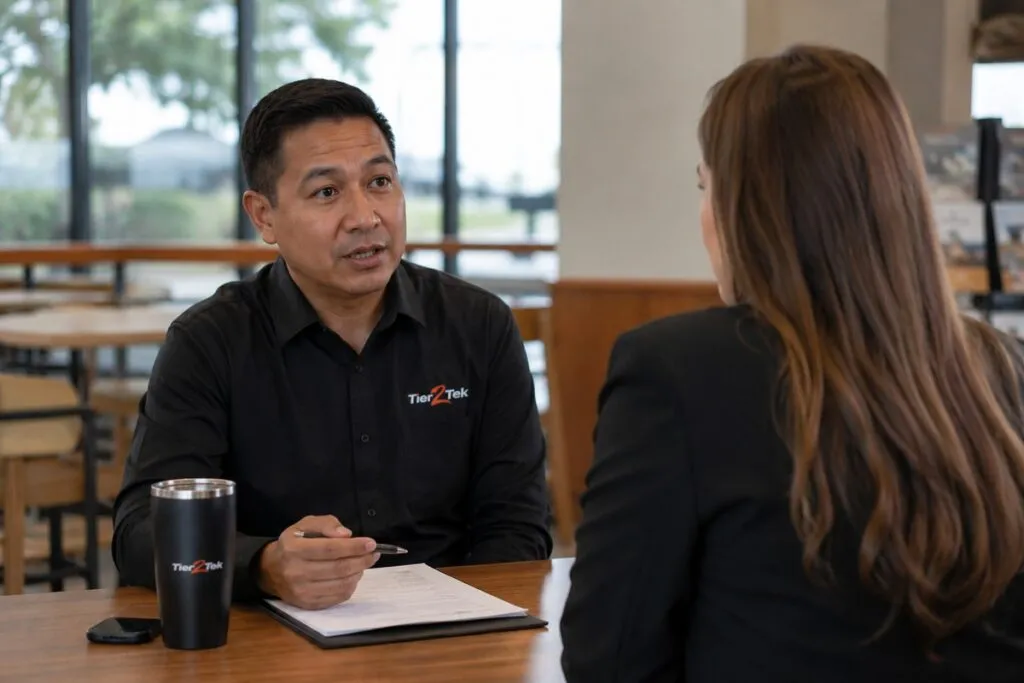
Safety engineering resumes often look remarkably similar. Many candidates list OSHA experience, incident investigations, risk assessments, safety training, and compliance audits. Those qualifications establish a baseline, but they rarely explain how effectively someone performs in a demanding operational environment.
At Tier2Tek Staffing, our evaluation process goes beyond keyword matching. We focus on the decisions candidates have made, the environments they have supported, and how they have influenced operational outcomes.
Rather than asking candidates to explain regulations they can easily recite, we explore situations such as:
- How did they convince production leadership to implement an unpopular safety improvement?
- What engineering changes resulted from an incident investigation?
- How did they prioritize corrective actions when capital budgets were limited?
- What role did they play during a facility expansion or equipment installation?
- How did they balance regulatory expectations with production schedules?
These conversations reveal practical judgment that is difficult to identify from resumes alone.
Candidates who consistently provide specific examples generally demonstrate stronger ownership than applicants who rely on broad descriptions of compliance responsibilities.
Another important distinction involves technical fluency. Effective Safety Engineers can communicate with maintenance technicians, production supervisors, engineering managers, and executive leadership without changing the accuracy of the message. That ability becomes increasingly valuable during investigations, design reviews, and capital projects.
Hiring Mistakes That Frequently Lead to Poor Safety Outcomes
Organizations often make hiring decisions based on credentials instead of operational alignment.
The following hiring patterns appear repeatedly across industrial environments.
| Hiring Decision | Common Long Term Consequence |
|---|---|
| Hiring solely for OSHA knowledge | Strong compliance reporting but weak operational influence |
| Prioritizing certifications over industry experience | Longer onboarding and slower credibility with production teams |
| Ignoring project experience | Safety issues emerge during construction or startup |
| Overlooking communication skills | Corrective actions receive limited operational support |
| Assuming all manufacturing experience is transferable | Candidate struggles with specialized hazards and workflows |
Another common mistake is overlooking industry-specific operational tempo.
A Safety Engineer who has spent a decade supporting batch pharmaceutical production may require significant adjustment before succeeding in continuous steel manufacturing. Likewise, someone experienced in commercial construction may not immediately understand the operational discipline required in chemical processing or power generation.
Understanding these differences reduces hiring risk and shortens the learning curve after onboarding.
Practical Resume Signals That Separate Experienced Safety Engineers
Strong resumes rarely rely on generic statements such as “responsible for safety compliance.”
Instead, experienced professionals typically describe measurable operational contributions.
Positive indicators include:
- Participation in Process Hazard Analysis or HAZOP studies
- Leadership during facility startups or shutdowns
- Management of contractor safety programs
- Collaboration with engineering during equipment design reviews
- Development of machine safeguarding improvements
- Implementation of Management of Change procedures
- Investigation of serious incidents with documented corrective actions
- Experience supporting multiple facilities or complex industrial operations
- Integration of safety initiatives with Lean Manufacturing or continuous improvement programs
Recruiters also pay attention to career progression.
Candidates who consistently assume broader operational responsibility often demonstrate greater leadership potential than applicants whose responsibilities have remained narrowly focused for many years.
Potential concerns may include:
- Heavy emphasis on administrative reporting without operational examples
- Frequent short-term employment without project explanations
- Numerous certifications with limited practical application
- Compliance experience limited to documentation rather than field execution
- Minimal collaboration with engineering or operations teams
None of these automatically disqualify a candidate, but they warrant deeper discussion during interviews.
Technology Has Expanded the Safety Engineer’s Role

Modern Safety Engineers increasingly work with digital platforms that improve visibility into operational risk.
Depending on industry, employers often seek experience with:
- Intelex
- Cority
- VelocityEHS
- Enablon
- Sphera
- Benchmark Gensuite
- ETQ Reliance
- SAP EHS
- IBM Maximo
- Microsoft Power BI
- AutoCAD for facility reviews
- Bluebeam Revu
- SharePoint
- Industrial IoT monitoring systems
- Permit-to-work software
- Learning Management Systems
- Incident management platforms
- Mobile inspection applications
Technical familiarity alone is not enough.
The strongest candidates understand how these systems support decision making rather than simply storing documentation. They recognize trends, identify recurring operational risks, and provide leadership with meaningful performance indicators instead of overwhelming stakeholders with raw data.
Safety Engineering Directly Supports Business Continuity
Safety performance affects much more than regulatory compliance.
Unexpected incidents frequently disrupt production schedules, customer deliveries, maintenance planning, insurance costs, workforce morale, and capital investment priorities.
Experienced Safety Engineers contribute to business continuity by helping organizations:
- Reduce unplanned downtime
- Improve equipment reliability through safer maintenance practices
- Strengthen contractor oversight
- Improve emergency preparedness
- Support insurance audits
- Reduce workers’ compensation exposure
- Improve operational consistency
- Protect customer confidence during audits
- Reduce project delays caused by safety deficiencies
Employers increasingly recognize safety engineering as a strategic operational function rather than a standalone compliance department.
That shift has changed hiring priorities across manufacturing, construction, utilities, energy, logistics, and industrial operations.
Recruiting for Safety Engineering Requires Understanding Operational Culture
Technical qualifications matter, but cultural alignment often determines whether a Safety Engineer succeeds after joining an organization.
Some companies expect highly collaborative professionals who spend most of their time on the production floor. Others require technically focused engineers supporting large capital projects or specialized regulatory initiatives.
At Tier2Tek Staffing, recruiting conversations explore questions that reveal how candidates naturally operate.
Examples include:
- Do they coach supervisors or primarily enforce policies?
- How comfortable are they challenging senior leadership?
- Can they influence experienced maintenance personnel?
- Have they earned credibility with union workforces?
- Do they understand production priorities?
- Have they worked within matrix organizations?
- How do they respond when operational demands conflict with ideal safety practices?
Answers to these questions often provide stronger hiring insight than standardized interview questions.
Matching communication style, operational maturity, and leadership approach to the employer’s environment improves retention and accelerates integration into existing teams.
Related Engineering Staffing Expertise
Many organizations hiring Safety Engineers are simultaneously expanding engineering, operations, or manufacturing teams. Tier2Tek also supports recruitment for related technical positions, including:
- Process Engineers
- Manufacturing Engineers
- Mechanical Engineers
- Electrical Engineers
- Controls Engineers
- Industrial Engineers
- Environmental Engineers
- Quality Engineers
- Reliability Engineers
- Maintenance Managers
- Plant Managers
- EHS Managers
- Project Engineers
These complementary recruiting capabilities help employers build engineering teams that work effectively across the entire operational lifecycle rather than filling isolated positions.
Our Editorial Standards and Recruiting Expertise
The information on this page reflects practical recruiting observations gathered through technical hiring conversations with employers, engineering leaders, and safety professionals across regulated industries.
Tier2Tek’s content is developed using real recruiting experience, industry hiring trends, operational hiring challenges, and established safety and engineering practices. Our recruiting team continually evaluates how changing regulations, industrial technologies, and workforce expectations influence successful hiring decisions, allowing us to provide employers with insights that extend beyond generic staffing advice.
Frequently Asked Questions
We recruit Safety Engineers for manufacturing, chemical processing, energy, utilities, construction, pharmaceuticals, food production, logistics, transportation, heavy industrial operations, and other regulated technical environments.
Our recruiting process focuses on operational experience, project involvement, communication style, engineering collaboration, incident response, leadership approach, and demonstrated decision making within complex industrial environments.
Yes. We recruit professionals with experience supporting Process Safety Management programs, Process Hazard Analysis, Management of Change, mechanical integrity, hazardous materials, and highly regulated industrial operations.
Absolutely. Many of our searches involve facility expansions, equipment installations, plant startups, commissioning activities, shutdown planning, and contractor management where project experience is essential.
Safety Engineers operate across engineering, operations, compliance, maintenance, and executive leadership. Successful recruiting requires evaluating technical knowledge alongside communication skills, operational judgment, and the ability to influence diverse stakeholders in demanding industrial environments.
Ready to Strengthen Your Safety Engineering Team?
Whether you are hiring for a growing manufacturing facility, a complex capital project, or a highly regulated industrial operation, Tier2Tek Staffing helps identify Safety Engineers with the technical expertise and operational judgment your organization requires. Contact Tier2Tek to discuss your hiring goals and connect with proven safety engineering talent.