Hire Skilled Engineers Faster
Your Engineering Staffing Partner
Tier2Tek Staffing connects employers with experienced engineering professionals across the United States. Our model is simple and focused. We provide direct hire staffing only. Every candidate we present is evaluated for long-term alignment with your organization, not short-term project fill.
Engineering roles carry operational, safety, compliance, and financial risk. Hiring the wrong engineer can lead to project overruns, regulatory exposure, design flaws, production delays, or safety incidents. Employers rely on Tier2Tek to identify engineers who understand both technical requirements and business outcomes.
Our national reach allows us to recruit across markets, including hard-to-fill and highly regulated sectors. Whether your workforce operates on-site, hybrid, or across multiple facilities, we deliver full-time engineering talent aligned to your long-term workforce strategy.
What Is a Engineering Staffing Agency

An Engineering Staffing agency helps employers identify, evaluate, and hire full-time engineering professionals with the technical depth and industry experience required for complex environments.
Unlike general recruiters, an engineering-focused staffing firm understands how design decisions, compliance requirements, safety standards, and production timelines intersect. The right engineer protects infrastructure, safeguards people, and ensures reliability across systems.
How Engineering Agencies Work
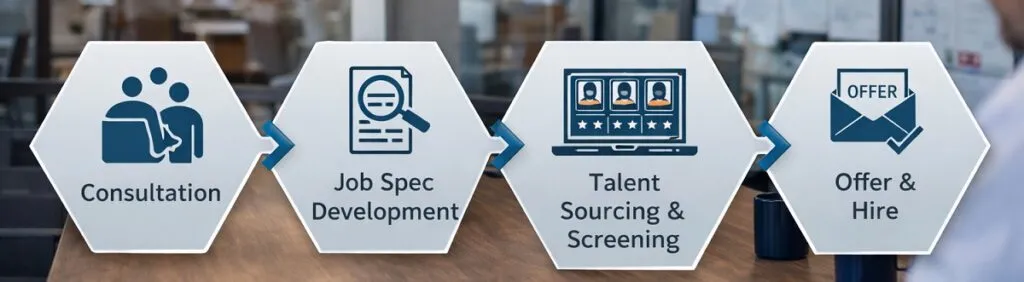
Engineering staffing agencies follow a structured recruitment process designed to reduce hiring risk and improve long-term retention. The focus is not only technical competence, but also decision-making under pressure, regulatory awareness, and accountability.
| Step | Description |
|---|---|
| Define Requirements | Clarify technical scope, compliance exposure, reporting structure, and performance expectations. |
| Source Qualified Candidates | Identify engineers with verified industry experience and stable employment history. |
| Evaluate Technical Skills | Review project portfolios, system designs, regulatory familiarity, and problem-solving capability. |
| Screen for Industry Fit | Assess ability to operate within your safety culture, documentation standards, and risk tolerance. |
| Present Best Fit Candidates | Provide a shortlist aligned with business outcomes, not just technical keywords. |
| Support the Direct Hire Process | Coordinate interviews, feedback, offer alignment, and onboarding transition. |
Common Mistakes Companies Make When Hiring Engineering Staffing
• Hiring for software proficiency while overlooking decision-making accountability on live systems
• Underestimating regulatory and safety exposure tied to engineering approvals
• Prioritizing academic credentials over real-world project execution experience
• Failing to assess how candidates respond when designs fail or timelines compress
• Overlooking communication skills in roles that require cross-functional coordination
• Assuming technical brilliance offsets reliability and documentation discipline
Why Companies Use Engineering Agencies
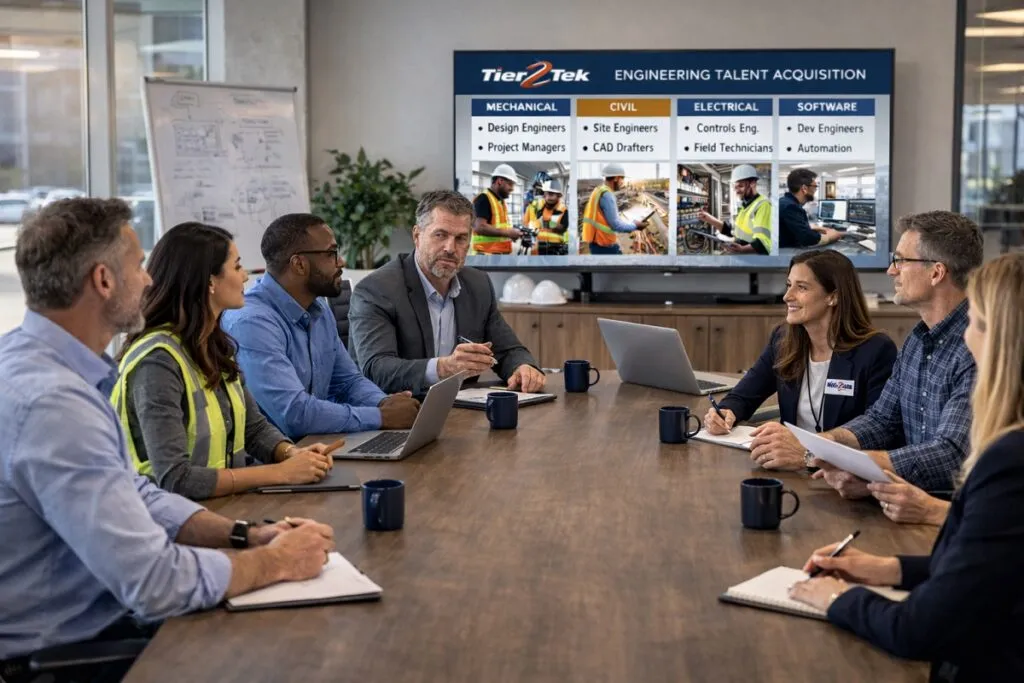
Employers engage engineering staffing partners to reduce operational and financial risk associated with critical hires.
• Access to specialized engineering talent pools
• Reduced time-to-hire for high-impact roles
• Lower risk of misaligned full-time hires
• Insight into competitive compensation markets
• Structured screening focused on reliability and accountability
• National candidate reach
• Improved long-term retention outcomes
• Confidential hiring support for strategic roles
Engineering Positions We Staff
| Role | Key Skills or Tools | Typical Industries |
|---|---|---|
| Electrical Engineer | PLCs, power systems, AutoCAD Electrical | Manufacturing, Energy |
| Civil Engineer | Structural analysis, site development | Infrastructure, Construction |
| Mechanical Engineer | SolidWorks, thermal systems | Aerospace, Industrial |
| Industrial Engineer | Lean, Six Sigma, process mapping | Manufacturing, Logistics |
| Petroleum Engineer | Reservoir modeling, drilling systems | Oil and Gas |
| Environmental Engineer | Regulatory compliance, remediation | Environmental Services |
| Process Engineer | Process optimization, control systems | Chemical, Manufacturing |
| Safety Engineer | OSHA standards, risk assessment | Industrial, Energy |
| Algorithms Engineer | Python, C++, modeling | Robotics, AI Systems |
| Robotics Engineer | Automation systems, embedded controls | Advanced Manufacturing |
| CAD or AutoCAD Designer | CAD drafting, blueprint creation | Construction, Engineering Firms |
| Party Chief | Survey equipment, site coordination | Civil, Infrastructure |
Types of Engineering Professionals and What They Do
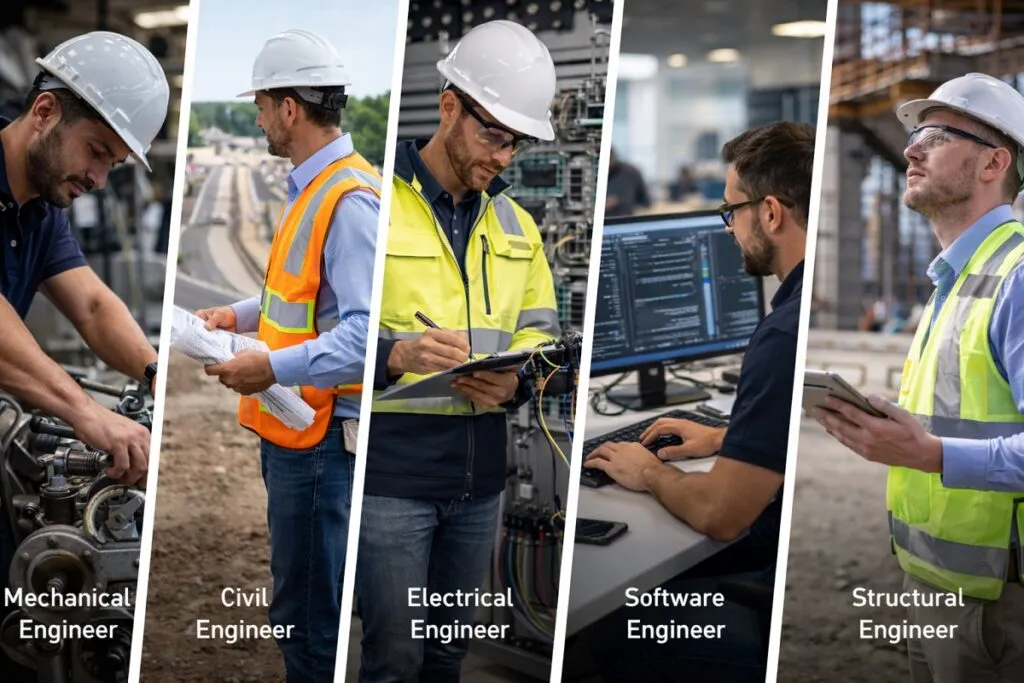
Electrical Engineer
Designs and maintains electrical systems for facilities, equipment, or infrastructure. High-performing electrical engineers anticipate load risk, redundancy requirements, and failure modes before installation. Employers often misunderstand the responsibility of code compliance sign-off and liability tied to electrical system approval.
Civil Engineer
Oversees structural integrity, site planning, and infrastructure reliability. The difference between average and high-performing civil engineers often lies in risk forecasting related to soil conditions, environmental impact, and long-term maintenance exposure.
Mechanical Engineer
Designs mechanical systems and evaluates stress, vibration, and thermal performance. Reliability under operational load is a primary business outcome of this role.
Industrial Engineer
Improves efficiency across production systems. Employers sometimes underestimate the cultural impact of process redesign on workforce adoption and performance stability.
Petroleum Engineer
Manages drilling and reservoir strategies. Decisions directly influence cost per barrel, safety exposure, and environmental compliance.
Environmental Engineer
Ensures compliance with environmental regulations and remediation standards. High performers proactively identify regulatory changes before enforcement becomes a risk.
Process Engineer
Optimizes chemical or manufacturing processes. A commonly misunderstood responsibility is long-term system stability after optimization, not just short-term output improvement.
Safety Engineer
Evaluates workplace hazards and compliance exposure. This role protects the organization from financial, legal, and reputational risk.
Algorithms Engineer
Develops computational models and optimization systems. Performance impacts automation accuracy, predictive modeling reliability, and system integrity.
Ship Engineer
Maintains and oversees marine vessel mechanical systems. Reliability and preventive maintenance discipline are critical to avoiding costly downtime.
CAD or AutoCAD Professional
Produces technical drawings and system layouts. Precision errors can cascade into structural or installation failures.
Robotics Engineer
Designs automated systems for manufacturing and production. Reliability and uptime are key performance indicators.
Party Chief
Leads surveying crews and validates field data accuracy. Data errors at this stage create costly downstream corrections.
Instrument Man
Operates and maintains surveying instruments to ensure measurement precision.
Rodman
Supports survey operations through accurate positioning and data collection assistance.
Industries We Serve
Tier2Tek provides Engineering Staffing across a wide range of industries:
• Aerospace
• Manufacturing
• Oil and Gas
• Energy and Utilities
• Construction, Infrastructure and Land Surveying
• Environmental Services
• Robotics and Automation
• Chemical Processing
• Transportation
Tools, Technologies, or Skills Used in Engineering Staffing
Engineering professionals use specialized tools that directly influence reliability and compliance.
| Tool or Skill | Primary Use |
|---|---|
| AutoCAD | Technical drafting and system design |
| SolidWorks | 3D modeling and mechanical design |
| PLC Programming | Automation control systems |
| MATLAB | Modeling and simulation |
| Python | Algorithms and automation |
| Six Sigma | Process improvement |
| OSHA Standards | Safety compliance |
| SCADA Systems | Industrial monitoring |
| GIS Software | Geospatial analysis |
| Reservoir Modeling Tools | Oil and gas optimization |
Why Work With Tier2Tek for Engineering Recruitment

Tier2Tek Staffing delivers direct hire engineering talent aligned with business risk and long-term workforce goals.
• Direct hire staffing only
• Qualified candidates delivered within 1 to 2 business days
• You do not pay until you hire
• Best-in-class staffing agency standards
• Deep experience in technical and engineering roles
• National recruitment reach
• Clear communication throughout the process
• Focus on reliability and retention
Where We Provide Engineering Staffing
Tier2Tek provides Engineering Staffing nationwide. We recruit full-time engineers across the United States for on-site, hybrid, and distributed environments.
Our national reach allows employers to access broader candidate pools, including passive professionals in regulated or highly specialized sectors. Whether your engineering operations are centralized or multi-location, we support consistent hiring standards across your organization.
How We Recruit Your Engineering Talent
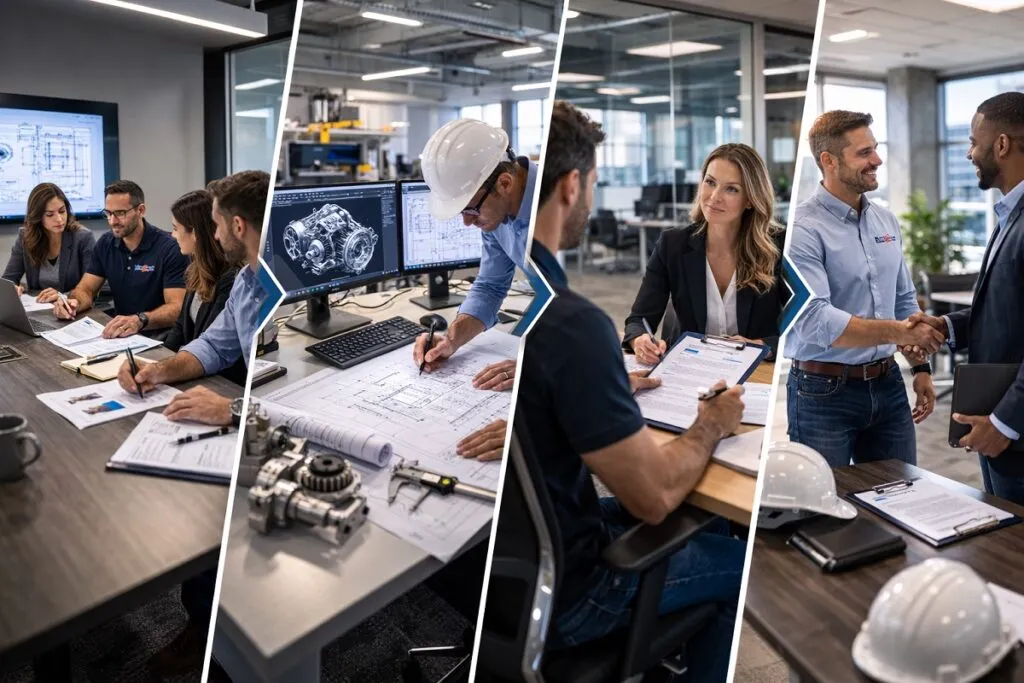
Our process is structured to reduce hiring mistakes and protect long-term performance.
- Understand Your Needs
We define technical scope, reporting structure, regulatory exposure, and operational risk. - Source Candidates
We identify engineers with relevant industry experience and demonstrated reliability. - Screen for Fit
We evaluate decision-making patterns, documentation discipline, and long-term career stability. - Present Top Talent
You receive a focused shortlist aligned with business outcomes.
Case Studies in Engineering Recruiting
Manufacturing Company
Challenge: High equipment failure rates linked to design inconsistencies.
Solution: Recruited a senior Mechanical Engineer with documented experience stabilizing high-load systems.
Result: Reduced downtime within the first year and improved preventive maintenance reliability.
Land Surveying
Challenge: Growth created survey and drafting backlogs. Needed 25 plus CAD Drafters and multiple field roles.
Solution: Conducted a national direct hire search for experienced CAD and land surveying professionals.
Result: Filled 25 plus CAD Drafters along with Party Chief, Data Tech, Instrument Man, and Rodman roles, reducing delays and improving project turnaround.
Energy Infrastructure
Challenge: Initial candidate pool lacked regulatory compliance depth. Search criteria adjusted after feedback from technical leadership.
Solution: Expanded sourcing to include engineers with direct federal and state reporting experience.
Result: Final hire aligned better with long-term compliance needs. Lesson learned: regulatory exposure required more weight than originally defined.
Engineering Staffing vs Related Staffing Services
Engineering hiring decisions differ from general technical recruiting due to compliance, safety, and infrastructure exposure.
| Engineering Staffing | General Technical Staffing |
|---|---|
| Focuses on licensed and regulated roles | Often centers on software or IT roles |
| Evaluates compliance and safety impact | Emphasizes coding or project delivery |
| Long-term infrastructure accountability | Shorter project lifecycle focus |
| High liability exposure | Lower regulatory exposure |
FAQs About Engineering Staffing
Tier2Tek provides qualified candidates within 1 to 2 business days.
No. Tier2Tek provides direct hire staffing only for full-time engineering roles.
We recruit engineers across manufacturing, energy, infrastructure, environmental, and advanced technology sectors nationwide.
We review project history, technical scope, decision accountability, and industry alignment.
Yes. We conduct confidential searches for leadership and highly specialized engineering roles.
When Engineering Staffing Is Not the Right Hiring Solution
Engineering staffing may not be appropriate when the role is short-term, project-based, or experimental without defined operational scope. Organizations without clear reporting structure or accountability lines may struggle to retain engineering talent effectively.
About Tier2tek Engineering Recruiting Expertise
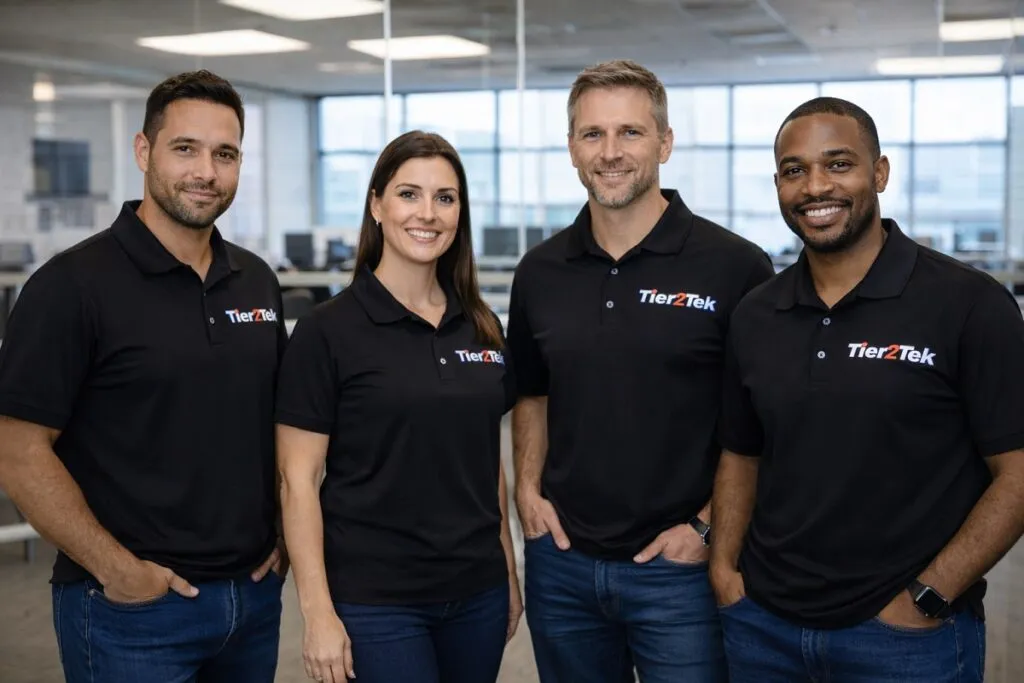
Tier2Tek Staffing recruits engineering, IT, and professional talent for organizations that require reliability and technical depth. Our recruiters understand the operational, compliance, and financial implications tied to engineering decisions.
We work closely with hiring managers to clarify performance expectations, risk exposure, and long-term workforce goals before presenting candidates. Our direct hire model supports stability, retention, and long-term business outcomes.
This content follows Tier2Tek Staffing’s internal publishing and review process. To learn more about how we create and update content, visit our Editorial Standards at https://tier2tek.com/about-us/editorial-standards/.
Get Started With Your Engineering Staffing Today
If your organization needs dependable, full-time engineering professionals, Tier2Tek is ready to deliver qualified candidates quickly and efficiently.